beginner rig
Lure presentationJig head and soft plastic
One of the single most versatile inshore presentations in this whole guide
- Water
- baymarshinletriverlakebridge
Components
- Main line or leader tied directly to a jig head
- Soft-plastic paddle tail, jerk shad, or curly-tail grub threaded onto the hook
Setup
- Hook
- The jig head's built-in hook does the work — match jig weight to depth/current, not hook size to bait.
- Weight
- Just enough jig-head weight to reach and hold the strike zone — too heavy sinks and drags unnaturally fast, too light never reaches bottom or holds position in current.
How to fish it
One of the single most versatile inshore presentations in this whole guide — cast out, let it sink, and retrieve with a lift-and-drop or steady swim depending on the soft plastic's own action.
When to use it
- Grass edges, creek mouths, and channel edges on a moving tide
- Dawn, dusk, and low light, when trout and drum are shallow
- Any time you want to cover water quickly and feel the bottom
Variations
Jig heads and bucktails: the same idea, adjusted
Where to use it
Water this rig is documented for
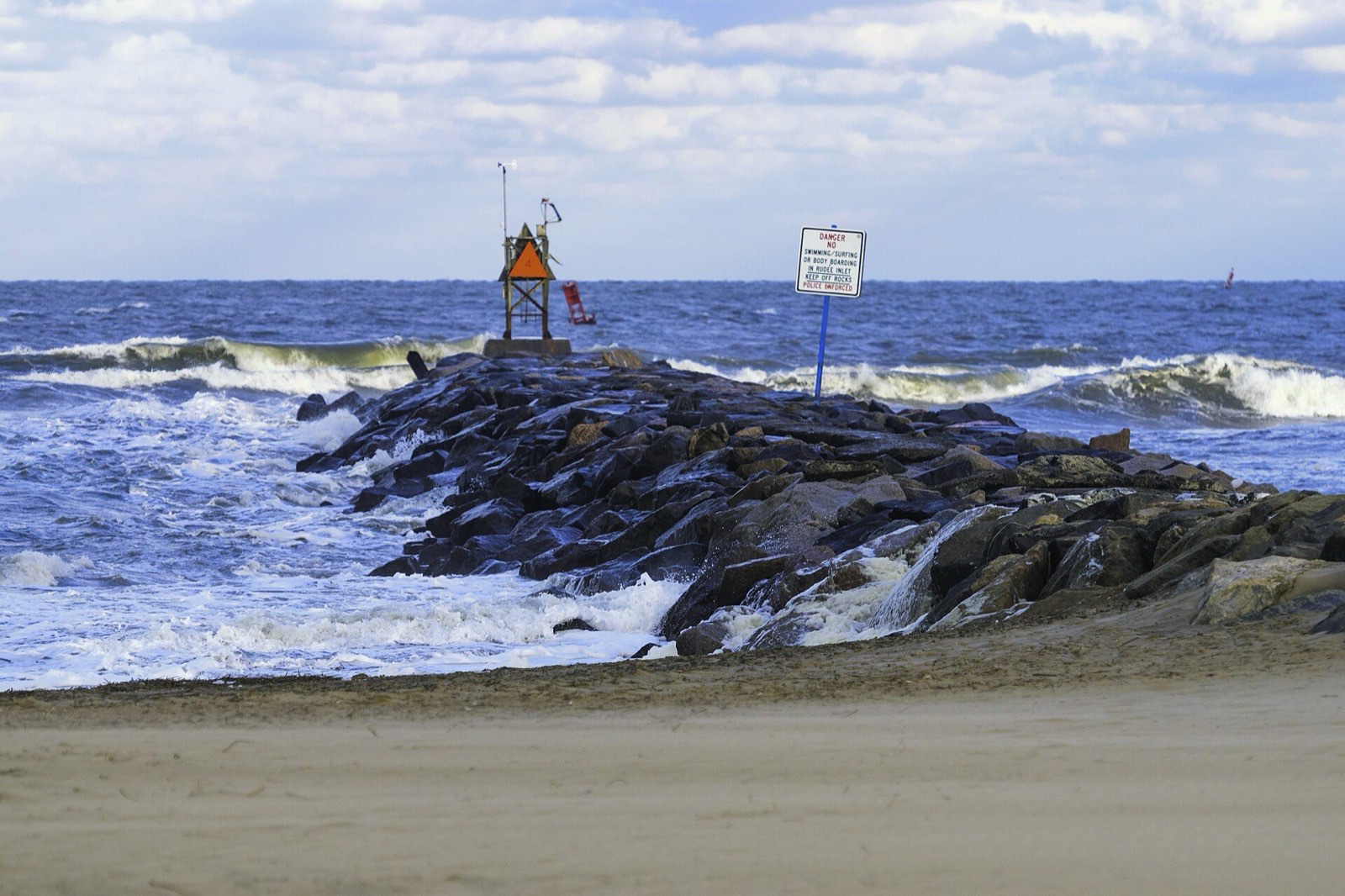
Photo PumpkinSky, CC BY-SA 3.0
ShorelineBeachRudee Inlet jetty & shoreline
Hard structure meeting ocean current — a technical spot that rewards anglers who read moving water.
6 speciesRestrooms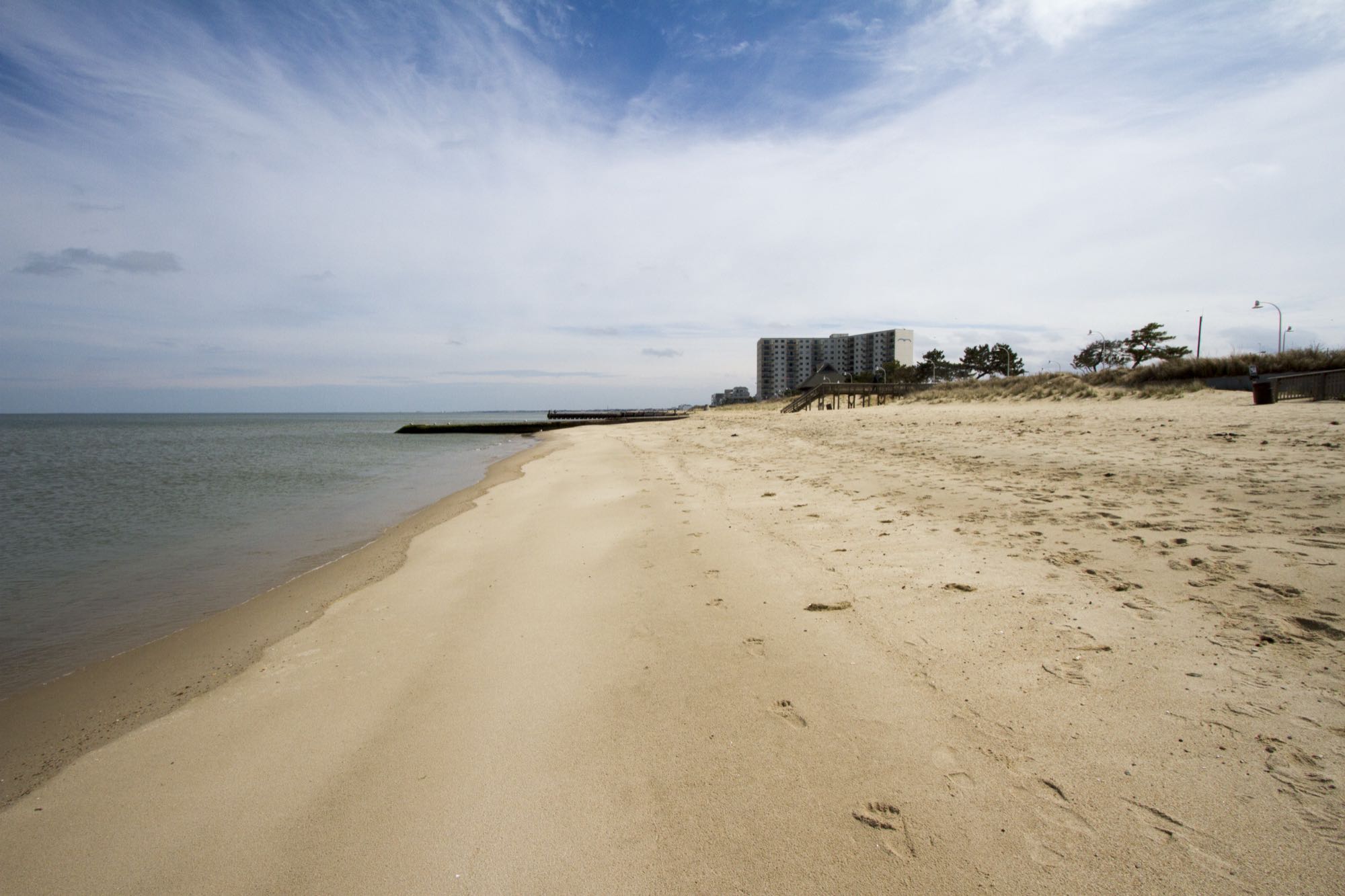
Photo Patrick Bloodgood / U.S. Army Corps of Engineers, Norfolk District, Public domain
ShorelineBeachWilloughby Spit shoreline
Narrow Bay-front spit near major structure — walkable shoreline with surprising depth close to the beach.
4 speciesFamily-friendly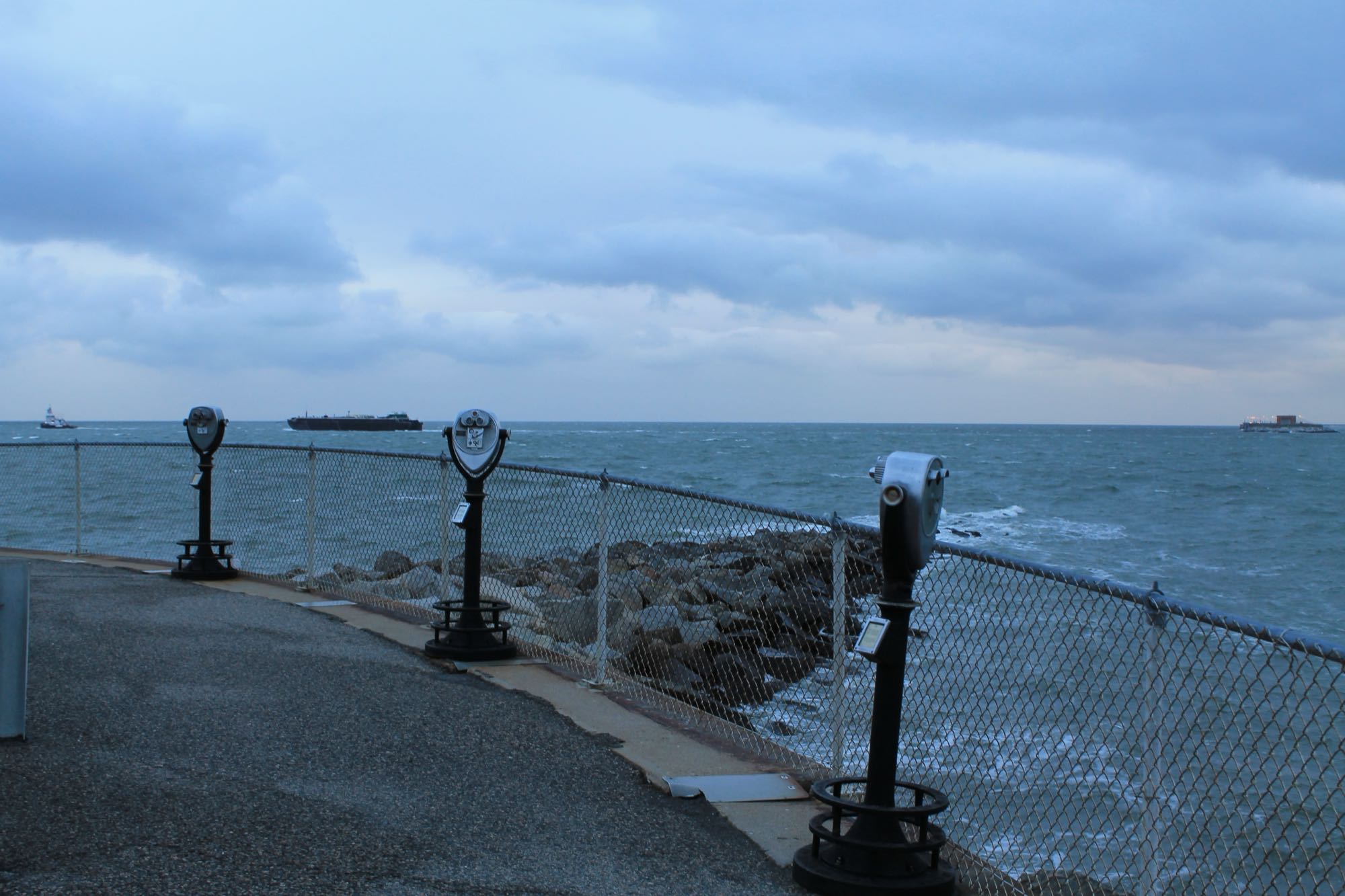
Photo Patrick Nouhailler, CC BY-SA 2.0 (representative)
Boat rampBay-mouth bridge structure (boat)
Miles of pilings, rubble, and channel edges at the Bay mouth — the region's premier structure fishery, boat access only.
6 species- No verified photo yet37.11° N 76.32° WKayak launchShoreline
Poquoson marsh kayak launch
Quiet grass-and-creek country for paddlers — shallow water, oyster bars, and very little boat pressure.
4 speciesFamily-friendly - No verified photo yet37.11° N 76.32° WBeachShoreline
Grandview Nature Preserve shoreline
A long walk-in Bay shoreline backed by marsh — solitude, wading depth, and a genuinely wild feel inside the city.
5 speciesFamily-friendly - No verified photo yet36.75° N 76.63° WShorelineBoat ramp
Suffolk reservoir shoreline
Cypress-lined municipal reservoir water — quiet freshwater fishing with permit requirements and posted rules.
2 speciesFamily-friendly


