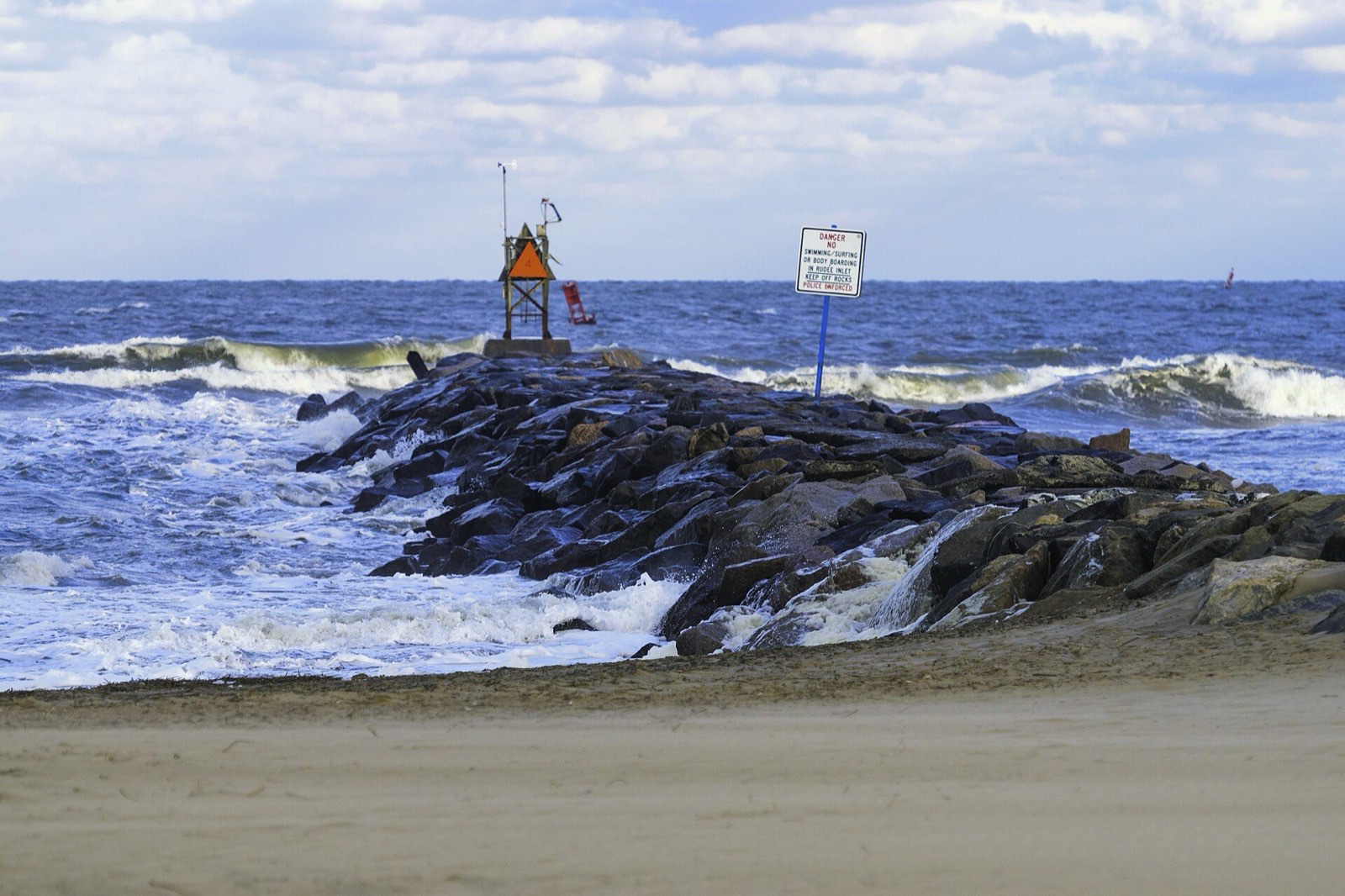
The Rudee Inlet jetty and rock breakwater — the same real structure as the "Rudee Inlet" record.
Photo: PumpkinSky — CC BY-SA 3.0 — verified 2026-08-08
Virginia Beach
Rudee Inlet jetty & shoreline
- Atlantic Ocean
- Rudee Inlet
- Shoreline
Hard structure meeting ocean current — a technical spot that rewards anglers who read moving water.
- Parking
- paid
- Restrooms
- Yes
- Fee or permit
- Likely
- Night access
- varies
Overview
Ocean water pushing in and out past rock creates seams, eddies, and depth changes within casting distance of shore. Fish position on the down-current side of rock and along the sand-to-rock transition.
Getting there
Walk-in shoreline and rock access near the inlet mouth. Rocks are uneven, slick, and not suitable for small children.
Park in designated public lots only. Do not climb closed or posted sections of the jetty.
Verify current access, hours, fees, closures, and regulations with official sources before you go.
Parking & amenities
- Nearby restrooms
- Paid parking
- Boardwalk access nearby
Not accessible: the productive areas require walking on loose sand and climbing wet rock.
Reading the water
Tide stage for this kind of water
Any strong current, either direction
From: Reading tides without overthinking themExposure
Fully exposed to ocean swell, wind, and rapid condition changes.
Wind against tide, and when to turn aroundToday here
The full instrument and the week ahead- Acquiring NOAA tide predictions, station 8639207
- Requesting the NWS hourly forecast
- Computing sunrise, sunset, and civil twilight
Safety considerations
Noted for this spot
- Slick rock and wave surge cause serious injuries — wear grippy footwear
- Never turn your back on the ocean side
- Avoid the jetty entirely in elevated surf
General to shoreline and beach access
- Riprap and oyster shell are sharp, slick, and uneven; wear footwear with grip and keep hands out of the shell. Casting safely
- Boat and ship wake arrives without warning on the rivers and the Bay front — stand back from the edge when traffic passes. Kayak and boating safety basics
- Rip currents form in the cuts between sandbars — fish the edges from the sand and never wade past knee depth in surf. Reading the surf
- No shade, glare off the water, and summer heat; dawn and dusk are cooler and usually better anyway. Heat, hydration, and sun protection
- A heavy sinker on a hard cast is a projectile; use a shock leader and clear the beach behind you. Surf rig
Species documented here
All species in Virginia Beach


Other water nearby
Similar spots in this part of the coast
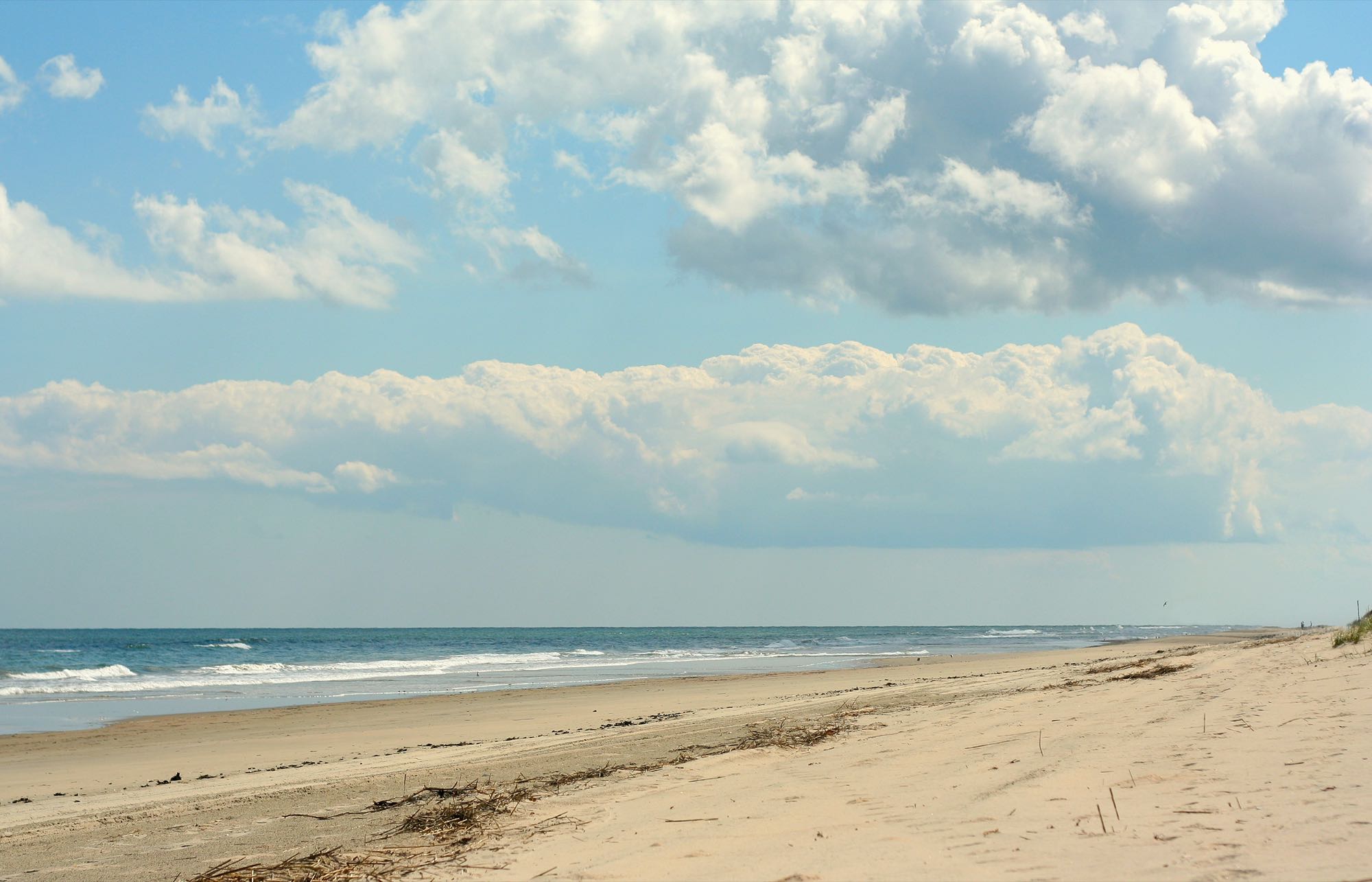
Photo Brent Hoard, CC BY 2.0
BeachSandbridge Beach surf
Open Atlantic beach with sandbars, troughs, and cuts — classic surf fishing with plenty of room to spread out.
4 speciesFamily-friendlyRestrooms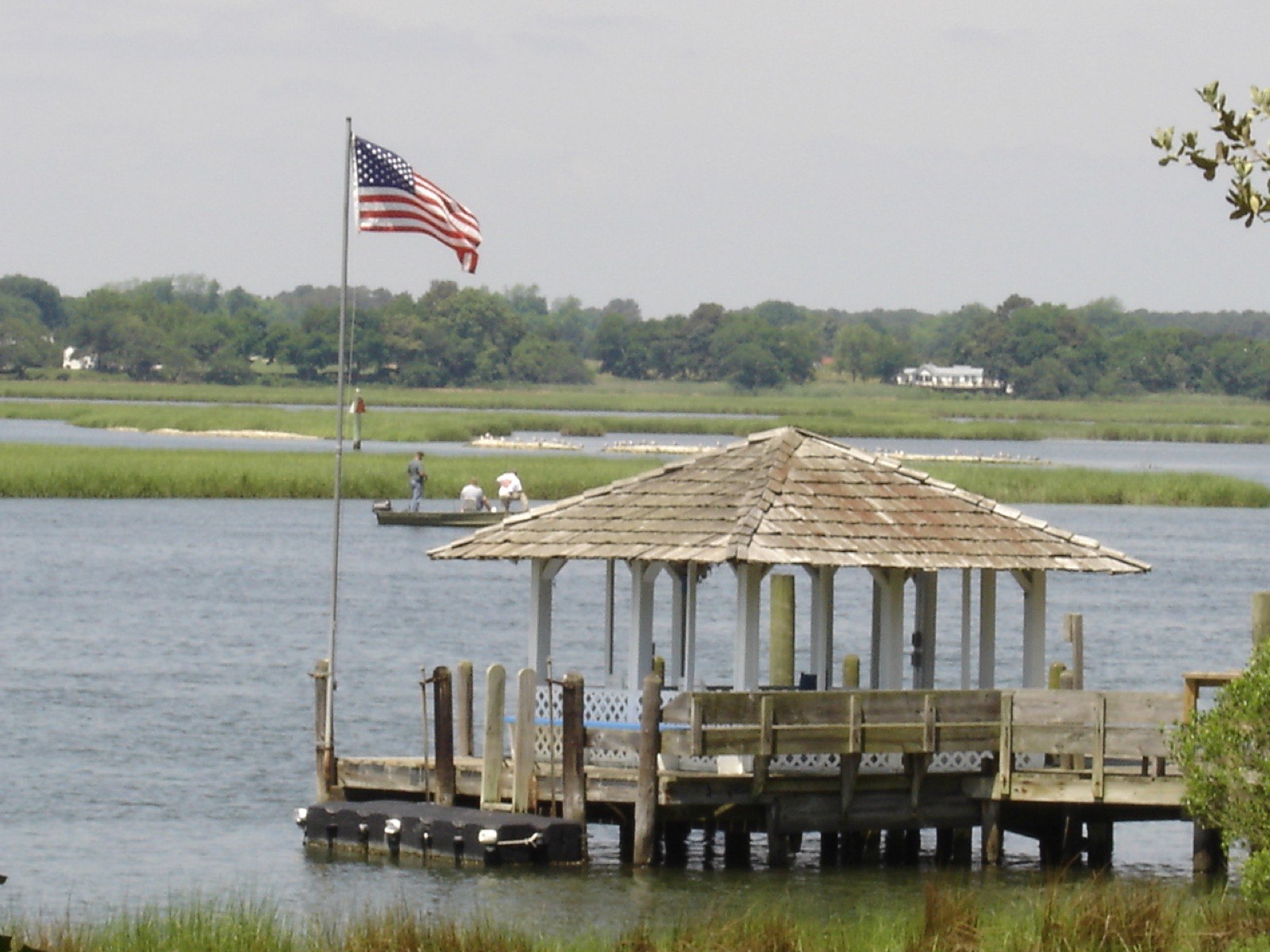
Photo BrandlandUSA, Public domain (representative)
ShorelineKayak launchLynnhaven Inlet — Boat Ramp & Beach Facility
The historic Lynnhaven Fishing Pier closed in 2017 and was sold — today's public access is the city's Lynnhaven Boat Ramp & Beach Facility, plus some bank fishing along the beach and riprap.
3 speciesAccessible features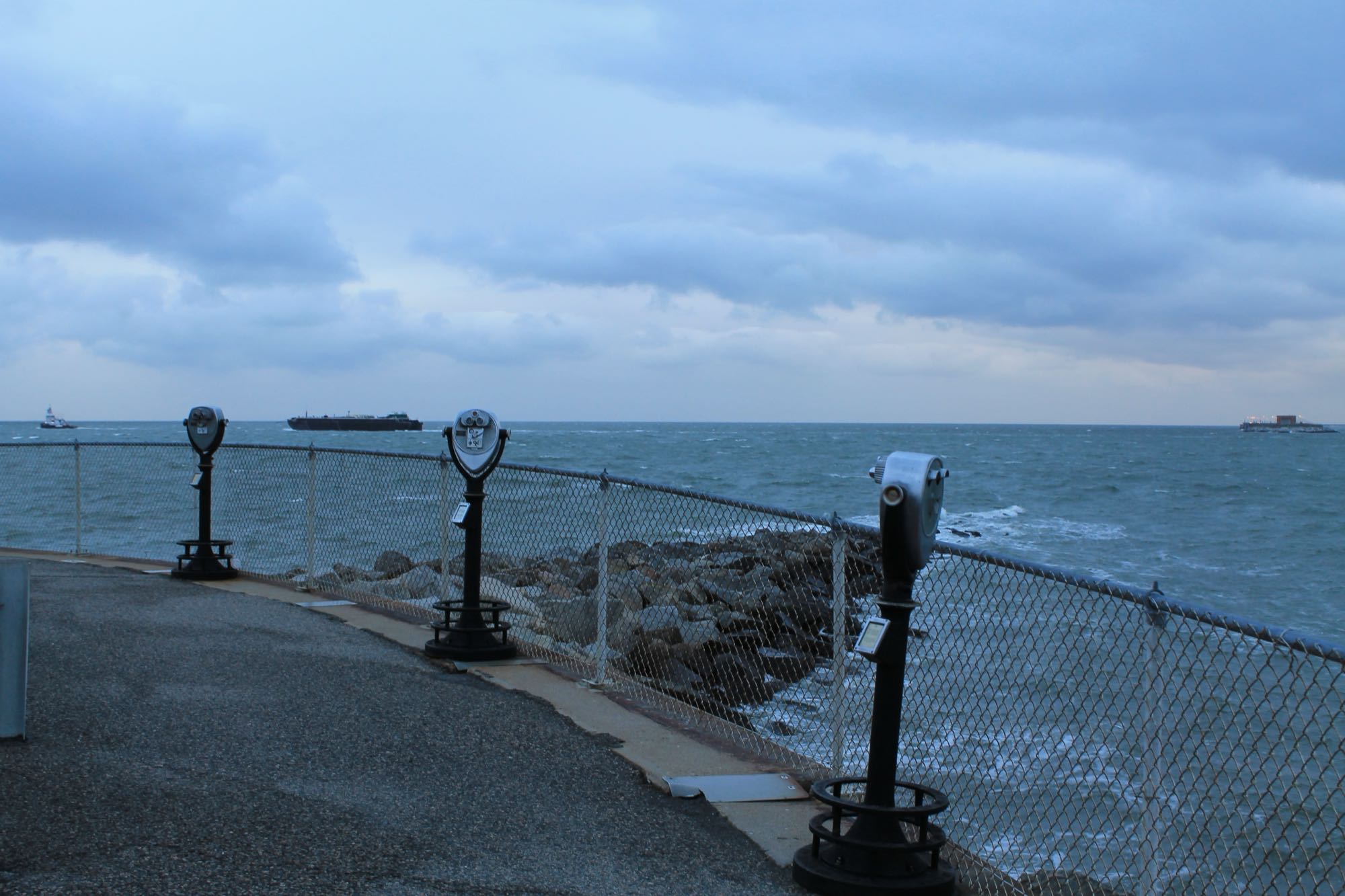
Photo Patrick Nouhailler, CC BY-SA 2.0 (representative)
Boat rampBay-mouth bridge structure (boat)
Miles of pilings, rubble, and channel edges at the Bay mouth — the region's premier structure fishery, boat access only.
6 species


