Red Drum
Sciaenops ocellatus
Partially verified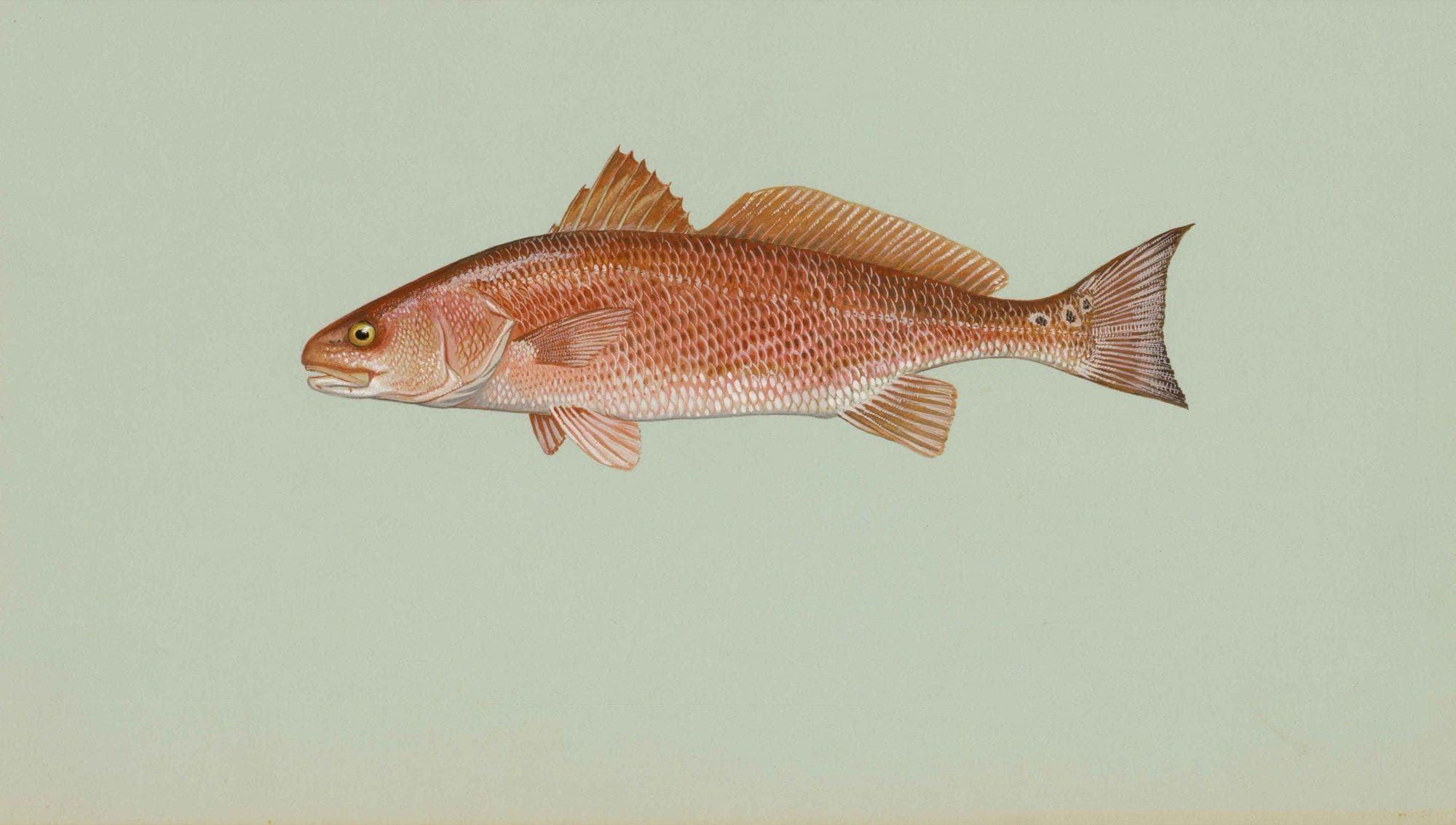
Commonly confused with: Black Drum. If you're not sure which one you've caught, treat it as the more restricted species and release it until you can confirm.
Identification
Coppery-bronze body with one or more black ocellated (eye-like) spots at the base of the tail — some fish have several spots, a few have none, No barbels (whiskers) on the chin, Streamlined body, slightly forked/lunate tail, and a rounded pectoral fin
More photos
Where this fish fits
Red Drum is found across more than one water environment — this reflects real movement between them (e.g. a tidal migration or life-stage change), not uncertainty about where to look.
Common access at this project's own linked locations: Bank / Shore, Boat Ramp, Kayak.
These are discovery categories describing where anglers realistically fish for this species, not a guarantee this project has confirmed regional access at every listed setting — see the linked locations below for this project's own actually-sourced spots.
- Typical season
- Late summer through fall, with a smaller spring push on the flats.
- Habitats
- Grass flats and shallow bays, Inlets and surf, Oyster reefs
- Food use
- Commonly eaten
Data not yet verified.
This site hasn't checked for a fish-consumption advisory covering this species yet. That is not the same as confirmed safe — check current official guidance before eating your catch.
Recipes for Red Drum
Commonly eaten — check the advisory notice above before eating your catch.
Seasons, size limits, and possession limits change and vary by water body. Always check the current regulations at the current regulations page before you fish.
- Bait & lures
- Cut mullet or crab fished on bottom, Gold spoons, Soft plastic paddletails
- Beginner difficulty
- Moderate
Part of this record is confirmed against an official source; other parts are not. See the notes below for exactly which.
The tail-spot/no-barbel identification features and the black drum lookalike distinction are corroborated across multiple state-agency sources (SC DNR, VMRC's own angler guide, and IERE); this project could not get a clean text extraction from VMRC's own saltwater angler ID guide PDF, so the citation here is SC DNR's red drum life-history page instead — the biology and ID facts are the same species regardless of state. Habitat/season/bait notes remain general regional angling knowledge, not individually fact-checked. Regulations change often — always check the current VMRC page linked below.