Largemouth Bass
Micropterus salmoides
Partially verified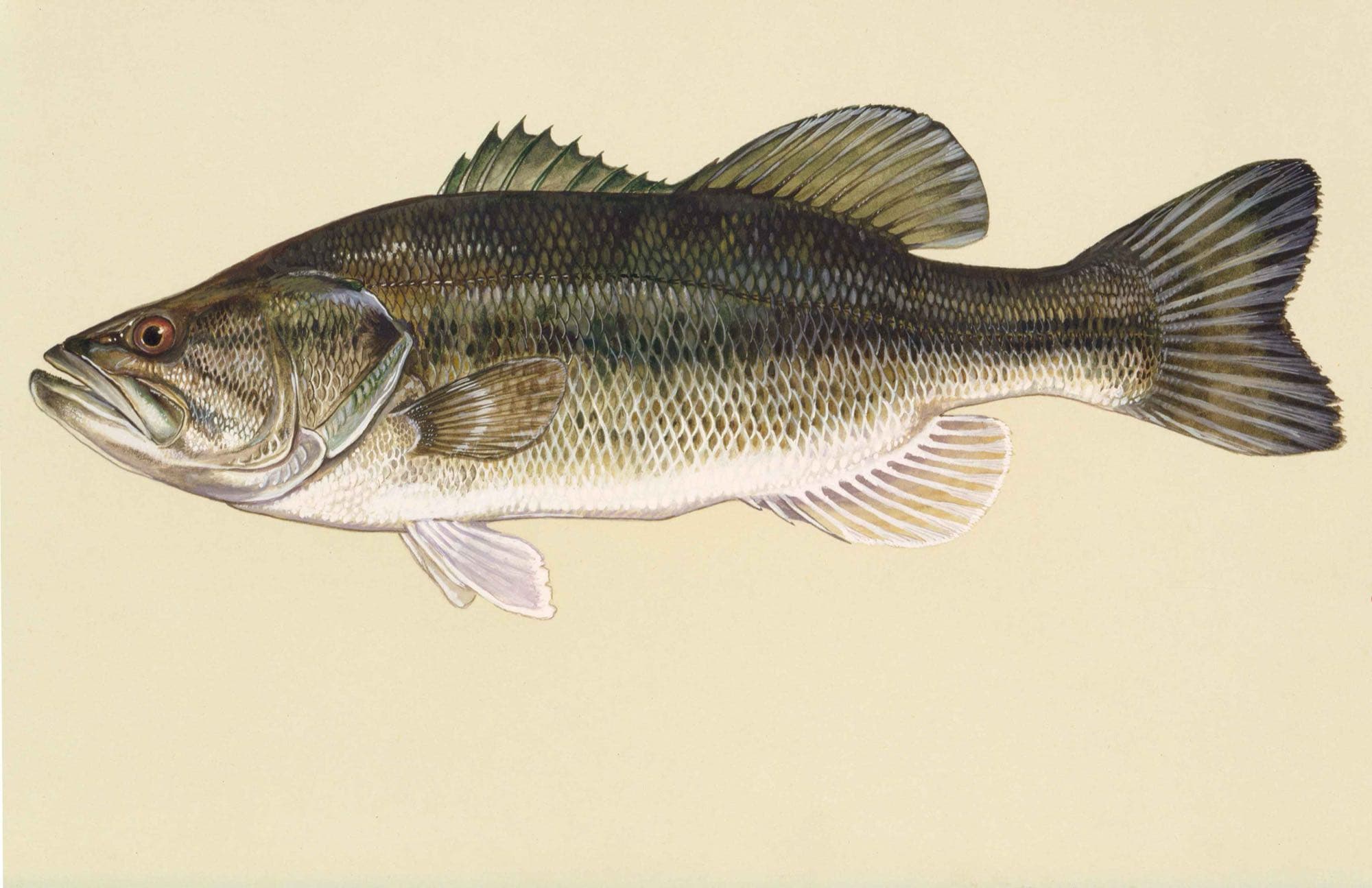
Commonly confused with: Smallmouth Bass. If you're not sure which one you've caught, treat it as the more restricted species and release it until you can confirm.
Identification
Upper jaw extends past the back of the eye when the mouth is closed — the single most reliable field mark versus smallmouth/spotted bass, Deeply notched dorsal fin (the two dorsal fins nearly separate); dark, often broken lateral stripe along the side
Where this fish fits
Largemouth Bass is found across more than one water environment — this reflects real movement between them (e.g. a tidal migration or life-stage change), not uncertainty about where to look.
Common access at this project's own linked locations: Bank / Shore, Kayak, Boat Ramp.
These are discovery categories describing where anglers realistically fish for this species, not a guarantee this project has confirmed regional access at every listed setting — see the linked locations below for this project's own actually-sourced spots.
- Typical season
- Spring pre-spawn and fall are most active; summer mornings/evenings and winter deep water also produce.
- Habitats
- Vegetation, laydowns, and other freshwater cover, Blackwater ponds, lakes, and slow rivers
- Food use
- Catch-and-release recommended
Advisory exists — review official guidance.
James River (tidal) (I-95 bridge in Richmond downstream to the Hampton Roads Bridge-Tunnel) — PCBs and Kepone: No more than 2 meals/month (PCBs). A separate Kepone advisory for this stretch caps all species at 1 meal/day; follow whichever limit is more restrictive.
Seasons, size limits, and possession limits change and vary by water body. Always check the current regulations at the current regulations page before you fish.
- Bait & lures
- Soft plastic worms and creature baits, Spinnerbaits and topwater in low light, Crankbaits along cover edges
- Beginner difficulty
- Easy for beginners
Part of this record is confirmed against an official source; other parts are not. See the notes below for exactly which.
The jaw-past-the-eye identification feature (the standard way to separate largemouth from Alabama/spotted/smallmouth bass) is confirmed via the Virginia DWR species page. Smallmouth bass is now a published entry (see similarSpecies); spotted bass remains not currently profiled on this site. Habitat/season/bait notes remain general regional angling knowledge, not individually fact-checked. Regulations change often — always check the current VDWR page linked below.