Striped Bass
Morone saxatilis
Partially verified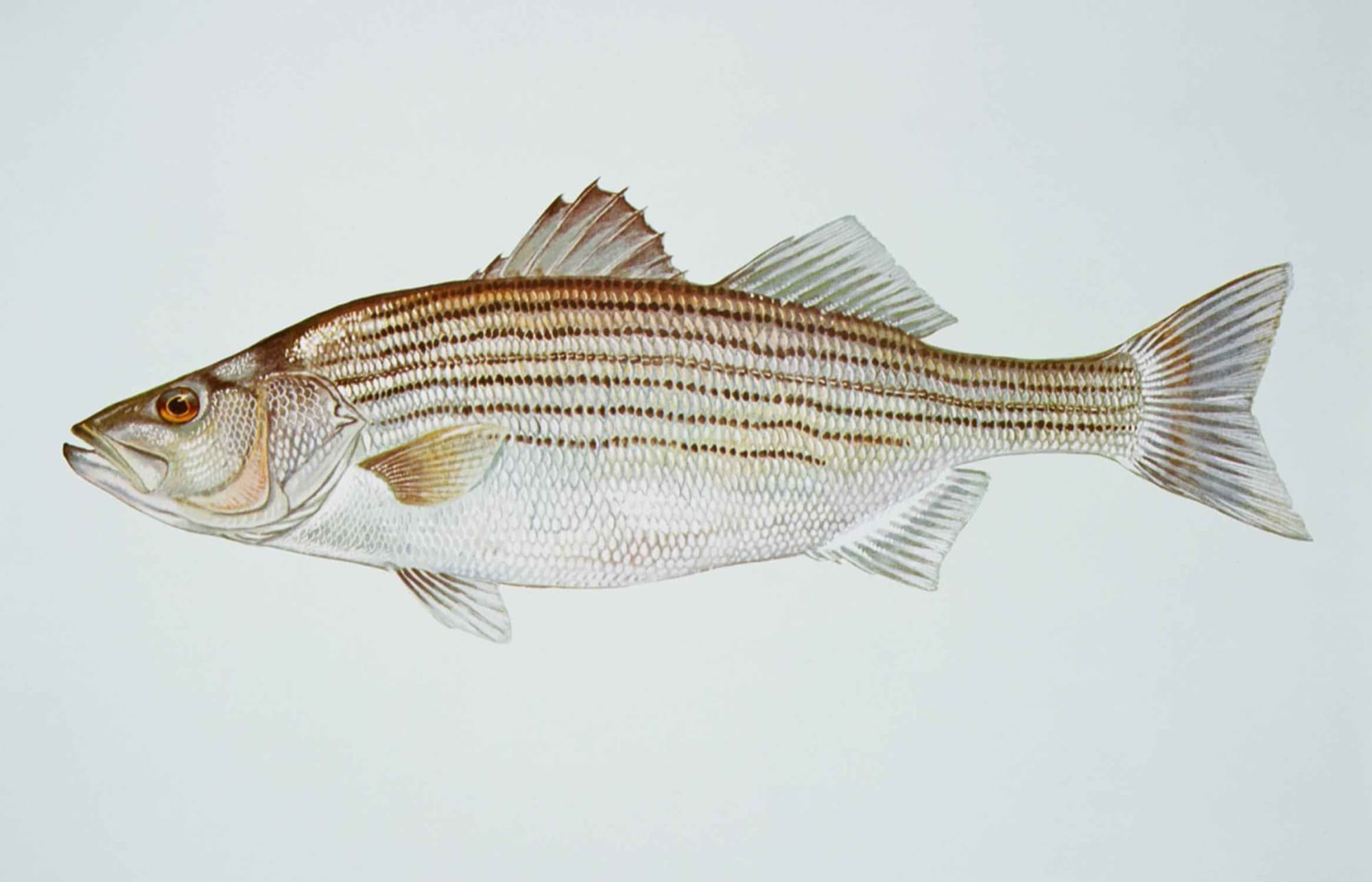
Identification
Long, silvery, elongated body with 7-8 black horizontal stripes running above and along the lateral line, Two dorsal fins, the first spiny
Where this fish fits
Striped Bass is found across more than one water environment — this reflects real movement between them (e.g. a tidal migration or life-stage change), not uncertainty about where to look.
Common access at this project's own linked locations: Bank / Shore, Kayak, Boat Ramp.
These are discovery categories describing where anglers realistically fish for this species, not a guarantee this project has confirmed regional access at every listed setting — see the linked locations below for this project's own actually-sourced spots.
- Typical season
- Spring and fall runs are most productive; a separate, tightly-regulated winter trophy season exists in parts of the Bay.
- Habitats
- Tidal rivers and creek mouths, Bridge pilings and channel edges, Open Chesapeake Bay in cooler months
- Food use
- Commonly eaten
Advisory exists — review official guidance.
Chesapeake Bay (mainstem) — PCBs: No more than 2 meals/month of anadromous (migratory) striped bass caught in the Chesapeake Bay mainstem.
Recipes for Striped Bass
Commonly eaten — check the advisory notice above before eating your catch.
Seasons, size limits, and possession limits change and vary by water body. Always check the current regulations at the current regulations page before you fish.
- Bait & lures
- Bucktails and soft plastics, Live or cut bunker (menhaden), Topwater plugs at dawn and dusk in fall
- Beginner difficulty
- Moderate
Part of this record is confirmed against an official source; other parts are not. See the notes below for exactly which.
Scientific name and the striping identification feature are confirmed via the NOAA Fisheries species page. Note that a juvenile striped bass (12-15") can be confused with an adult white bass or hybrid striped bass, neither of which is a species this site currently profiles — a deeper-bodied fish with stripes that look broken/staggered, or two closely-adjoined tooth patches on the tongue, is one of those instead. Habitat/season/bait notes remain general regional angling knowledge, not individually fact-checked. Regulations change often — always check the current VMRC page linked below.