Horned Grebe
Podiceps auritus
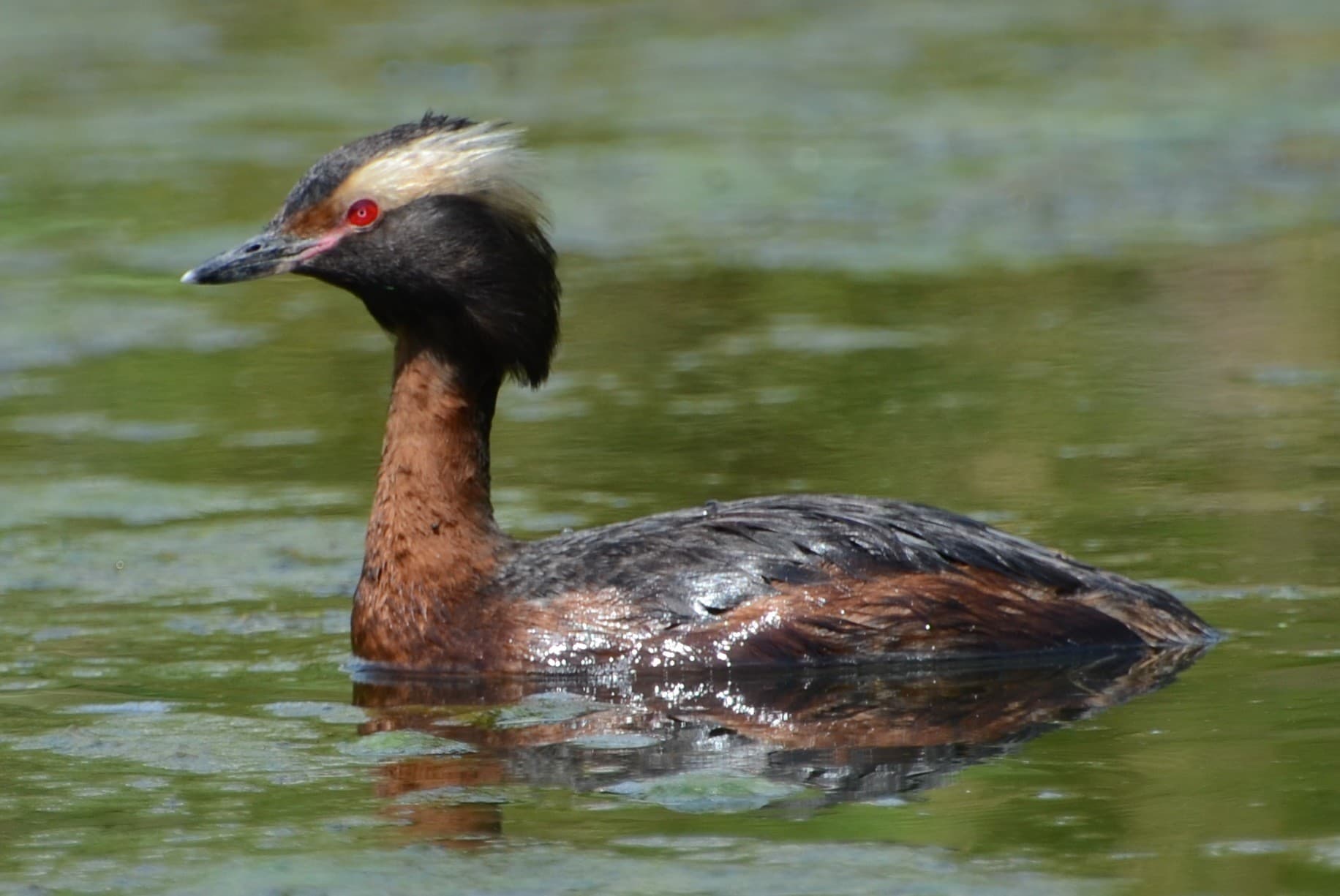
Drawn from a named source but not independently confirmed. Double-check before relying on it.
Winter-plumage identification features and the size/bill/neck distinction from red-necked grebe are directly confirmed against Cornell's own identification pages for both species. Federal protection is well-established general knowledge. Habitat/behavior notes reflect general regional knowledge, not individually fact-checked against a Virginia-specific source.
A common winter protected waterbird easily mistaken for a small diving duck (bufflehead/scaup) from a distance on open Bay water — genuinely smaller and shorter-necked than the similarly-named red-necked grebe.
Field marks
- In winter plumage: neat black cap and nape contrasting with a clean white cheek and throat — a subdued gray-and-white look overall.
- Much smaller bill than red-necked grebe, and a noticeably shorter neck — the two are often confused with each other, not just with ducks.
- Compact, tailless silhouette like all grebes, riding fairly low on the water.
- Habitat
- Open Bay water in winter, often near diving-duck rafts (bufflehead, scaup, and similar species).
Conservation context
Protected under the Migratory Bird Treaty Act; not managed as a game species.
Similar species — check before you shoot
Identification alone never establishes that a bird may legally be taken. Confirm species (and sex, where a sub-limit depends on it) before shooting.
Ethical shot selection: A small diving waterbird mixed into a raft of bufflehead or scaup deserves a careful second look before assuming it's a legal duck — confirm bill shape and neck length rather than shooting on silhouette alone at a distance.
This page is educational and does not certify that any specific bird may be legally taken at any specific time or place. Always confirm the current season, bag limit, and permit requirements at Licensing & Regulations →