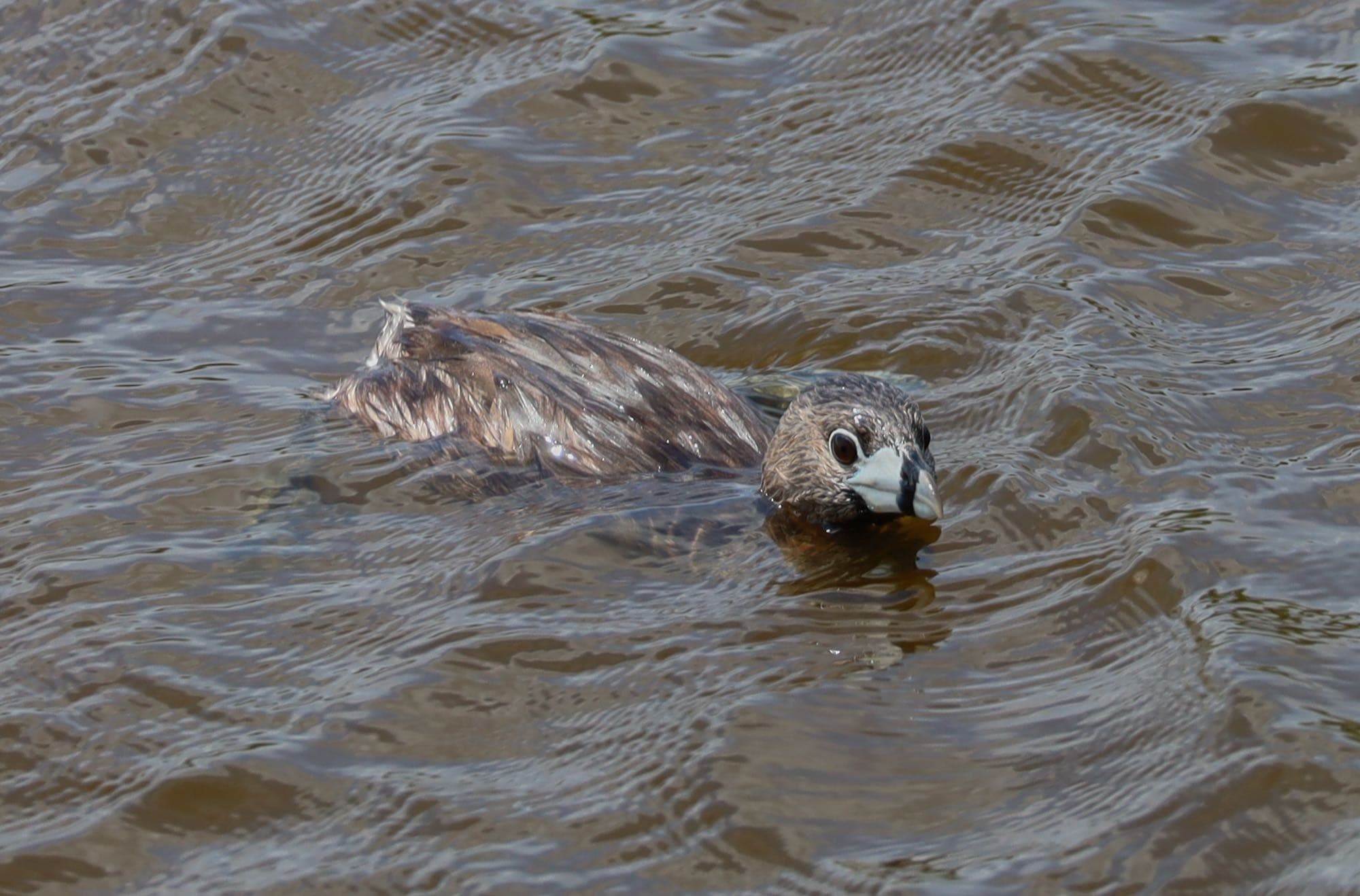
Pied-billed Grebe
Podilymbus podiceps
Drawn from a named source but not independently confirmed. Double-check before relying on it.
Body shape, bill shape/color, and lobed-toe identification features are directly confirmed against Cornell's own identification page. Federal protection is well-established general knowledge. Hampton Roads habitat/year-round presence reflects general regional knowledge, not individually fact-checked against a Virginia-specific source.
A common, protected, non-huntable small waterbird — not a duck at all — regularly confused with small ducks at a distance on ponds, marshes, and sheltered tidal-river coves.
Field marks
- Small, chunky, compact body about the size of a green-winged teal, with a blocky head, slender neck, and virtually no visible tail.
- Short, thick bill — never a duck's wide, flat bill; in breeding season the bill is whitish with a black band ('pied'), otherwise plain yellow-brown.
- Lobed (not webbed) toes, like all grebes — not visible at a distance, but the reason grebes swim/dive differently from ducks.
- Brown overall, darker above, more tawny below; dark crown/nape and black throat in breeding season.
- Habitat
- Small, quiet ponds and marshes with thick emergent vegetation, and sheltered tidal-river coves — often hidden in vegetation and detected by its loud, far-carrying call before it's seen.
Conservation context
Protected under the Migratory Bird Treaty Act; not managed as a game species.
Similar species — check before you shoot
Identification alone never establishes that a bird may legally be taken. Confirm species (and sex, where a sub-limit depends on it) before shooting.
Ethical shot selection: A small, chunky, tailless waterbird on a quiet pond or marsh edge is far more likely to be this species than any legal duck — confirm bill shape (short and thick, not flat and wide) before ever treating one as a target.
This page is educational and does not certify that any specific bird may be legally taken at any specific time or place. Always confirm the current season, bag limit, and permit requirements at Licensing & Regulations →