Red-necked Grebe
Podiceps grisegena
Drawn from a named source but not independently confirmed. Double-check before relying on it.
Size and winter-plumage identification distinctions from horned grebe are directly confirmed against Cornell's own identification/life-history pages. Federal protection is well-established general knowledge. The genuine scarcity/difficulty-of-confirmation at the Chesapeake Bay mouth is directly corroborated via an independent regional birding source describing real observer experience ('hours of scope study... to produce' a confirmed sighting) rather than assumed. Per the brief's own caution against publishing on the strength of a single observation, this entry is deliberately framed as scarce/occasional rather than implied routine — matching its own seasonalPresence: occasional-visitor.
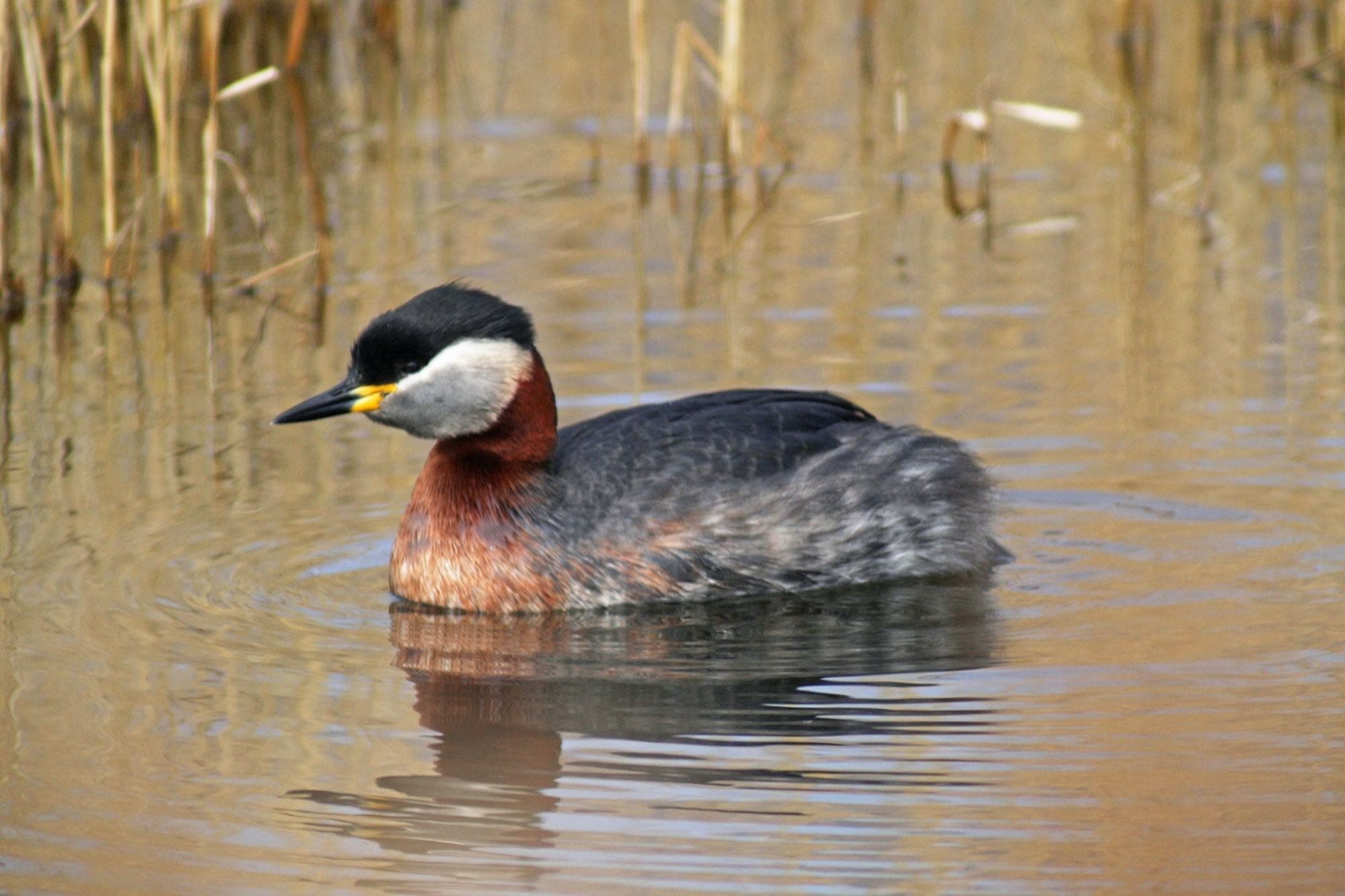
A federally protected diving bird, larger and heavier-billed than the more regularly-present horned grebe — a genuinely scarce Chesapeake Bay winter visitor that birders describe as needing 'hours of scope study' to confirm.
Field marks
- Nearly the size of a mallard — intermediate in size between horned grebe (much smaller) and western grebe.
- In winter: smudgy brown neck, whitish throat, and a long, heavy, mostly yellow bill — the bill size alone is the fastest distinction from horned grebe's much smaller, shorter bill.
- Longer neck than horned grebe, contributing to the size difference between the two.
- Habitat
- Open Bay water in winter, at the mouth of the Chesapeake Bay — a scarcer visitor than horned or pied-billed grebe.
Conservation context
Protected under the Migratory Bird Treaty Act; not managed as a game species.
Similar species — check before you shoot
Identification alone never establishes that a bird may legally be taken. Confirm species (and sex, where a sub-limit depends on it) before shooting.
Ethical shot selection: Given how genuinely scarce this species is in Virginia waters, any large grebe-like bird deserves careful confirmation of bill size/neck length before assuming it's anything else — but since every grebe in this guide is equally protected, the actual shoot/don't-shoot answer never changes: don't.
This page is educational and does not certify that any specific bird may be legally taken at any specific time or place. Always confirm the current season, bag limit, and permit requirements at Licensing & Regulations →