Canada Goose
Branta canadensis
Confirmed against an official or primary source as of the date shown.
Identification facts corroborated via Cornell's All About Birds and the Virginia Bird Atlas. The zone/population-management structure and season framework are directly confirmed via a live DWR fetch (the same source backing this project's Canada Goose HuntingSeason records) — this species' `verificationStatus` is 'verified' specifically because its most load-bearing claim (the zone system itself) was directly, not just synthetically, confirmed.
Legal status: A legal migratory game bird in Virginia. Regulations differ meaningfully by zone and season: a September resident-only season (statewide, higher bag limit), and separate regular seasons for the Atlantic Population Zone and Resident Population Zone with different dates and bag limits. See this project's three Canada Goose HuntingSeason records for the current zone-specific limits — do not assume one figure applies statewide or year-round.
The most familiar goose in North America and the only one present in Hampton Roads year-round via its resident population — distinct in regulation, though not appearance, from the larger migrant population also present in winter.
Field marks
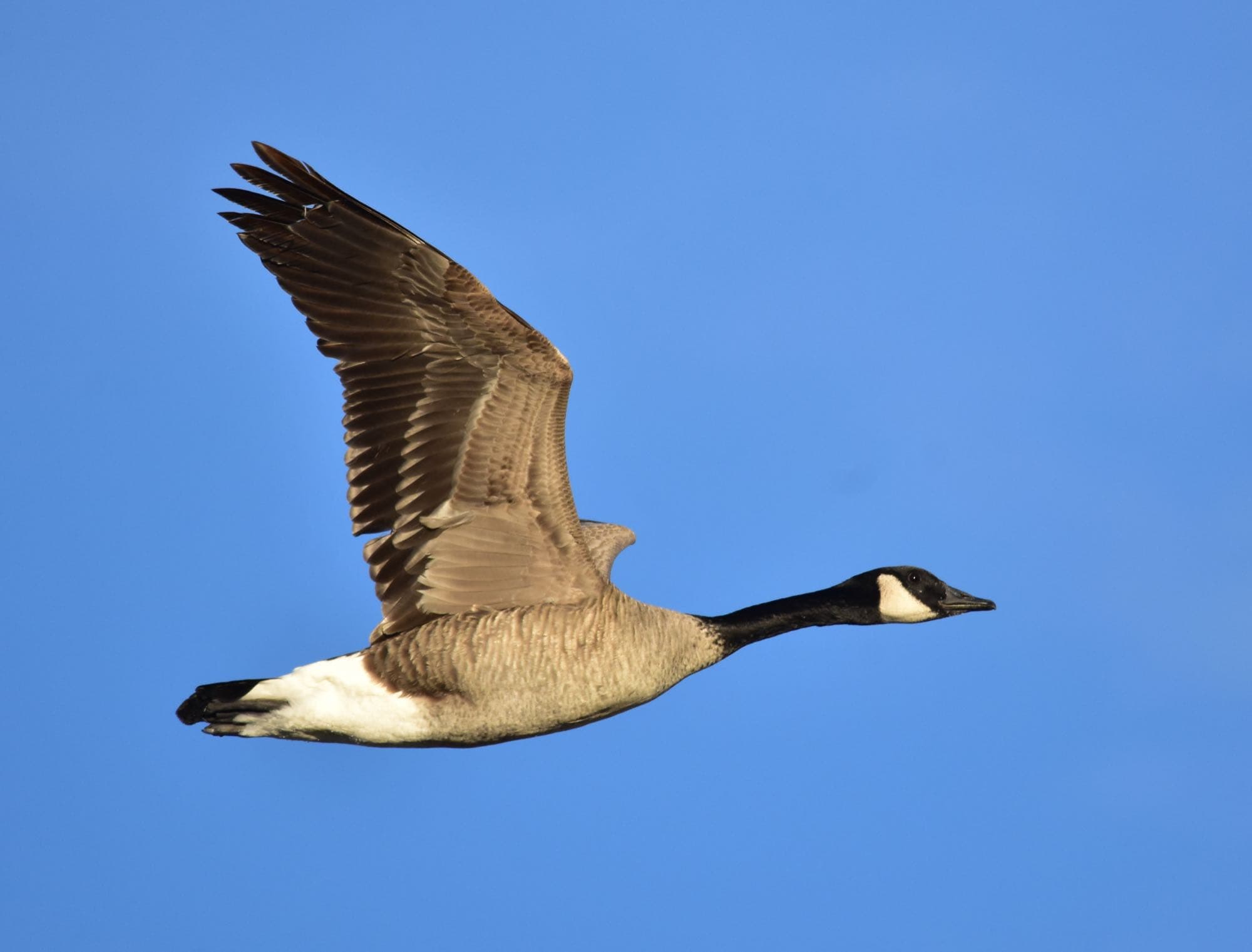
- Black head and neck with a bold white chinstrap patch — the species' signature field mark.
- Brown body, black legs and feet.
- Large-bodied goose; flies in the classic V-formation, often calling loudly.
- Habitat
- Extremely adaptable — found on ponds, rivers, marshes, golf courses, parks, and agricultural fields; resident birds often stay near human-altered landscapes year-round.
- Feeding behavior
- Grazes on grasses and grain in fields and lawns; also dabbles for aquatic vegetation.
- Flight profile
- Strong, direct flight, typically in V-formation or long diagonal lines, with a loud, familiar honking call.
- Flock behavior
- Highly social; large flocks graze on open grass (parks, lawns, agricultural fields) as well as feeding on aquatic vegetation.
- Vocalizations
- The familiar loud, honking 'ahonk' call, frequently given in flight.
Migration & seasonal context
Virginia manages four distinct Canada goose subpopulations with different regulations: the non-migratory Atlantic Flyway Resident Population (RP), and three migrant populations (the North Atlantic Population, Southern James Bay Population, and Atlantic Population (AP)). Hampton Roads sits within the AP Zone for regulatory purposes. Migrant geese typically arrive in Virginia around late September, well after the state's early-September resident-goose season closes — a deliberate regulatory design to target the resident population separately from migrants.
Similar species — check before you shoot
Identification alone never establishes that a bird may legally be taken. Confirm species (and sex, where a sub-limit depends on it) before shooting.
This page is educational and does not certify that any specific bird may be legally taken at any specific time or place. Always confirm the current season, bag limit, and permit requirements at Licensing & Regulations →