Cackling Goose
Branta hutchinsii
Drawn from a named source but not independently confirmed. Double-check before relying on it.
The 2004 taxonomic split, size/bill/neck/head identification distinctions from Canada goose are directly confirmed against Cornell's All About Birds identification and species-comparison pages. No Virginia-specific bag-limit rule naming cackling goose separately from Canada goose was found — stated honestly as a reasonable inference from the general goose season structure, not a directly confirmed fact. Added in the Regional Species Completeness, Phase 2 pass, promoted from the framework's own pre-existing draft entry.
Legal status: A legal migratory game bird in Virginia. This project has not found a Virginia-specific bag-limit rule naming cackling goose separately from Canada goose — it is generally hunted under the same general 'goose' season structure and bag limits documented in this project's Canada Goose HuntingSeason records, but always confirm current species-specific treatment directly before hunting, since the size/bill/neck distinction genuinely matters for correct reporting.
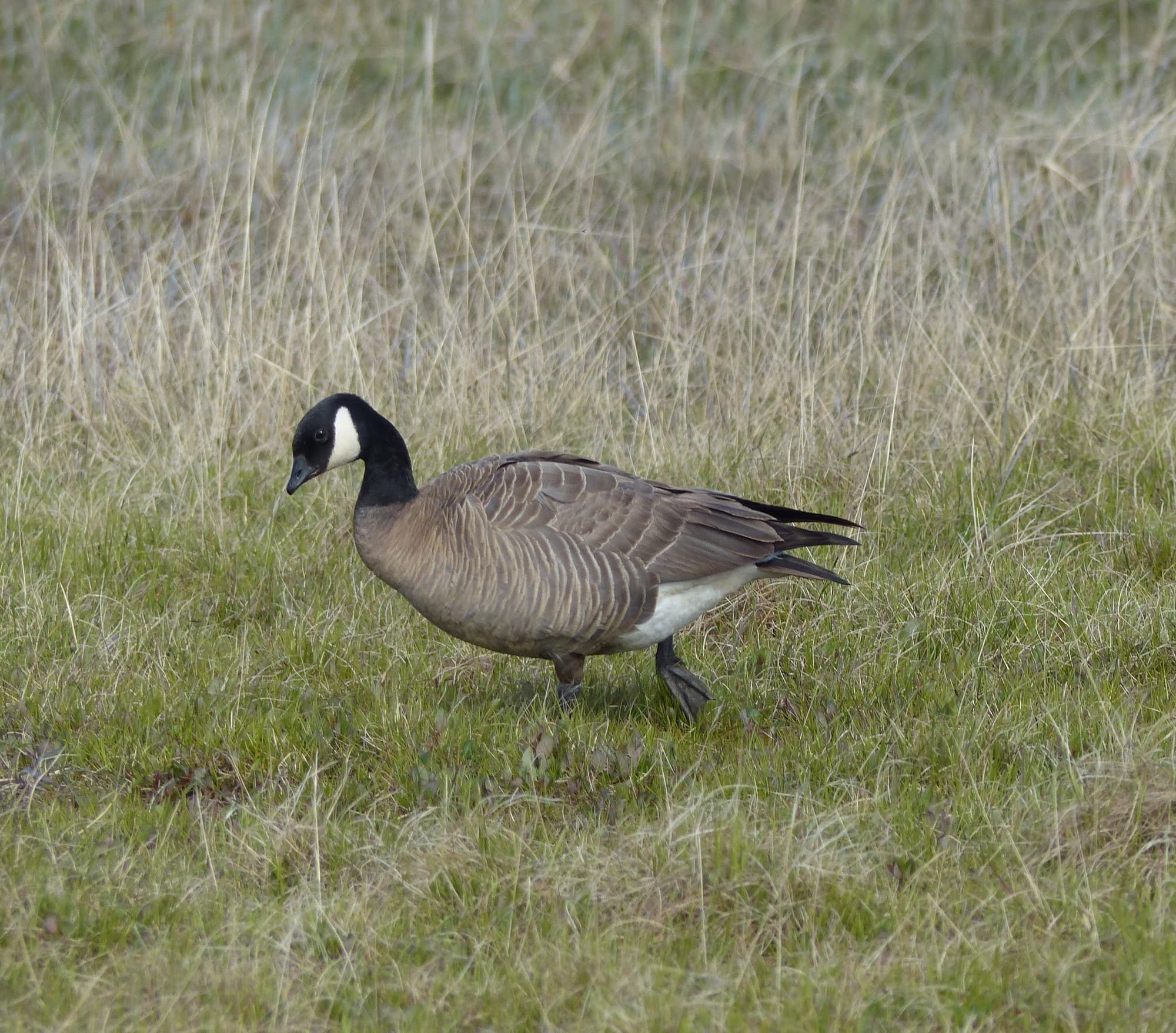
A miniature look-alike of Canada goose, only recognized as its own species in 2004 — a real, ongoing identification challenge with real bag-limit implications when the two mix in the same flock.
Field marks
- Overall body size is the single biggest clue — some cackling geese are barely larger than a mallard, while the largest Canada geese can weigh twice as much, though smaller female/immature Canada geese can approach cackling-goose size, which is exactly why this pairing is genuinely hard.
- Stubbier, shorter bill; steeper forehead; shorter neck (strikingly apparent in flight); usually a more rounded head than Canada goose.
- Same black head/neck and white chinstrap pattern as Canada goose — plumage alone does not separate the two.
- Higher-pitched call than Canada goose's familiar honk.
- Habitat
- Mixes directly into Canada goose flocks in fields and impoundments — not a separate habitat, a separate species within the same flock.
- Flight profile
- Similar V-formation flight to Canada goose, but the shorter neck is noticeably apparent in flight once the size comparison is known.
Migration & seasonal context
A tundra-breeding Atlantic Flyway migrant, wintering in Virginia mixed into the state's much larger Canada goose population.
Conservation context
Split from Canada goose as its own species by the American Ornithological Union in July 2004 (the smallest 4 of 11 former Canada goose subspecies) — a real, relatively recent taxonomic change hunters and birders are still adjusting field habits around.
Similar species — check before you shoot
Identification alone never establishes that a bird may legally be taken. Confirm species (and sex, where a sub-limit depends on it) before shooting.
Ethical shot selection: Do not assume every small goose in a mixed flock is a young or female Canada goose — confirm bill/neck/head shape, not size alone, since size ranges genuinely overlap between the two species.
This page is educational and does not certify that any specific bird may be legally taken at any specific time or place. Always confirm the current season, bag limit, and permit requirements at Licensing & Regulations →