Components
- Main line through a sliding sinker (as in the Fish-Finder/Carolina Rig)
- Bead and swivel
- Leader to a main hook baited with a minnow or strip bait
- A short trailer ("stinger") leader from the main hook's bend to a second small hook, hooked lightly into the bait's tail
Setup
- Hook
- A main hook (1/0–3/0), sized to the bait, plus a smaller stinger/trailer hook — flounder often strike short, biting the tail end of a bait first, and the stinger hook is specifically there to catch those short strikes.
- Weight
- Same sliding-sinker logic as the Carolina rig — enough to hold bottom in the current you're fishing, without killing the bait's natural drift.
- Leader
- The stinger trailer leader is short (2–4 inches), just enough to reach from the main hook to the bait's tail without tangling.
How to fish it
Built specifically to solve flounder's well-known habit of biting the tail of a bait before committing to swallow it — the stinger hook catches those otherwise-missed strikes.
When to use it
- Inlets, channel edges, and pier pilings over sand and shell
- Drifting or slow-dragging a minnow or strip with the current
- Days when short strikes keep stealing the tail off the bait
Common mistakes
- Setting the hook on the very first tap, which is often just a flounder testing the tail — many anglers wait for a second, more committed pull before setting
Variations
Sliding-sinker rigs: the same idea, adjusted
- Sheet 01Bottombeginner
Fish-finder rig
Cut bait on sand or shell bottom from surf, beach, and marsh shorelines.
SurfShorePier - Sheet 04Bottombeginner
Carolina rig
Dragging baits along the bottom for flounder, bass, and structure fish.
ShoreKayakInshore boat - Sheet 09Bottombeginner
Fish-finder rig (Carolina style)
For flounder, red drum, black drum, channel catfish from inlet, river, bay, bridge.
FlounderRed DrumBlack Drum - Sheet 12Bottombeginner
Striped bass chunk rig (circle hook required)
For striped bass from bay, river, bridge, inlet.
Striped Bass
Where to use it
Water this rig is documented for
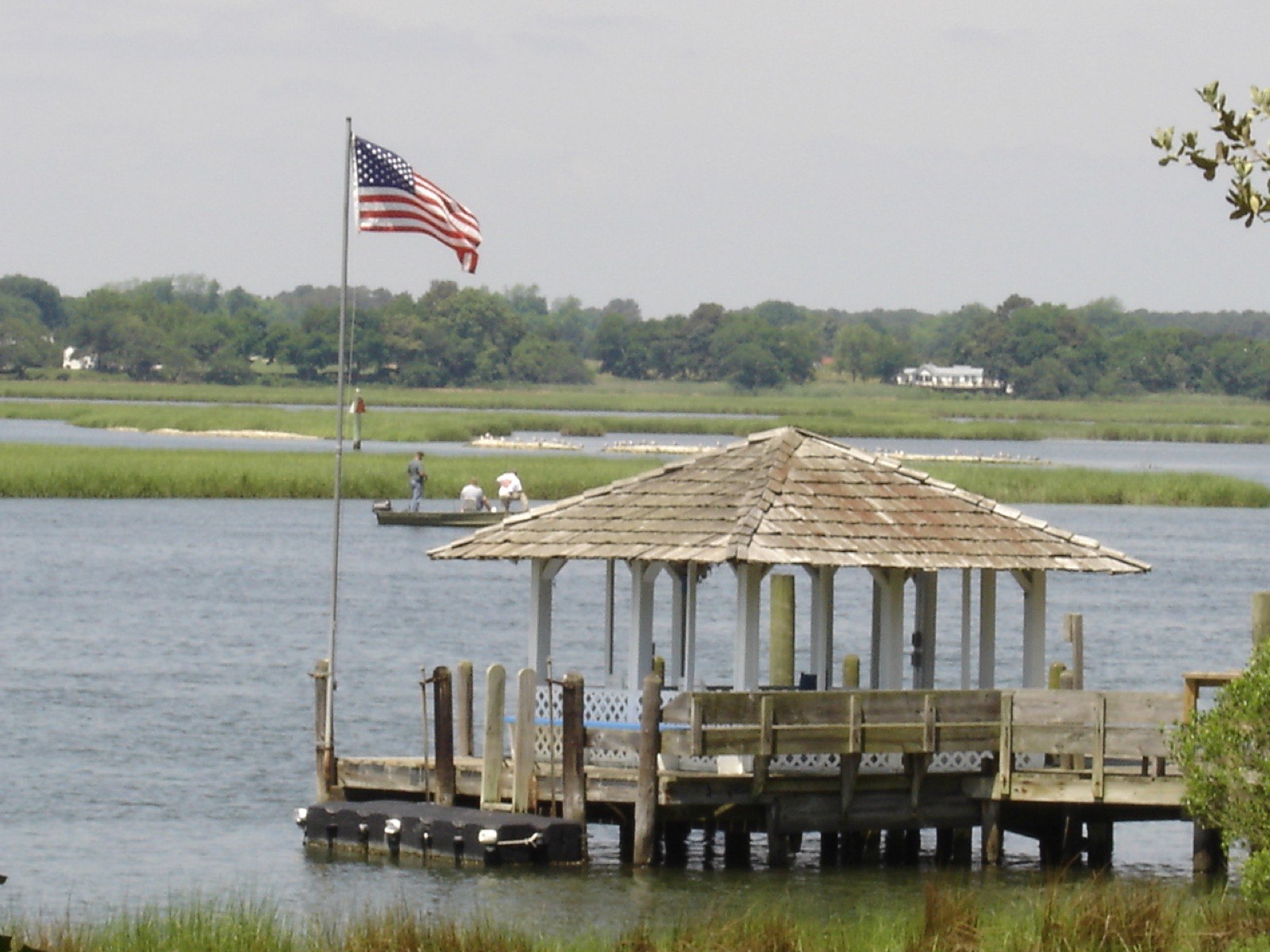
Photo BrandlandUSA, Public domain (representative)
ShorelineKayak launchSpecies matchLynnhaven Inlet — Boat Ramp & Beach Facility
The historic Lynnhaven Fishing Pier closed in 2017 and was sold — today's public access is the city's Lynnhaven Boat Ramp & Beach Facility, plus some bank fishing along the beach and riprap.
3 speciesAccessible features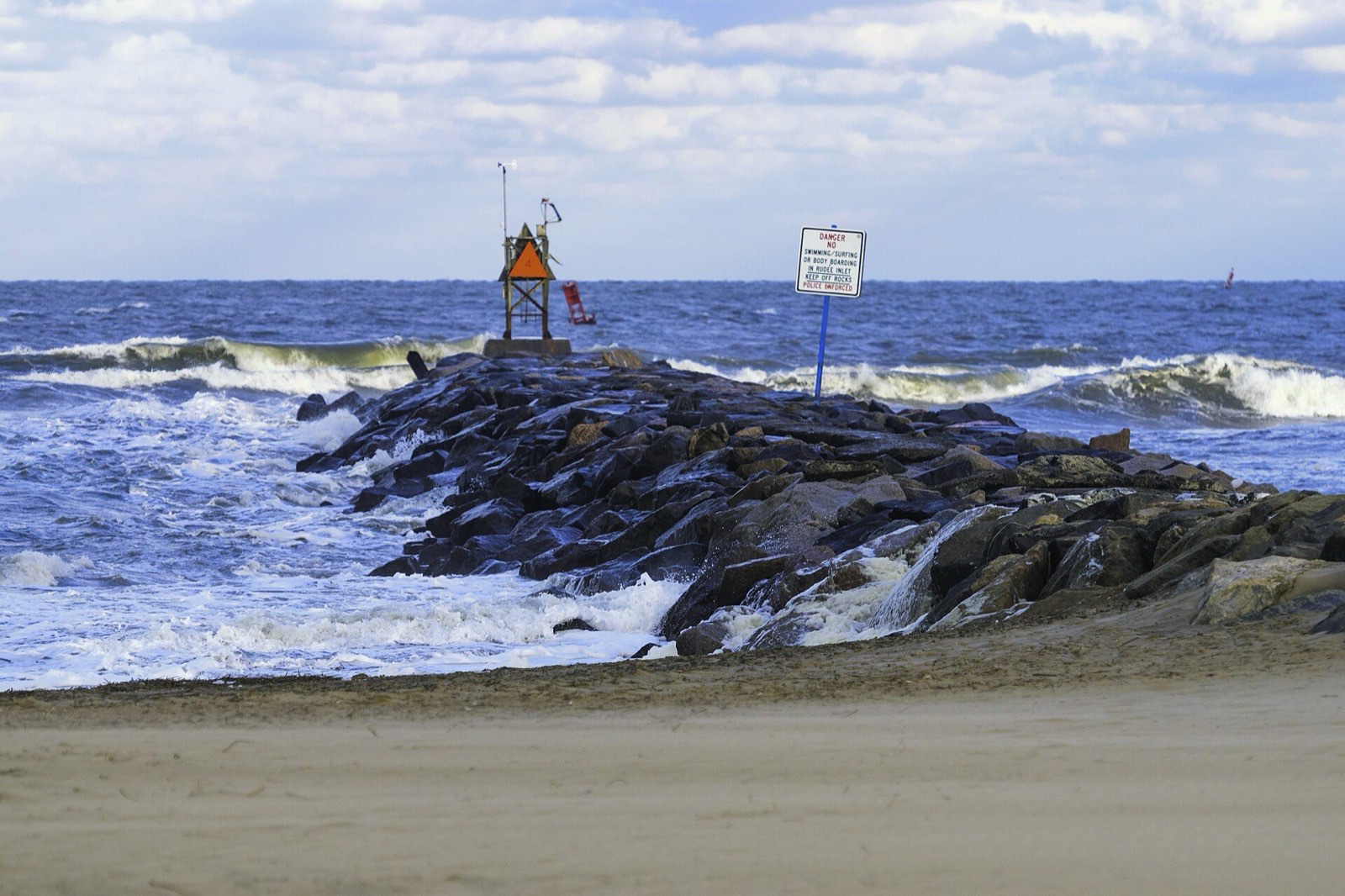
Photo PumpkinSky, CC BY-SA 3.0
ShorelineBeachSpecies matchRudee Inlet jetty & shoreline
Hard structure meeting ocean current — a technical spot that rewards anglers who read moving water.
6 speciesRestrooms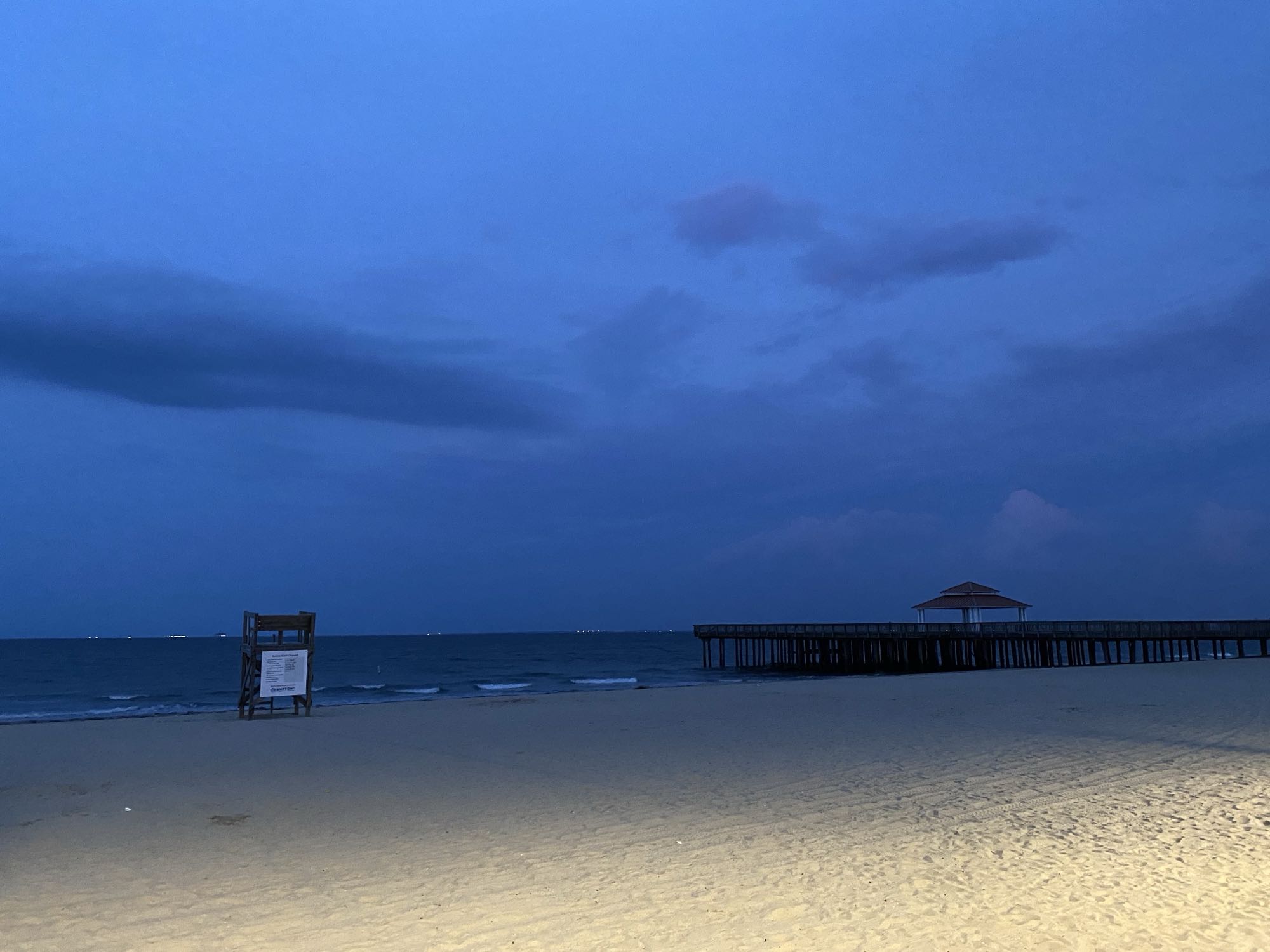
Photo Fuzheado, CC BY-SA 3.0
Fishing pierBeachSpecies matchBuckroe Beach & pier area
Bay-front pier and beach park — the most family-friendly introduction to Chesapeake fishing in Hampton.
6 speciesFamily-friendlyAccessible featuresRestrooms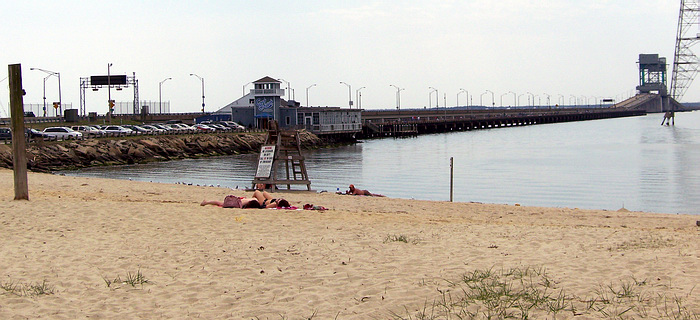
Photo Mytwocents, CC BY-SA 3.0
Fishing pierShorelineSpecies matchJames River pier & shoreline
Long tidal-river pier reaching out over deep water, mixing saltwater panfish with tidal-river species.
5 speciesFamily-friendlyAccessible featuresRestrooms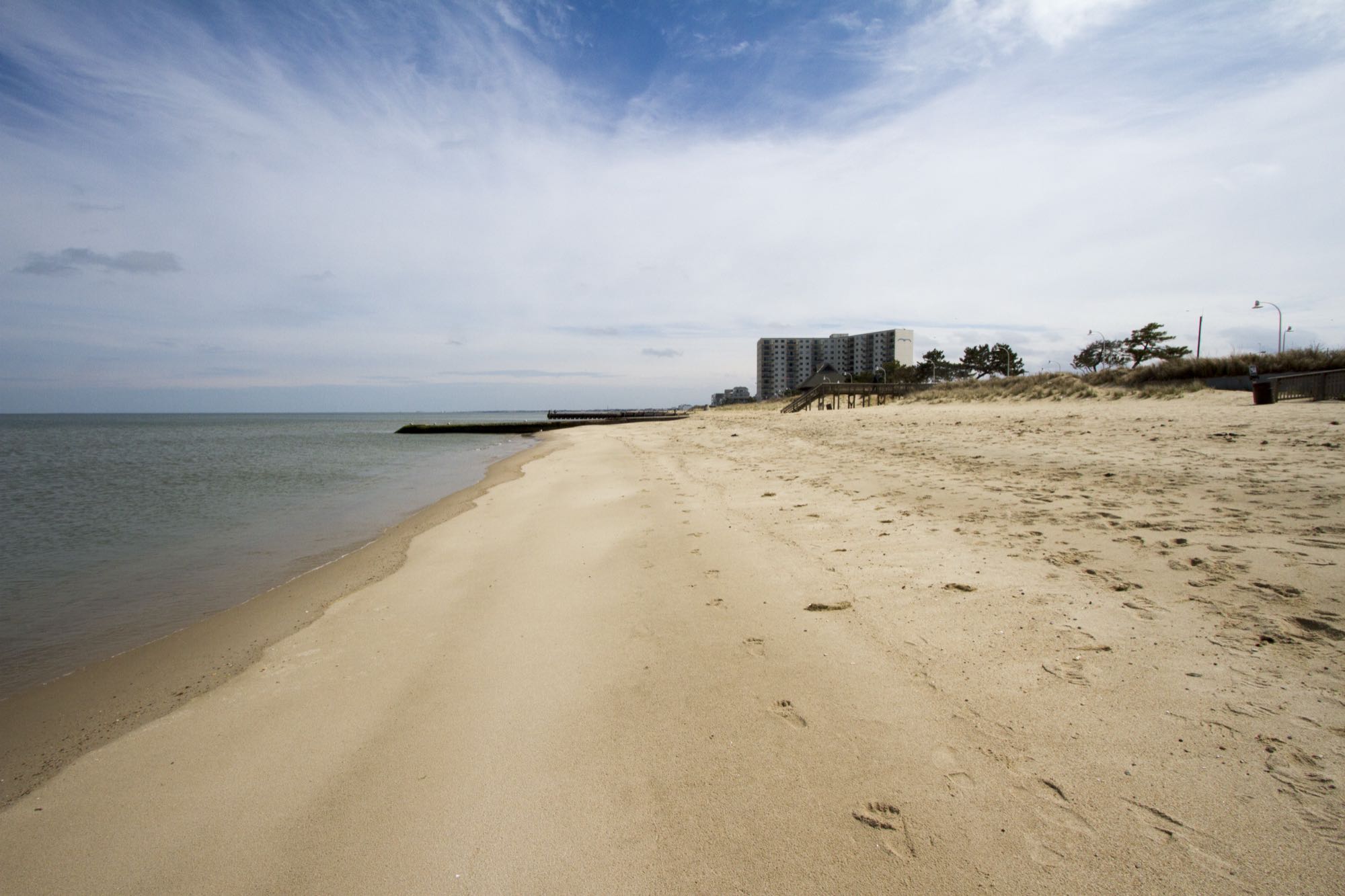
Photo Patrick Bloodgood / U.S. Army Corps of Engineers, Norfolk District, Public domain
ShorelineBeachSpecies matchWilloughby Spit shoreline
Narrow Bay-front spit near major structure — walkable shoreline with surprising depth close to the beach.
4 speciesFamily-friendly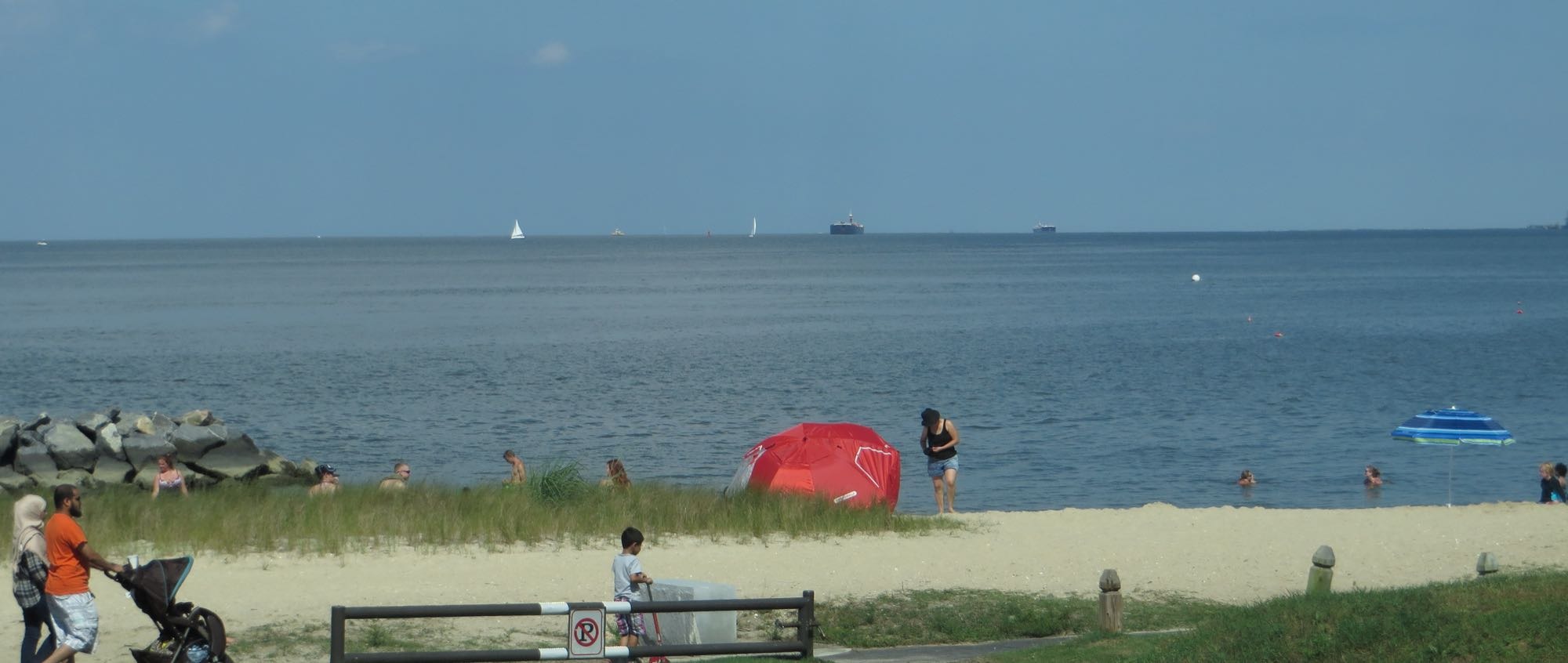
Photo Ken Lund, CC BY-SA 2.0
Fishing pierShorelineSpecies matchYorktown Beach & Fishing Pier
A free, ADA-accessible pier on the York River in Historic Yorktown — no fishing license needed from the pier itself, open nearly around the clock.
4 speciesFamily-friendlyAccessible features


