Southern Flounder
Paralichthys lethostigma
Partially verified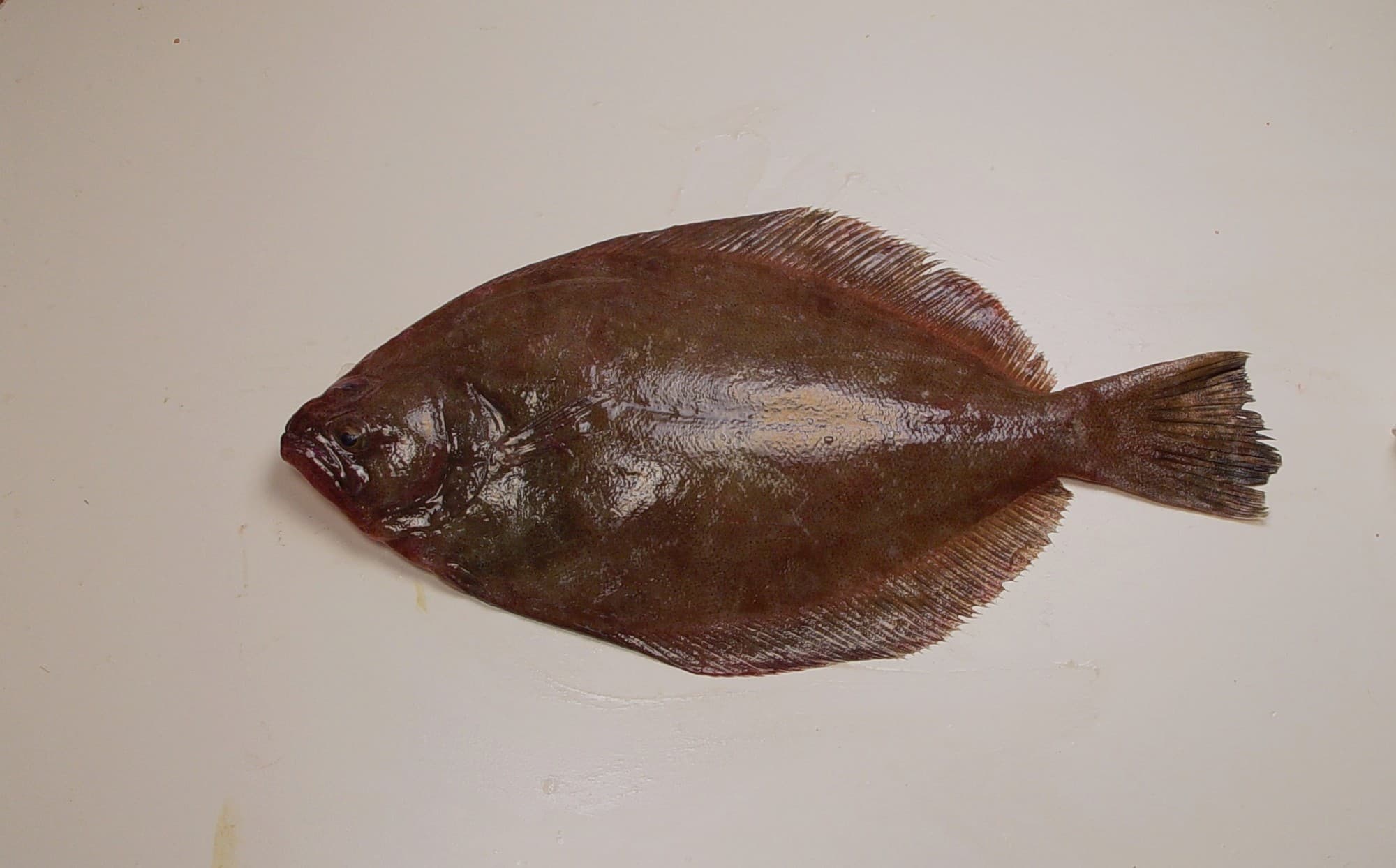
Handling & regulations: Documented as an occasional visitor to the lower Chesapeake Bay, Virginia — its core U.S. range runs Virginia to Texas, with North Carolina and points south the more consistent fishery. This project has not found a Virginia-specific southern flounder regulation distinct from summer flounder's own current size/possession rules — check VMRC's current saltwater regulations directly before harvesting, and do not assume the two species share identical limits without confirming.
Commonly confused with: Flounder. If you're not sure which one you've caught, treat it as the more restricted species and release it until you can confirm.
Identification
Lacks the summer flounder's bold, eye-like (ocellated) spots — southern flounder shows only indistinct, diffuse spotting on a brownish upper body, Fewer gill rakers on the lowermost gill arch (9-10) than summer flounder (15 or more) — a count only relevant if examining a specimen closely, not a glance-level field mark, Both eyes on the left side of the head, same as summer flounder — this alone does not distinguish the two species
Where this fish fits
Southern Flounder is found across more than one water environment — this reflects real movement between them (e.g. a tidal migration or life-stage change), not uncertainty about where to look.
These are discovery categories describing where anglers realistically fish for this species, not a guarantee this project has confirmed regional access at every listed setting — see the linked locations below for this project's own actually-sourced spots.
- Typical season
- Warmer months, in brackish tidal rivers and creeks — a genuinely distinct species from the far more commonly encountered summer flounder, documented as an occasional visitor to the lower Chesapeake Bay rather than a routine catch.
- Habitats
- Brackish tidal rivers and creeks, Marsh edges, More tolerant of low salinity than summer flounder, so found further upriver
- Food use
- Commonly eaten
Data not yet verified.
This site hasn't checked for a fish-consumption advisory covering this species yet. That is not the same as confirmed safe — check current official guidance before eating your catch.
Seasons, size limits, and possession limits change and vary by water body. Always check the current regulations at the current regulations page before you fish.
- Bait & lures
- Live mud minnows or finger mullet on a Carolina rig, Bucktail tipped with Gulp! or a minnow
- Beginner difficulty
- Easy for beginners
Part of this record is confirmed against an official source; other parts are not. See the notes below for exactly which.
The lack of ocellated spots and the gill-raker-count distinction from summer flounder are directly confirmed against the USGS species profile and corroborated by NC Fishes' own Paralichthys lethostigma page. The 'occasional visitor to the lower Chesapeake Bay' occurrence claim is directly confirmed via the same USGS profile, not inferred from a bare Virginia-to-Texas range map. No Virginia-specific regulation distinct from summer flounder was found — stated honestly as an open question rather than assumed identical. Habitat/bait notes remain general regional angling knowledge, not individually fact-checked.