Mallard
Anas platyrhynchos
Drawn from a named source but not independently confirmed. Double-check before relying on it.
Identification/behavior facts drawn from Cornell's All About Birds and Ducks Unlimited's waterfowl-ID guide via live search synthesis, not a single direct full-page fetch of either — corroborated across both independent sources rather than a single source. Legal-status/bag-limit facts are separately sourced directly to this project's own HuntingSeason records (verified via direct DWR fetch); see that record rather than this one for the legal facts.
Legal status: A legal migratory game bird in Virginia during the open duck season, subject to the season's own mallard sub-limit (no more than 2 hen mallards within the daily mallard limit) — see the current Duck Season record. Identifying a mallard does not by itself confirm the season is open, that shooting hours apply, or that the specific bird in hand meets the hen/drake sub-limit; verify current regulations before hunting.
The most familiar duck in North America and the most commonly encountered dabbler in Hampton Roads marshes and impoundments in winter.
Field marks
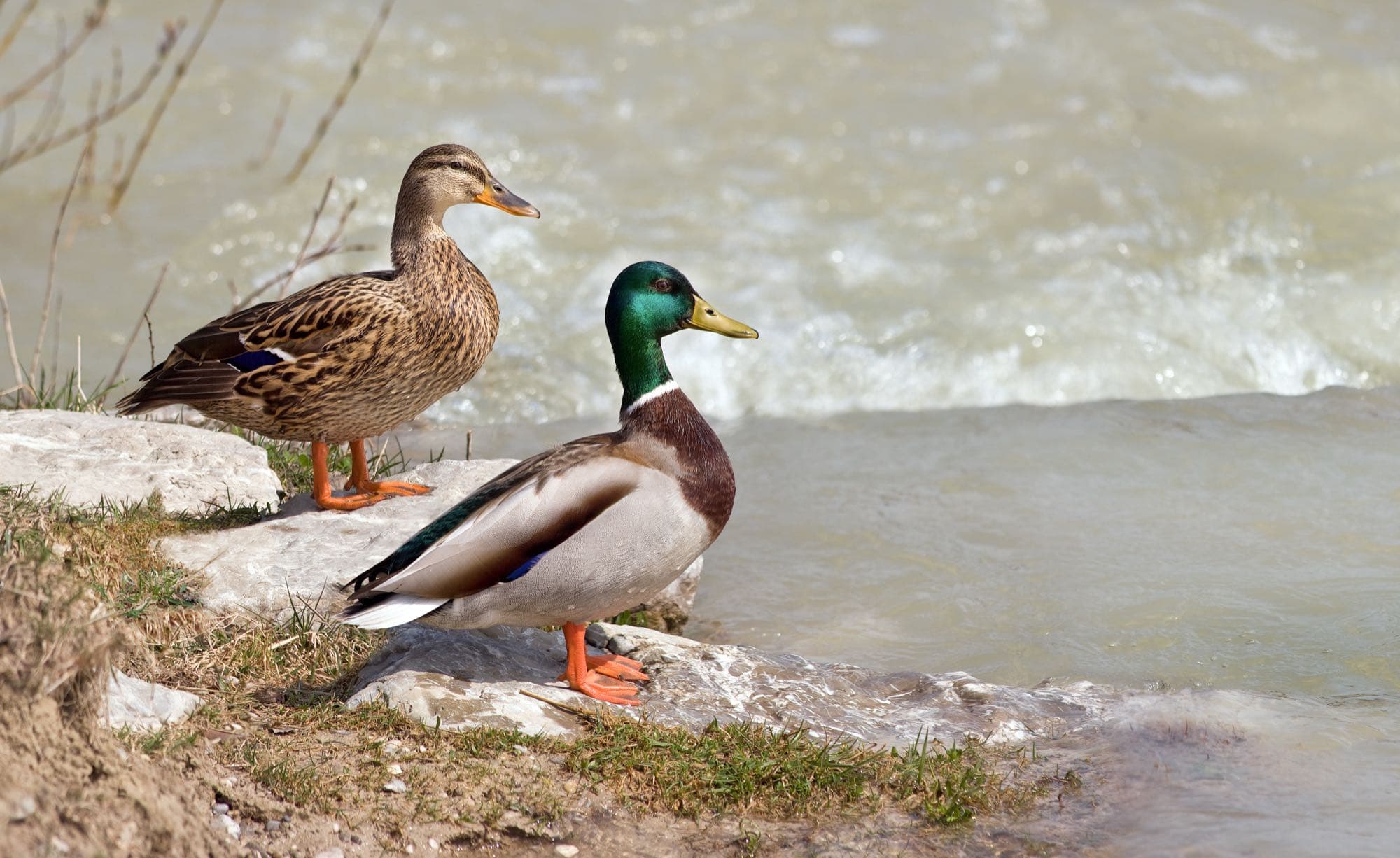
- Both sexes show a bright blue speculum (wing patch) bordered by white bars on both edges — the single most reliable mallard field mark.
- Orange legs and feet.
- Fairly large, heavy-bodied dabbling duck with a flat forehead and long, sloped bill.
Male, female, and seasonal plumage
- Male
- Iridescent green head (can look black in poor light), narrow white neck ring, chestnut-brown breast, gray body, black rear with curled tail feathers ('drake curl'), yellow-to-olive bill.
- Female
- Mottled brown overall with a dark eye stripe, orange bill marked with black blotches — no bright colors.
- Eclipse plumage
- In late summer, drakes molt into a duller plumage resembling the female. The bill is the best clue: a 'female-looking' bird with a yellow (not orange-and-black) bill is a male in eclipse.
- Habitat
- Marshes, ponds, flooded fields, impoundments, and slow rivers — highly adaptable to both wild and semi-urban wetlands.
- Feeding behavior
- Dabbles and tips up in shallow water for aquatic vegetation, seeds, and invertebrates; also readily feeds in flooded agricultural fields.
- Flight profile
- Direct, strong flight; often in small, loose flocks rather than tight formations.
- Flock behavior
- Highly social outside the breeding season; readily mixes with other dabbling ducks at impoundments and flooded fields.
- Vocalizations
- The classic loud, descending 'quack' is the hen's call; drakes give a quieter, raspy call.
Migration & seasonal context
One of the most widespread and abundant ducks on the Atlantic Flyway; Hampton Roads sees large wintering concentrations of mallards from northern breeding grounds alongside a smaller local/park-associated resident presence.
Conservation context
Population large and stable continent-wide, though genetic introgression from feral/domestic mallards and hybridization pressure on the closely related, declining American black duck is an active conservation concern in the Atlantic Flyway.
Similar species — check before you shoot
Identification alone never establishes that a bird may legally be taken. Confirm species (and sex, where a sub-limit depends on it) before shooting.
Ethical shot selection: Confirm species and sex before taking the shot — the hen-mallard sub-limit specifically requires distinguishing a hen mallard from a female look-alike (including a female black duck) in flight, which is genuinely difficult; when in doubt, let the bird pass.
This page is educational and does not certify that any specific bird may be legally taken at any specific time or place. Always confirm the current season, bag limit, and permit requirements at Licensing & Regulations →