American Black Duck
Anas rubripes
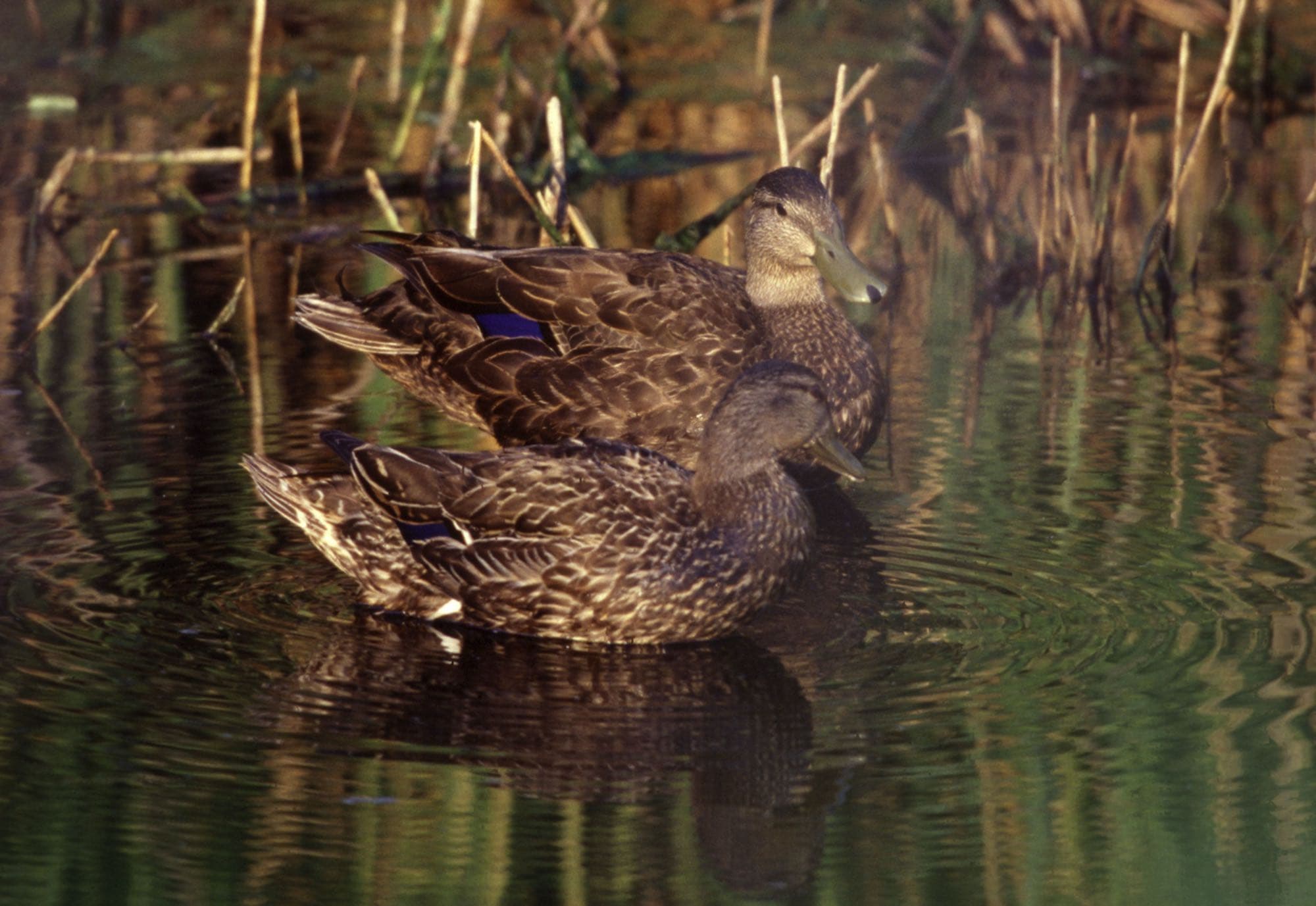
Drawn from a named source but not independently confirmed. Double-check before relying on it.
Identification/population facts drawn from Cornell's All About Birds, NRCS's American Black Duck species page, and the Chesapeake Bay wintering-population figures via live search synthesis across multiple independent authoritative sources, not a single direct full-page fetch. Legal bag-limit facts are separately, directly sourced to this project's own Duck Season HuntingSeason record.
Legal status: A legal migratory game bird in Virginia during the open duck season, subject to its own daily/possession sub-limit (2 per day in the current season — see the Duck Season record), which is meaningfully lower than the mallard sub-limit given this species' population decline. Confirming the current season and this species' own sub-limit before hunting is essential, not optional, for exactly this species.
A large, dark dabbling duck of Atlantic coastal marshes — an iconic East Coast species now of real conservation concern, and a common close look-alike for a hen mallard.
Field marks
- Very dark brown/blackish body overall (much darker than a hen mallard) with a paler, grayish-brown head and face.
- Violet-purple speculum, generally without mallard's bold white borders.
- Red-to-orange legs (mallard hens have orange-yellow legs — a subtle but real distinction).
- Bright white underwing linings flash conspicuously in flight, contrasting with the dark body — a strong flight-identification mark from below.
Male, female, and seasonal plumage
- Male
- Olive-yellow bill; overall slightly darker than the female.
- Female
- Duller, more mottled bill (olive with dark markings); otherwise similar dark plumage to the male.
- Habitat
- Coastal salt marshes, tidal estuaries, and brackish impoundments — the Atlantic coast from Maine to Virginia (including Hampton Roads) holds the species' largest concentrations from October through March.
- Feeding behavior
- Dabbles for aquatic vegetation, invertebrates, and mollusks in shallow tidal marsh and estuary habitat; more tied to saline/brackish water than mallards.
- Flight profile
- Fast, direct flight; the white underwing flash against the dark body is often the quickest field mark at distance or in poor light.
- Flock behavior
- Often found in smaller, wary groups than mallards; readily mixes with mallards in winter, which is exactly where hybridization and misidentification both occur.
Migration & seasonal context
A short-to-medium-distance Atlantic Flyway migrant breeding in eastern Canada and the northeastern U.S., wintering in concentration along the mid-Atlantic coast, including the Chesapeake Bay.
Conservation context
Population has declined roughly 87% in the U.S. between 1966 and 2019 (Canadian population comparatively stable over the same period); the Chesapeake Bay wintering population specifically fell from over 200,000 to fewer than 52,000 birds. Habitat loss/degradation of Atlantic coastal and eastern Canadian breeding wetlands, plus genetic swamping from range-expanding mallards, are the primary cited pressures — a real reason to identify this species carefully before taking a duck in the mallard-hen-sized/dark-duck category.
Similar species — check before you shoot
Identification alone never establishes that a bird may legally be taken. Confirm species (and sex, where a sub-limit depends on it) before shooting.
Ethical shot selection: Given the documented population decline, take extra care distinguishing this species from a hen mallard before shooting — the underwing-flash and leg-color marks are the most reliable field cues, best confirmed before the shot, not after.
This page is educational and does not certify that any specific bird may be legally taken at any specific time or place. Always confirm the current season, bag limit, and permit requirements at Licensing & Regulations →