Gadwall
Mareca strepera
Drawn from a named source but not independently confirmed. Double-check before relying on it.
Identification/behavior/Virginia-status facts drawn from Cornell's All About Birds, Ducks Unlimited, and Animal Diversity Web via live search synthesis across multiple independent sources.
Legal status: A legal migratory game bird in Virginia during the open duck season, under the general duck bag limit — this project's own seeded Duck Season record does not list a gadwall-specific sub-limit distinct from the general count; verify directly with DWR before hunting.
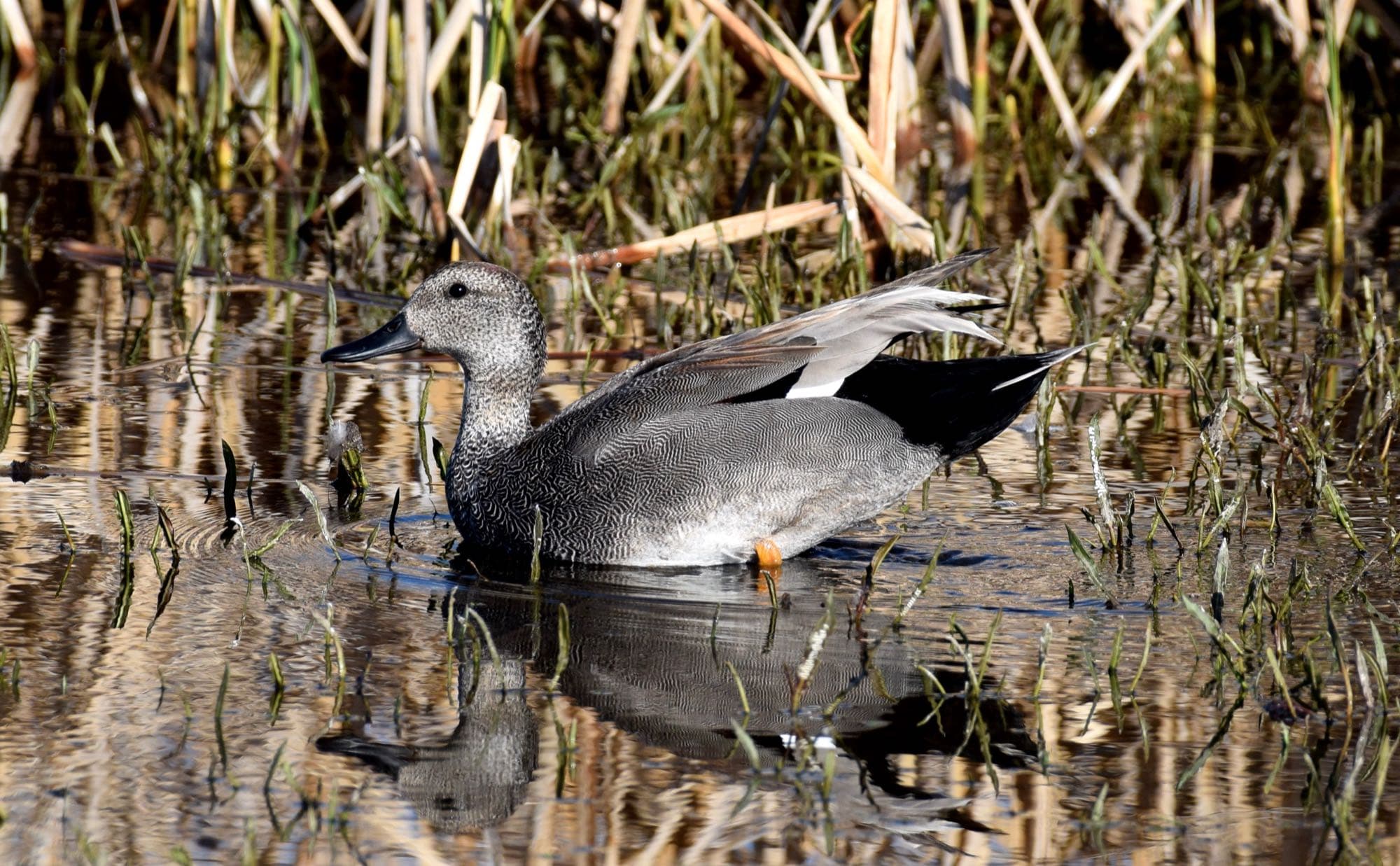
A common, understated winter dabbling duck in Virginia — easy to overlook next to a mallard until the white wing patch and the fine gray-brown patterning are noticed.
Field marks
- A fairly large, square-headed dabbler with a steep forehead and a noticeably thinner bill than a mallard's.
- Both sexes show a small white speculum (wing patch), sometimes visible even while resting or swimming, not just in flight.
- Overall gray-brown coloring without the bold head/breast contrast of a mallard.
Male, female, and seasonal plumage
- Male
- Gray-brown overall with a black patch at the tail/undertail.
- Female
- Patterned brown and buff with a thin orange edge to an otherwise dark bill.
- Habitat
- Small ponds and wetlands with abundant submerged aquatic vegetation, often feeding in slightly deeper water than other dabblers; uses both fresh and brackish habitat.
- Feeding behavior
- Tips forward for submerged vegetation rather than diving; gregarious, frequently associating with American wigeon, sometimes stealing food wigeon bring to the surface.
Migration & seasonal context
A common winter resident and transient in Virginia, arriving in fall and departing by spring, with some localized breeding recorded.
Similar species — check before you shoot
Identification alone never establishes that a bird may legally be taken. Confirm species (and sex, where a sub-limit depends on it) before shooting.
This page is educational and does not certify that any specific bird may be legally taken at any specific time or place. Always confirm the current season, bag limit, and permit requirements at Licensing & Regulations →