American Wigeon
Mareca americana
Drawn from a named source but not independently confirmed. Double-check before relying on it.
Identification/behavior facts drawn from the Chesapeake Bay Program's own field guide, Cornell's All About Birds, and USFWS's species profile via live search synthesis across multiple independent sources.
Legal status: A legal migratory game bird in Virginia during the open duck season, under the general duck bag limit — verify current sub-limits, if any, directly with DWR before hunting.
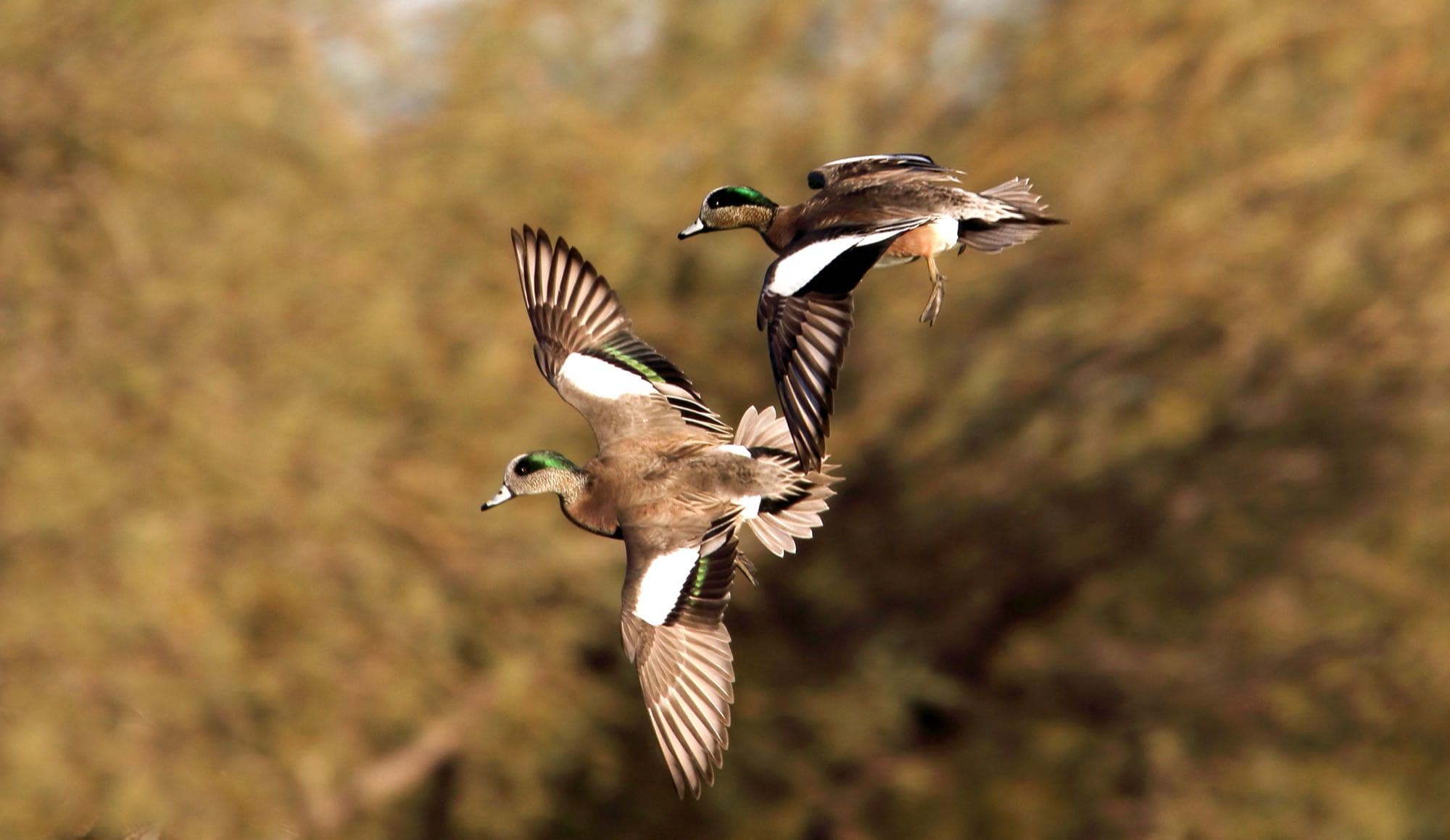
A round-headed, short-billed dabbling duck known for its early arrival and early departure on the Chesapeake Bay — often first spotted mixed in with mallards, black ducks, and teal.
Field marks
- Short bill and round head silhouette, distinct from the flatter-headed mallard or the wedge-headed pintail.
- Pale blue-gray bill with a black tip, present in both sexes.
Male, female, and seasonal plumage
- Male
- Brownish-gray head with a wide green stripe behind the eye and a gleaming white/cream cap ('baldpate'); pale cinnamon body; white rump patches contrasting with a black undertail.
- Female
- Mottled brown overall with a brownish-to-grayish head, lacking the male's white cap and green stripe.
- Habitat
- Fresh and brackish wetlands with abundant submerged aquatic vegetation; also forages in upland winter-cereal or harvested grain fields alongside other dabbling ducks.
- Feeding behavior
- Grazes on submerged aquatic vegetation and upland grain; frequently associates with diving ducks and coots, sometimes taking vegetation they bring to the surface.
Migration & seasonal context
Among the earliest waterfowl to reach the Chesapeake Bay's wintering grounds in fall and the earliest to leave in spring — most pairs are already formed before spring migration begins.
Similar species — check before you shoot
Identification alone never establishes that a bird may legally be taken. Confirm species (and sex, where a sub-limit depends on it) before shooting.
This page is educational and does not certify that any specific bird may be legally taken at any specific time or place. Always confirm the current season, bag limit, and permit requirements at Licensing & Regulations →