Red-breasted Merganser
Mergus serrator
Drawn from a named source but not independently confirmed. Double-check before relying on it.
Identification/habitat facts drawn from the Sea Duck Joint Venture's own species page, Cornell's All About Birds, and Ducks Unlimited via live search synthesis. Legal-status combined-merganser-limit fact is separately, directly sourced to this project's own Merganser and Coot Season HuntingSeason record. `foodUseStatus` matches hooded merganser's own eat-with-caution reasoning.
Legal status: A legal migratory game bird in Virginia. Mergansers (hooded, red-breasted, and common, in any combination) share one combined daily bag limit — see the Merganser and Coot Season record for the current figure.
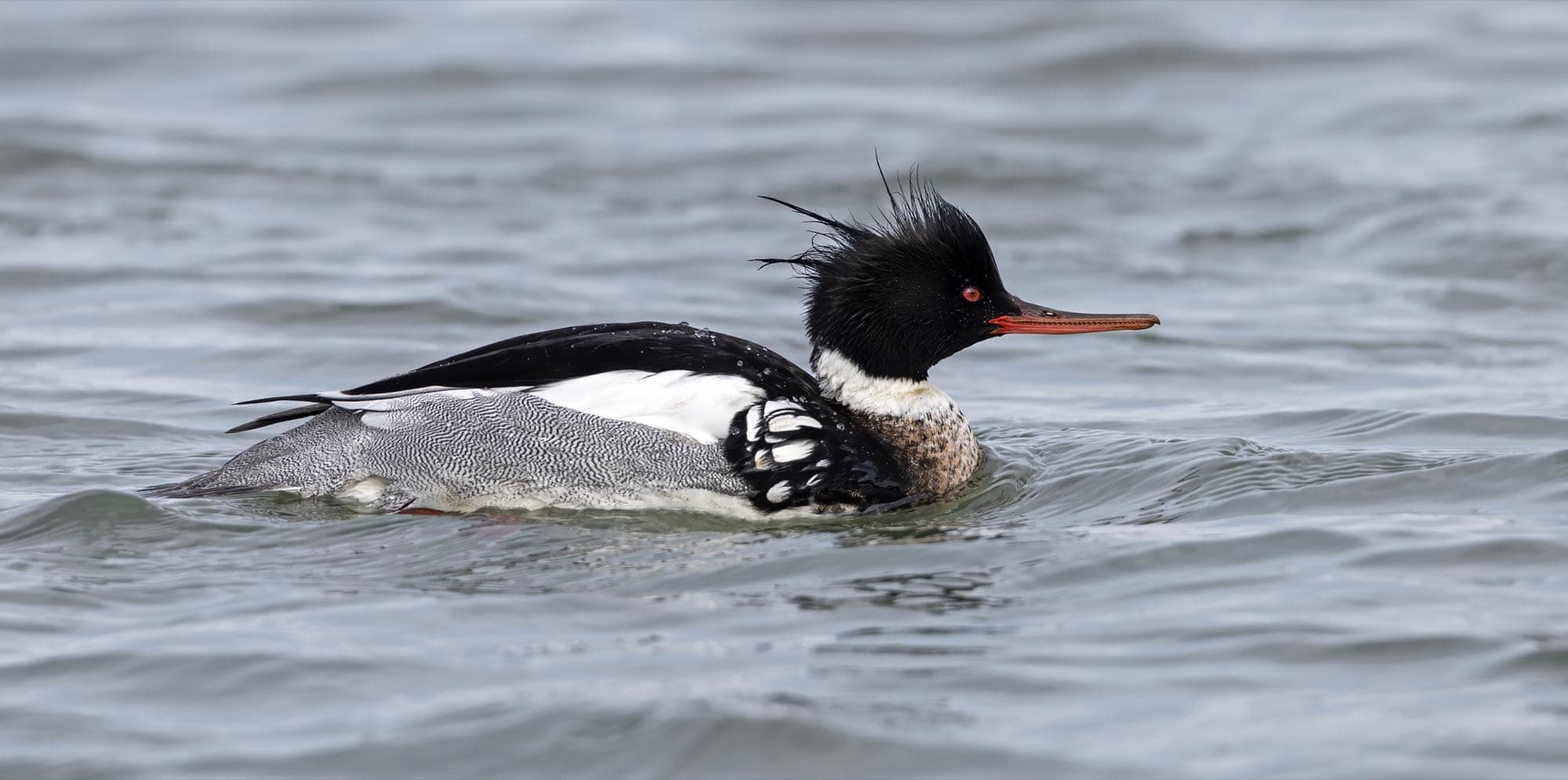
A shaggy-crested, fish-eating sea duck common along Virginia's coast in winter — closely resembles the common merganser but with a slimmer build and a shaggier double crest.
Field marks
- Long, thin, red-orange bill with a black tip and serrated ('saw-bill') edges for gripping fish.
- A shaggy, double-pointed crest on the back of the head, more pronounced than a common merganser's.
- Black wings with white patches across the inner wing, visible in flight.
Male, female, and seasonal plumage
- Male
- A shaggy, iridescent green head, a cinnamon-colored, streaked chest, a white neck band, and gray sides — distinct from a male common merganser's cleaner white sides and white breast.
- Female
- Brownish-gray overall with a brownish chin, dingy breast, and a brown shaggy head.
- Habitat
- Marine and brackish coastal waters — the Chesapeake Bay, inlets, and nearshore ocean.
- Feeding behavior
- Swims with the head partially submerged, watching for prey, then dives to catch small fish with its serrated bill.
Migration & seasonal context
A common winter visitor along Virginia's coast, arriving in fall and departing by spring.
Similar species — check before you shoot
Identification alone never establishes that a bird may legally be taken. Confirm species (and sex, where a sub-limit depends on it) before shooting.
This page is educational and does not certify that any specific bird may be legally taken at any specific time or place. Always confirm the current season, bag limit, and permit requirements at Licensing & Regulations →