Hooded Merganser
Lophodytes cucullatus
Drawn from a named source but not independently confirmed. Double-check before relying on it.
Identification/habitat facts drawn from the Audubon Field Guide and the Chesapeake Bay Program field guide via live search synthesis. Legal bag-limit facts (the combined merganser limit and the removed hooded-merganser-specific restriction) are separately, directly sourced to this project's own Merganser and Coot Season HuntingSeason record. `foodUseStatus` set to eat-with-caution reflecting general guidance that fish-eating ducks like mergansers commonly have a stronger flavor than plant/seed-eating dabblers — a culinary note, not a food-safety claim.
Legal status: A legal migratory game bird in Virginia. Mergansers (hooded, red-breasted, and common, in any combination) share one combined daily bag limit — see the Merganser and Coot Season record for the current figure. Historic hooded-merganser-specific restrictions have been removed per DWR, but the combined merganser limit still applies.
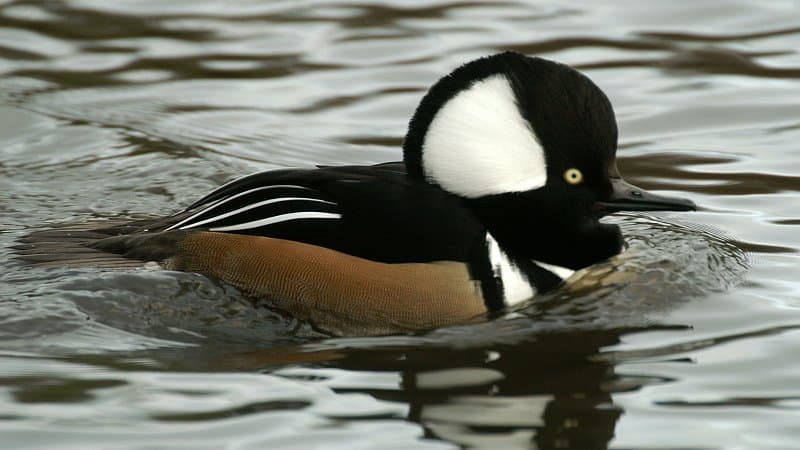
A small, fish-eating duck with a distinctive fan-shaped crest — one of only a few North American ducks specialized for eating fish, using a thin, serrated bill rather than the flat bill of a dabbler.
Field marks
- Thin, dark, saw-edged ('serrated') bill — the mergansers' defining physical trait, used to grip slippery fish prey.
- Distinctive large, fan-shaped, erectile crest on both sexes.
Male, female, and seasonal plumage
- Male
- Mostly black with rusty-brown sides, a bold white fan-shaped crest patch bordered in black, a white breast with two black bars, and small yellow eyes.
- Female
- Grayish-brown overall with a reddish-brown, windblown-looking crest.
- Habitat
- Wooded ponds, beaver ponds, and quiet backwaters — similar cavity-nesting, timbered-wetland habitat preference to the wood duck.
- Feeding behavior
- Dives to catch small fish, aquatic insects, crayfish, and crabs, using its serrated bill to grip prey.
- Flight profile
- Fast, direct flight low over the water, often in small groups.
Migration & seasonal context
Present in Virginia largely as a winter visitor from northern breeding areas, using the same wooded-wetland habitat type the resident wood duck population also uses.
Similar species — check before you shoot
Identification alone never establishes that a bird may legally be taken. Confirm species (and sex, where a sub-limit depends on it) before shooting.
This page is educational and does not certify that any specific bird may be legally taken at any specific time or place. Always confirm the current season, bag limit, and permit requirements at Licensing & Regulations →