Lightning Whelk
Sinistrofulgur sinistrum
Drawn from a named source but not independently confirmed. Double-check before relying on it.
Range/rarity-at-northern-edge framing corroborated across multiple independent sources found via WebSearch (Mote Marine, UT Marine Science Institute, general whelk-identification guides).
Legal status: This guide found no Virginia-specific regulation for this species distinct from the general whelk-fishery framework, and given how uncommon it reportedly is this far north, a realistic Hampton Roads recreational encounter is more a genuine identification curiosity than a planned harvest target. If you find one, treat it as you would any other whelk regulation-wise, and verify directly.
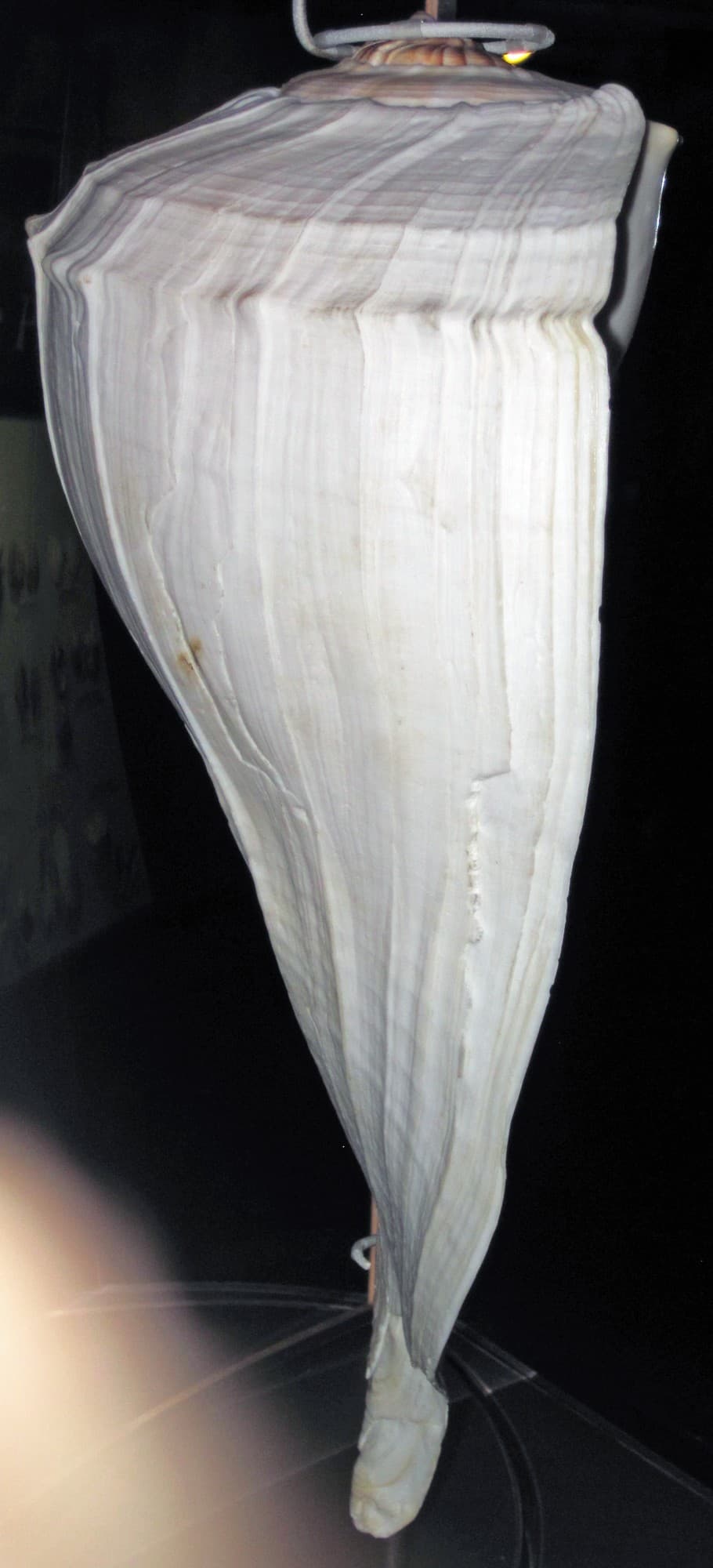
The one whelk in this guide with a left-opening ("sinistral") shell — hold any whelk point-up with the opening facing you: if the opening is on the left, it's a lightning whelk; knobbed and channeled whelk both open on the right.
Identification
- Left-opening (sinistral) shell aperture — the single clearest, most reliable field mark distinguishing it from every other whelk in this guide.
- Long, often faintly striped shell.
- Regional occurrence
- Within its documented range (New Jersey to Florida and the Gulf), but sources consistently describe it as uncommon north of South Carolina — Virginia is near the northern, sparser edge of where this species is realistically encountered, not a location with a robust lightning whelk population.
- Habitat
- Shallow bays, burrowing into the bottom to hunt clams and oysters.
- Food use
- Eat With Caution
Similar species — check before you keep one
Identification alone never establishes that an animal may legally be kept. Confirm species before harvesting.
Consumption advisory
Data not yet verified.
This site hasn't checked for a fish-consumption advisory covering this species yet. That is not the same as confirmed safe — check current official guidance before eating your catch.
This page is educational and does not certify that any specific animal may be legally harvested at any specific time or place. Confirm current regulations, health-closure status, and access rights before harvesting.