Knobbed Whelk
Busycon carica
Drawn from a named source but not independently confirmed. Double-check before relying on it.
Identification/habitat/regulatory-comparison drawn from multiple independent sources found via WebSearch, cross-checked against Virginia-specific whelk-fishery discussion.
Legal status: This guide found no specific Virginia size or possession regulation for knobbed whelk (unlike channeled whelk, which has a confirmed 5.5-inch minimum size rule) — verify current rules directly with VMRC before harvesting, since the absence of a rule found during this research pass is not the same as a confirmed absence of regulation.
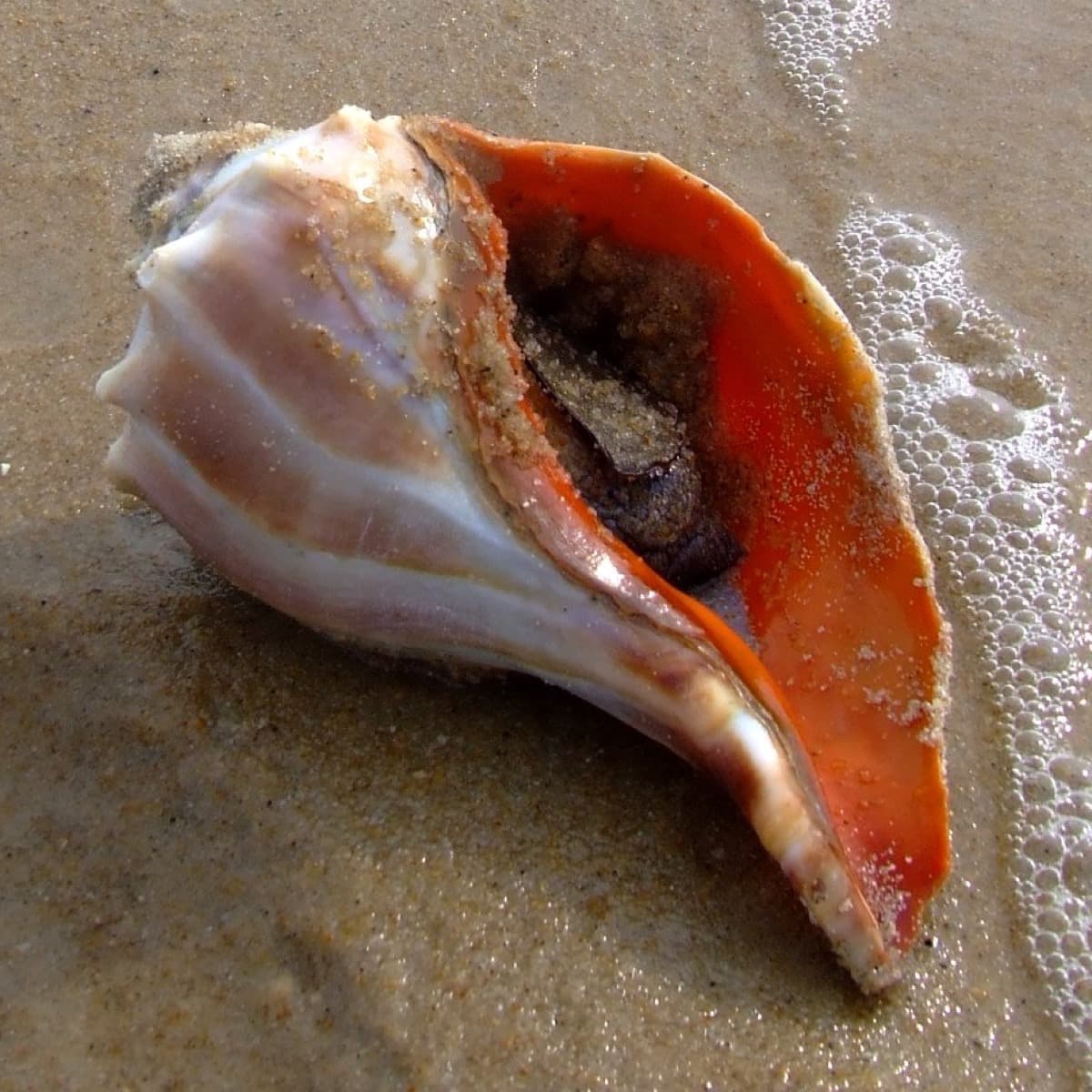
A large (up to 9-inch), spiral-shelled marine snail (often called "conch" locally, though not a true conch) with prominent rounded knobs along the shoulder of each whorl — the clearest way to tell it apart from channeled whelk.
Identification
- Prominent, heavy, rounded knobs circling the shoulder of the shell's spiral.
- Shell opening (aperture) on the right side when held point-up, opening toward you.
- Typically found inshore in estuarine habitat, versus channeled whelk's more near-/offshore habitat.
- Regional occurrence
- Common in Hampton Roads' inshore estuarine habitats — the more frequently inshore-encountered of Virginia's two main whelk species.
- Habitat
- Sandy/muddy estuarine bottom; feeds on clams and oysters.
- Food use
- Commonly Eaten
Ecological role
A predator of clams and oysters — uses the edge of its own shell to chip and pry open bivalve prey.
Similar species — check before you keep one
Identification alone never establishes that an animal may legally be kept. Confirm species before harvesting.
Consumption advisory
Data not yet verified.
This site hasn't checked for a fish-consumption advisory covering this species yet. That is not the same as confirmed safe — check current official guidance before eating your catch.
This page is educational and does not certify that any specific animal may be legally harvested at any specific time or place. Confirm current regulations, health-closure status, and access rights before harvesting.