Channeled Whelk
Busycotypus canaliculatus
Confirmed against an official or primary source as of the date shown.
The 5.5-inch/10-whelk-per-basket rule was directly confirmed via WebSearch synthesis of the actual Administrative Code section text (4VAC20-890-30), not a full direct WebFetch of the page during this pass — the rule's specific 'per inspected basket' framing suggests it may be primarily commercial-inspection-oriented; verify how it applies to a purely recreational trip directly with VMRC.
Legal status: A confirmed Virginia size rule applies: it is unlawful to possess more than 10 channeled whelk under 5.5 inches in length in any inspected basket, with undersized whelk beyond that allowance required to be returned to the water alive. Verify the current rule directly with VMRC, since this appears to function as an escapement-tolerance rule rather than a flat minimum-size cutoff, and this guide did not find every possession-limit nuance.
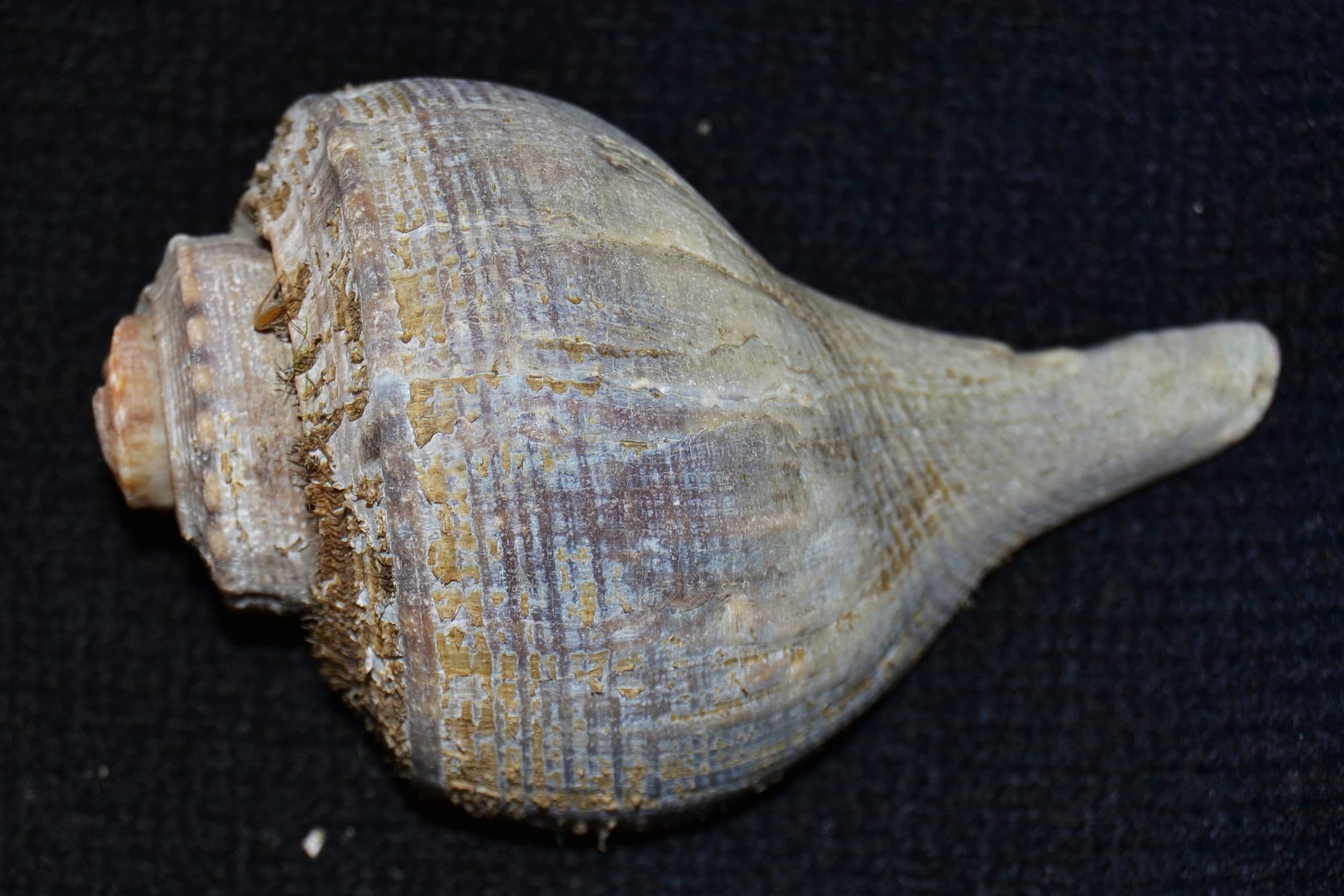
A pear-shaped, spiral shell with deep, distinct channels between each whorl (rather than knobbed whelk's rounded knobs) and a lighter, more delicate-looking shell overall.
Identification
- Deep, broad channels/grooves between whorls, versus knobbed whelk's rounded knobs.
- Smoother, pear-shaped overall profile.
- More associated with near-/offshore habitat than knobbed whelk.
- Regional occurrence
- Present in Virginia's near- and offshore marine habitats, with some overlap into shallow inshore waters alongside knobbed whelk.
- Habitat
- Sandy bottom in near- and offshore marine waters.
- Food use
- Commonly Eaten
Similar species — check before you keep one
Identification alone never establishes that an animal may legally be kept. Confirm species before harvesting.
Consumption advisory
Data not yet verified.
This site hasn't checked for a fish-consumption advisory covering this species yet. That is not the same as confirmed safe — check current official guidance before eating your catch.
This page is educational and does not certify that any specific animal may be legally harvested at any specific time or place. Confirm current regulations, health-closure status, and access rights before harvesting.