Blue Crab
Callinectes sapidus
Confirmed against an official or primary source as of the date shown.
Directly confirmed via a live WebFetch of VMRC's own recreational crabbing rules page — see blue-crab.ts and seasons.ts for the full, category-by-category regulation detail.
Legal status: A legal recreational species statewide in Virginia's tidal waters, subject to real, actively enforced size, season, sponge-crab-retention, sanctuary-area, and gear-marking rules — this guide's own dedicated Blue Crab Guide (Phase 35C) covers every one of these in depth. Never assume a method or limit is legal everywhere in Virginia merely because it's legal somewhere in the state.
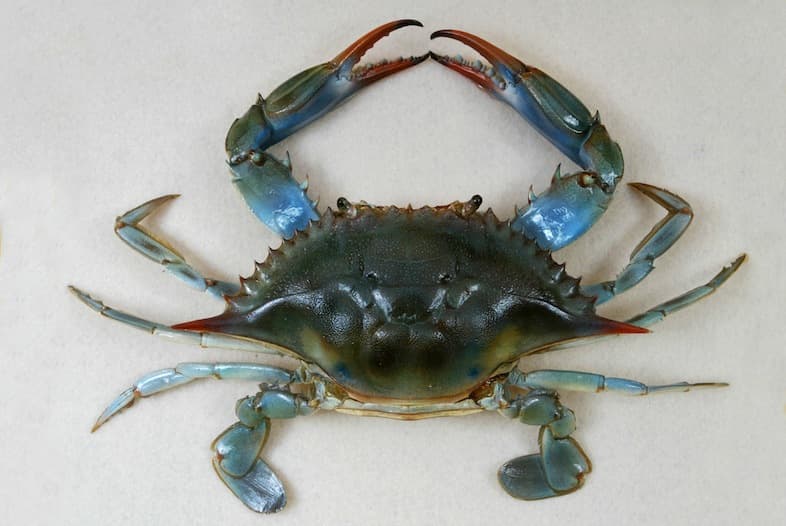
A swimming crab with a wide, olive-to-bluish carapace tipped with blue on the claws (more vividly so on males), and a distinctive pair of paddle-shaped rear legs used for swimming.
Identification
- Broad, spiny-edged carapace, typically 5-9 inches point to point in adults.
- Bright blue claws, especially prominent on males; females' claw tips are often red/orange.
- The abdominal "apron" on the underside is the fastest way to tell sex and maturity apart — see this guide's own dedicated Blue Crab Guide for the full, illustrated breakdown (Phase 35C).
- Regional occurrence
- The single most iconic and abundant harvestable species in the Chesapeake Bay and all of Hampton Roads' tidal creeks, rivers, and inlets — present virtually everywhere brackish-to-salt tidal water exists in the region.
- Habitat
- Tidal creeks, marshes, seagrass beds, river channels, and open Bay bottom, from very shallow water to well offshore depending on season and life stage.
- Food use
- Commonly Eaten
Ecological role
A keystone predator/scavenger and a major prey species for striped bass, red drum, and many wading birds — its population is also a widely tracked Bay-health indicator.
Consumption advisory
Advisory exists — review official guidance.
York River — King Creek (King Creek) — PCBs and mercury: Do not eat the hepatopancreas ("mustard"/tomalley) of blue crabs from King Creek. Crab meat itself is fine to eat.
This species has its own dedicated, in-depth regulation coverage on this guide — see Regulations →
This page is educational and does not certify that any specific animal may be legally harvested at any specific time or place. Confirm current regulations, health-closure status, and access rights before harvesting.