Loggerhead Sea Turtle
Caretta caretta
Part of this record is confirmed against an official source; other parts are not. See the notes below for exactly which.
Endangered Species Act status and the Virginia Aquarium stranding-hotline contact/procedure are directly confirmed against Virginia DWR's own Sea Turtles in Virginia page. Identification features (head size/color, carapace shape/color, two-claws-per-flipper) are directly confirmed against NOAA Fisheries' own Loggerhead Turtle species page and corroborated by the National Aquarium's own loggerhead-vs-green comparison page.
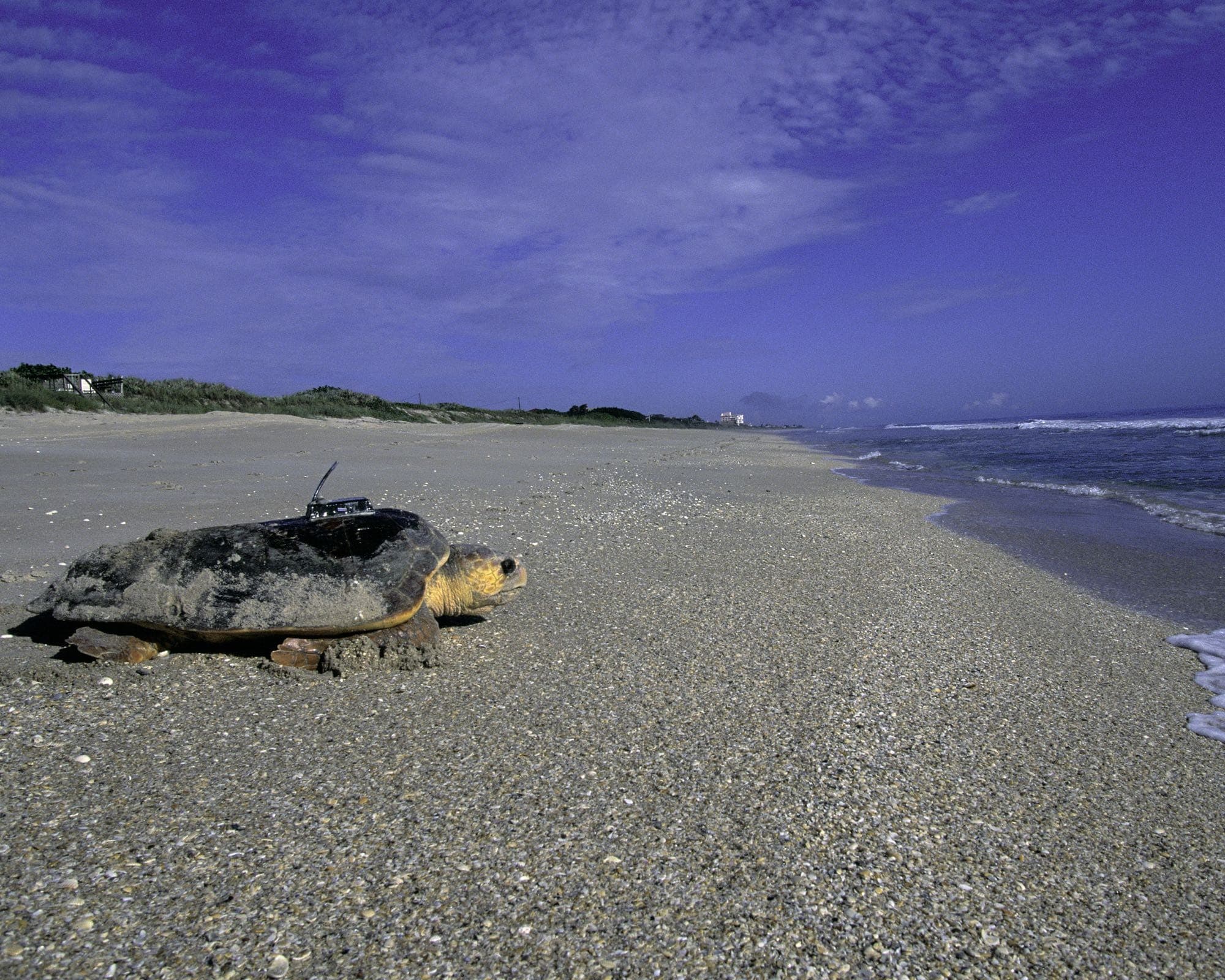
The most regularly-occurring sea turtle in Virginia waters — named for its notably large head, which houses the powerful jaw muscles it uses to crush hard-shelled prey like whelks and conch.
Identification
- Large head relative to body size (the source of the common name), reddish-brown on top and pale yellow on the sides/underside.
- Heart-shaped, reddish-brown carapace (top shell) in adults/sub-adults, with five pairs of costal (side) scutes.
- A pair of claws on each flipper — the direct contrast against green sea turtle's single claw per flipper.
- Large-bodied: adults average roughly 36" carapace length and 250 lbs in the southeastern US.
How you might encounter this species
The sea turtle Hampton Roads anglers/boaters are most likely to actually encounter — as an incidental fishing-line entanglement, a vessel-strike risk, or a seasonal sighting while boating in the lower Bay. Never a legal target.
- Where you might see it
- Lower Chesapeake Bay, Nearshore ocean waters
What not to do
Do not attempt to remove fishing line, a hook, or other entangling gear yourself beyond cutting the line as close to the water as safely possible if a turtle is actively hooked and cannot be released immediately. Do not attempt to lift, move, or restrain a turtle. Do not approach or handle a stranded/beached turtle beyond keeping people and pets away while awaiting a response.
What to do instead
If a sea turtle is hooked while fishing, cut the line as close to the hook as safely possible rather than trying to remove the hook, and release the turtle if it's able to swim off; if it can't, or if you find a weakened, injured, or dead sea turtle, call the Virginia Aquarium's Stranding Response Team and be ready to describe the location, estimated size, species (if known), and condition.
Report a stranded, injured, or entangled animal
This page is educational, not a substitute for professional wildlife-response guidance. Never attempt to rescue, handle, or disentangle a protected animal yourself — contact trained responders using the number above.