Green Sea Turtle
Chelonia mydas
Part of this record is confirmed against an official source; other parts are not. See the notes below for exactly which.
Endangered Species Act status and the shared Virginia Aquarium stranding-hotline procedure are directly confirmed against Virginia DWR's own Sea Turtles in Virginia page. Identification features (head/jaw shape, four costal scutes, single claw per flipper) are directly confirmed against the National Aquarium's own loggerhead-vs-green comparison page and corroborated by the Sea Turtle Conservancy's own species identification key.
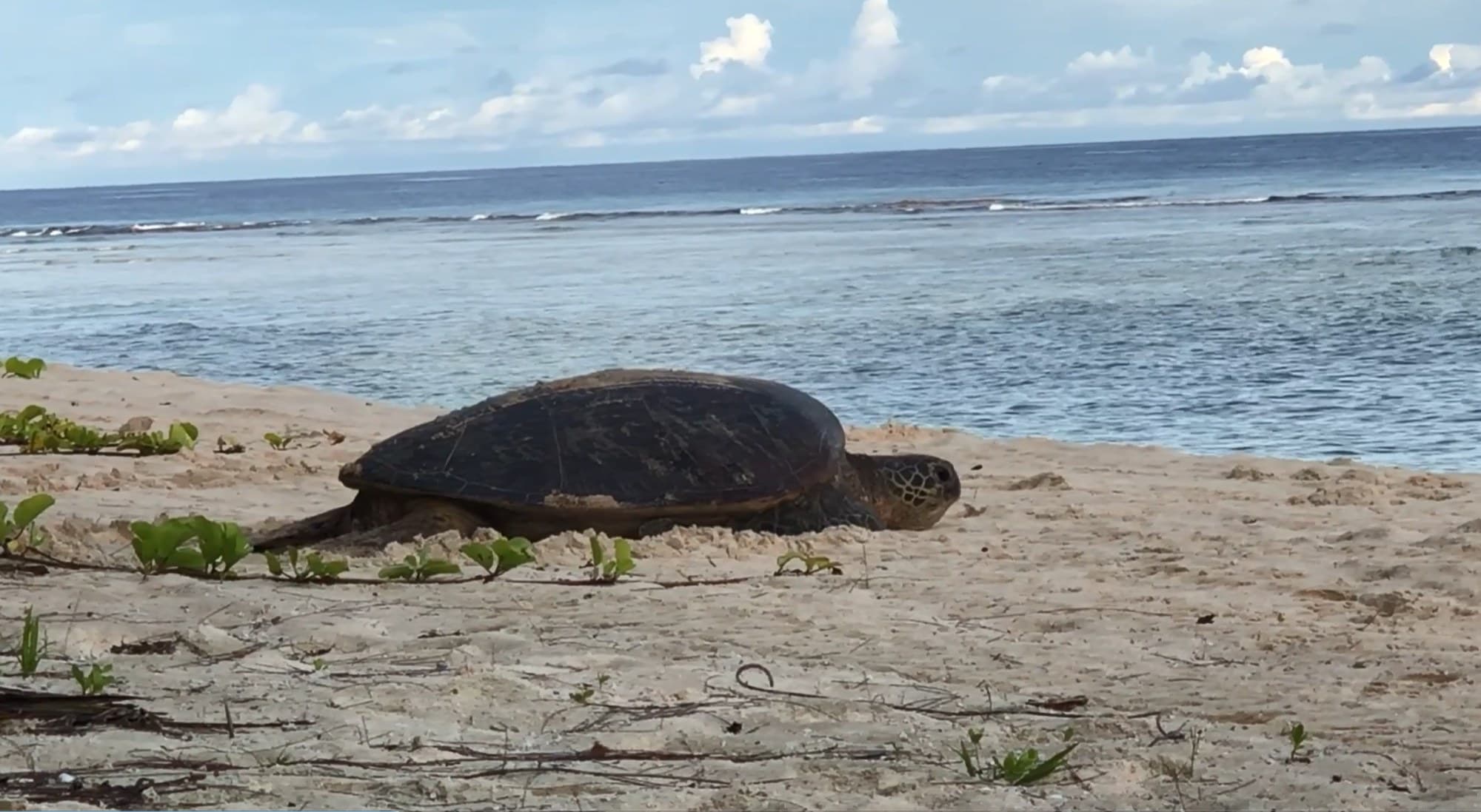
Named for the color of its body fat, not its shell — has a small, blunt head with a serrated jaw (built for grazing seagrass) and only one claw per flipper, versus loggerhead's larger head and two claws per flipper.
Identification
- Small, blunt head with a serrated jaw edge — noticeably narrower than loggerhead's large head.
- Bony carapace without ridges, with four pairs of costal (side) scutes (loggerhead has five).
- Only one claw per flipper — the single most reliable distinction from loggerhead, which has a pair of claws on each flipper.
How you might encounter this species
A documented, if less frequent, Virginia sea turtle visitor — juveniles forage seasonally in the lower Chesapeake Bay. Never a legal target.
- Where you might see it
- Lower Chesapeake Bay (seasonal juvenile foraging)
What not to do
Do not attempt to remove fishing line, a hook, or other entangling gear yourself beyond cutting the line as close to the water as safely possible. Do not attempt to lift, move, or restrain a turtle. Do not approach or handle a stranded/beached turtle beyond keeping people and pets away while awaiting a response.
What to do instead
Same guidance as loggerhead and Kemp's ridley: cut the line rather than remove the hook, let the turtle swim off if able, and call the Virginia Aquarium's Stranding Response Team for any weakened, injured, or dead turtle.
Report a stranded, injured, or entangled animal
This page is educational, not a substitute for professional wildlife-response guidance. Never attempt to rescue, handle, or disentangle a protected animal yourself — contact trained responders using the number above.