Diamondback Terrapin
Malaclemys terrapin
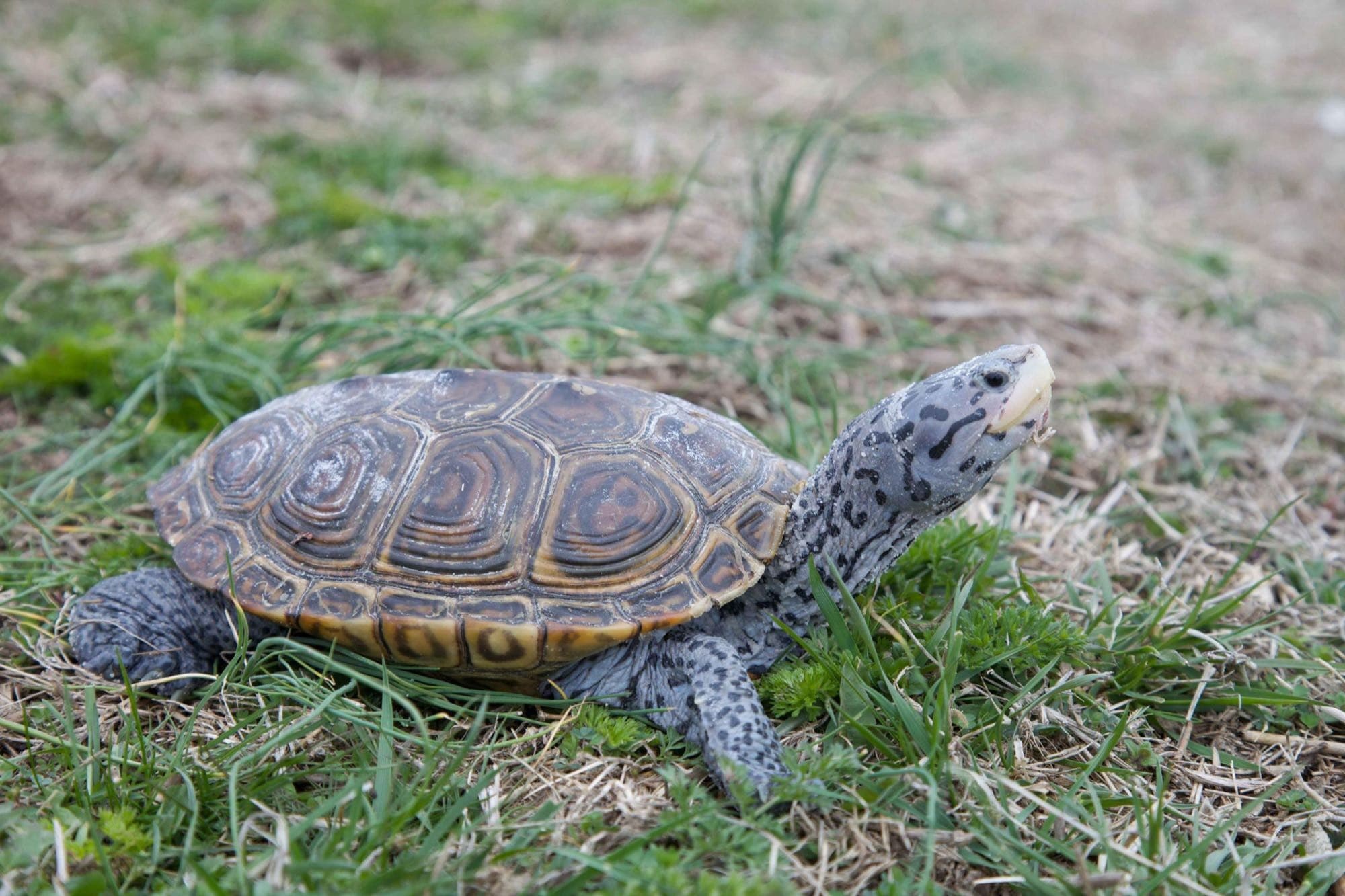
Part of this record is confirmed against an official source; other parts are not. See the notes below for exactly which.
The no-possession status and terrapin-excluder-device crab-pot requirement are directly confirmed against Virginia DWR's own nongame species regulations page. Identification features (shell rings, skin spotting, lip color, size) are directly confirmed against Virginia DWR's own Northern Diamond-backed Terrapin species page and corroborated by the Chesapeake Bay Program's own field guide. The stranding-response contact (phone, 24/7 availability) is directly confirmed against the Virginia Aquarium & Marine Science Center's own Stranding Response Program page.
The only turtle species adapted to live in brackish water — found in Hampton Roads salt marshes and tidal creeks specifically, unlike any freshwater or sea turtle.
Identification
- Shell (carapace) marked with diamond-shaped concentric growth rings, often a different color than the rest of the shell — the source of the common name.
- Gray-to-whitish skin covered in small black spots and streaks; black eyes; pale ('yellow') lips, sometimes with a dark 'mustache' marking above the mouth.
- Much smaller than any sea turtle — an adult's shell is roughly 4-9 inches, not the 2+ feet of even the smallest regularly-occurring sea turtle (Kemp's ridley).
How you might encounter this species
The species this content most directly serves: recreational crab pots can incidentally trap and drown a terrapin, which is exactly why Virginia requires a terrapin excluder device on recreational crab pots — a real, actionable rule for anyone using this project's own Coastal Harvest crabbing guidance, not just background wildlife trivia. Also regularly seen basking or crossing causeways near salt marshes.
Recreational crabbers: the crab-pot gear rules on this site's Coastal Harvest Regulations guide cover license and cull-ring requirements, but not yet the terrapin excluder device rule cited above — confirm the current requirement directly with VMRC/DWR before setting a pot.
- Where you might see it
- Salt marshes, Brackish tidal creeks, Causeways near marsh habitat
What not to do
Do not collect, possess, or keep a diamondback terrapin for any reason, including as a pet. Do not skip installing a terrapin excluder device on a recreational crab pot — it's a real legal requirement, not just a suggestion. Do not assume a terrapin found on a causeway or road needs to be relocated far away; if help is genuinely needed, move it in the direction it was already heading, just off the road surface.
What to do instead
If a terrapin is found drowned or entangled in crab-pot gear, that's exactly the kind of incident Virginia's nongame regulations exist to prevent — check that any pots in use carry a working excluder device. For an injured terrapin, contact the same stranding response resources used for sea turtles/marine mammals.
Report a stranded, injured, or entangled animal
This page is educational, not a substitute for professional wildlife-response guidance. Never attempt to rescue, handle, or disentangle a protected animal yourself — contact trained responders using the number above.