Common Bottlenose Dolphin
Tursiops truncatus
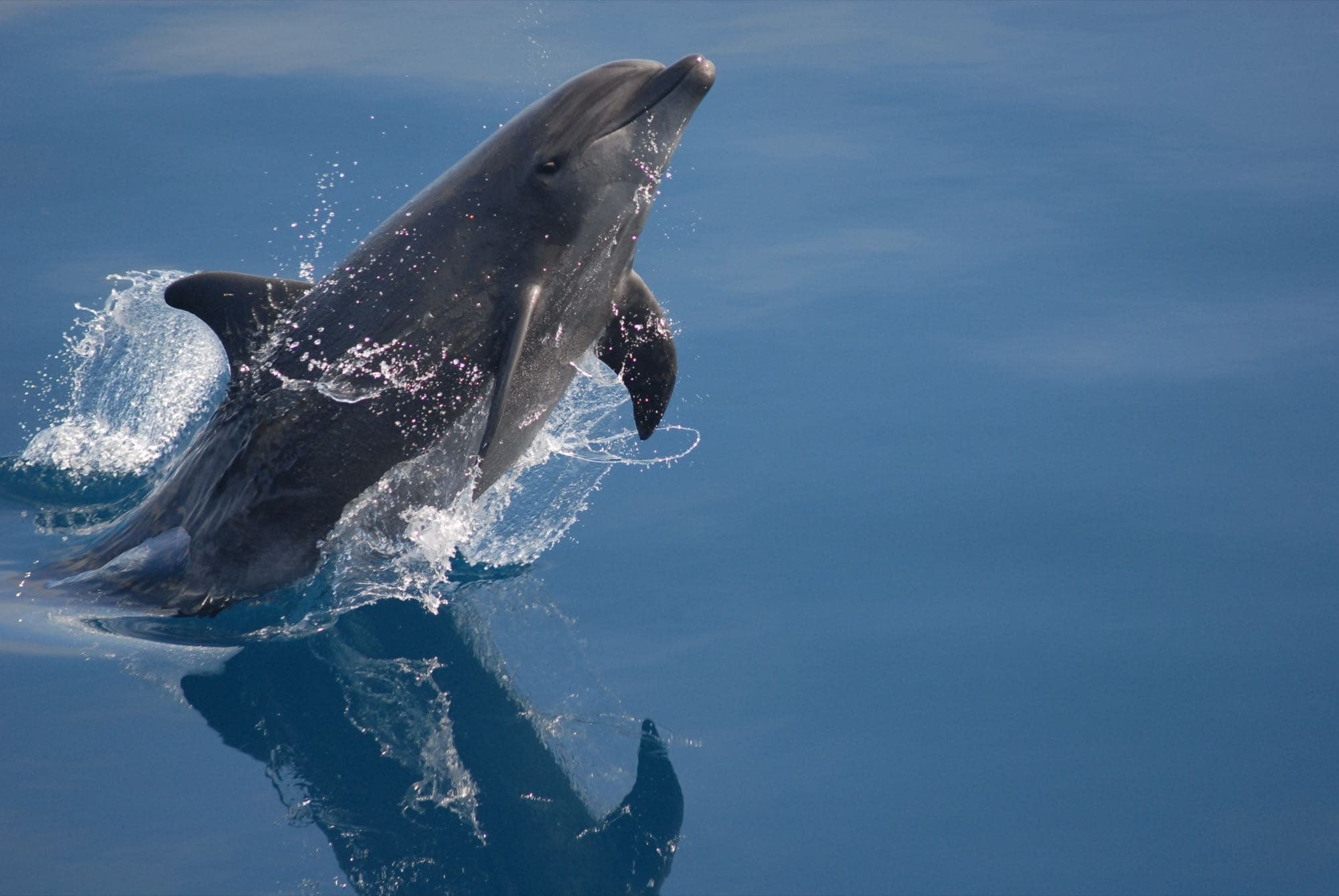
Part of this record is confirmed against an official source; other parts are not. See the notes below for exactly which.
Marine Mammal Protection Act status and the 50-yard recommended viewing distance are directly confirmed against NOAA Fisheries' own Common Bottlenose Dolphin species page. Identification features (coloring, dorsal fin shape/position, Chesapeake-Bay-specific size range) and the real geographic pattern (summer visitor, most common near Cape Charles and the James/Elizabeth Rivers) are directly confirmed against the Chesapeake Bay Program's own bottlenose dolphin field guide entry. The stranding-response contact is the same Virginia Aquarium program used for sea turtles — directly confirmed as covering marine mammals too, not just turtles, on that program's own page.
A large, gray, curved-dorsal-finned dolphin that regularly frequents the Chesapeake Bay in warmer months — the one marine mammal a Hampton Roads boater should expect to actually see.
Identification
- Back is light-to-slate gray, fading to pale gray or pink on the belly.
- Tall, curved (falcate) dorsal fin set roughly two-thirds of the way down the back.
- In the Chesapeake Bay specifically, adults can reach up to 12 feet, typically weighing 300-400 lbs.
How you might encounter this species
The marine mammal Hampton Roads boaters/anglers are overwhelmingly most likely to encounter — a regular summer visitor to the lower Chesapeake Bay, most often seen near Cape Charles and the James/Elizabeth Rivers. A real vessel-strike and harassment-law risk, not just a wildlife-watching note.
- Where you might see it
- Lower Chesapeake Bay (summer), James and Elizabeth River mouths, Cape Charles area
What not to do
Do not approach closer than 50 yards, chase, encircle, or separate a dolphin (or a mother/calf pair) with a vessel. Do not feed a wild dolphin — it's illegal and encourages dangerous boat-approach behavior. Do not attempt to touch, swim with, or handle a dolphin, injured or not.
What to do instead
Maintain the 50-yard viewing distance and let the animal set the terms of any interaction — put your engine in neutral if one approaches your boat. For an injured, entangled, stranded, or dead dolphin, call the Virginia Aquarium's Stranding Response Team, which coordinates response for all marine mammals in Virginia, not just sea turtles.
Report a stranded, injured, or entangled animal
This page is educational, not a substitute for professional wildlife-response guidance. Never attempt to rescue, handle, or disentangle a protected animal yourself — contact trained responders using the number above.