Spot
Leiostomus xanthurus
Partially verified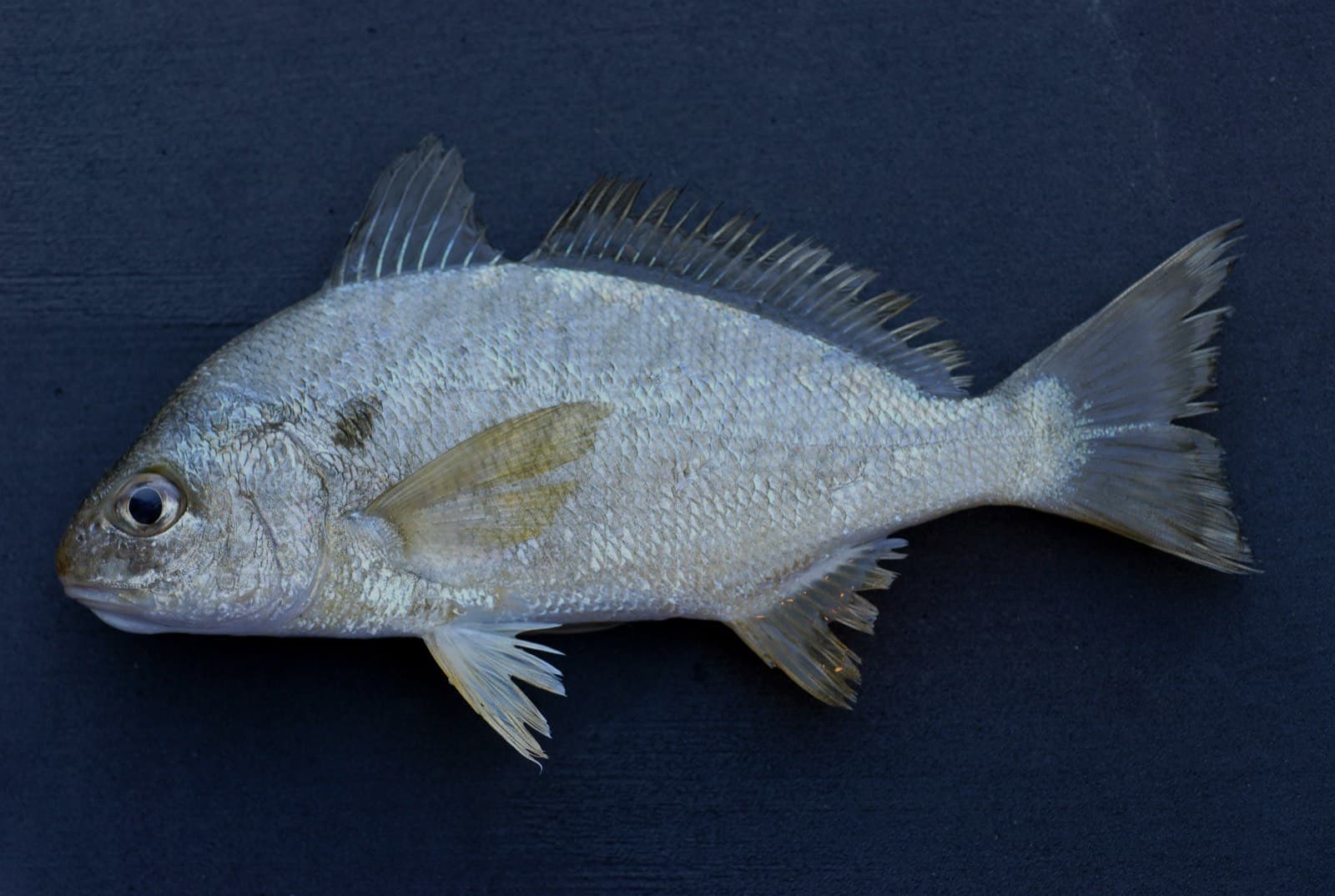
Commonly confused with: Croaker. If you're not sure which one you've caught, treat it as the more restricted species and release it until you can confirm.
Identification
A single dark spot just behind the gill cover, above the pectoral fin, Deep, silvery body with faint dark diagonal bars on the upper sides; forked tail, No chin barbels (unlike its close relative Atlantic croaker)
Where this fish fits
Spot is found across more than one water environment — this reflects real movement between them (e.g. a tidal migration or life-stage change), not uncertainty about where to look.
Common access at this project's own linked locations: Bank / Shore, Kayak, Boat Ramp.
These are discovery categories describing where anglers realistically fish for this species, not a guarantee this project has confirmed regional access at every listed setting — see the linked locations below for this project's own actually-sourced spots.
- Typical season
- Late summer into fall — a classic pier and bank run.
- Habitats
- Piers, bridges, and open Bay bottom, Tidal creeks
- Food use
- Commonly eaten
Advisory exists — review official guidance.
York River and tributaries — PCBs and mercury: No more than 2 meals/month.
Recipes for Spot
Commonly eaten — check the advisory notice above before eating your catch.
Seasons, size limits, and possession limits change and vary by water body. Always check the current regulations at the current regulations page before you fish.
- Bait & lures
- Bloodworms or small bits of shrimp on a bottom rig
- Beginner difficulty
- Easy for beginners
Part of this record is confirmed against an official source; other parts are not. See the notes below for exactly which.
The shoulder-spot/no-barbel identification features (the main way to tell spot apart from Atlantic croaker) are confirmed via the Chesapeake Bay Program's field guide. Habitat/season/bait notes remain general regional angling knowledge, not individually fact-checked. Regulations change often — always check the current VMRC page linked below.