Southern Stingray
Hypanus americanus
Partially verified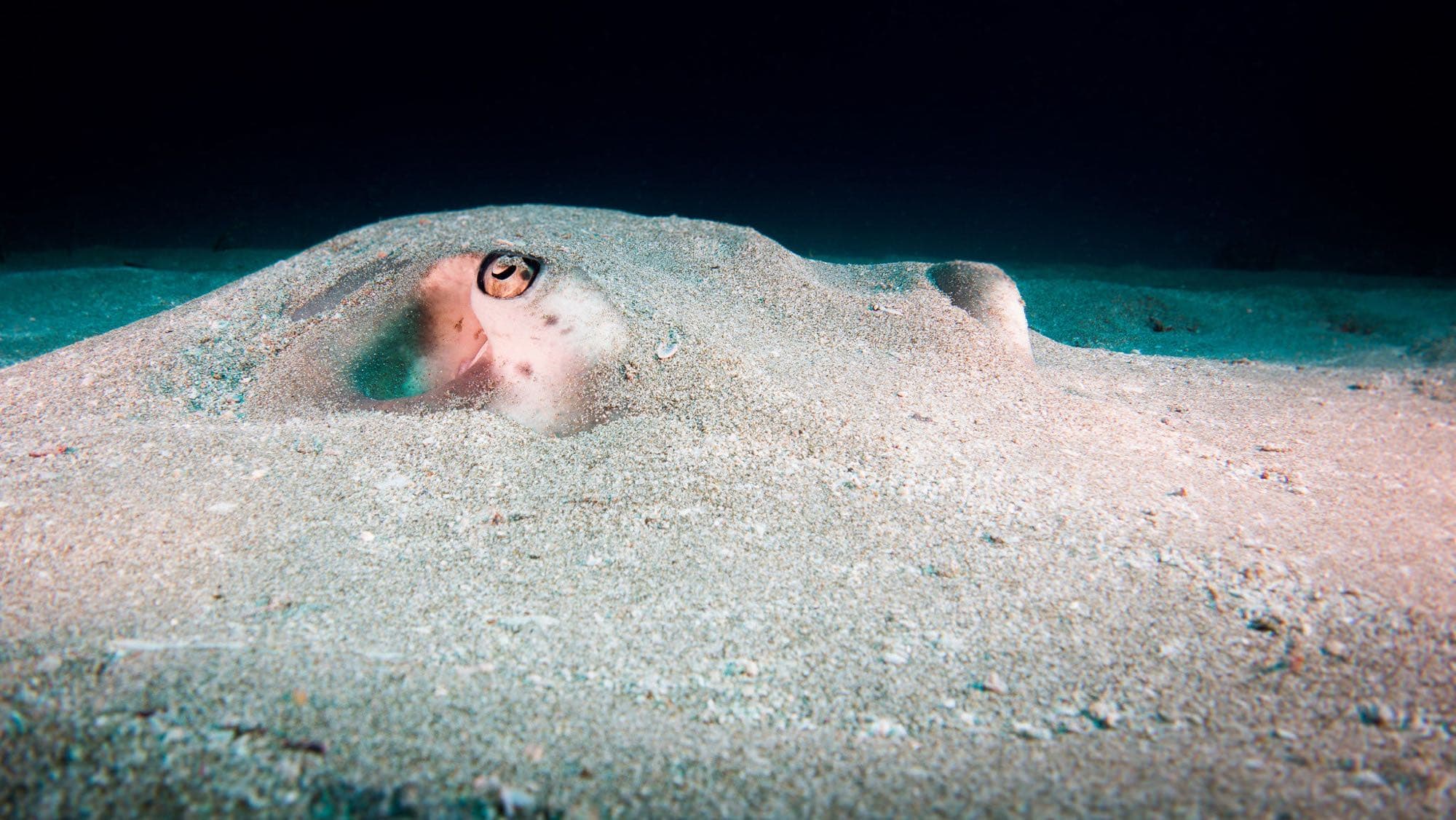
Handling & regulations: Has one or more venomous barbed spines on the tail. Prevention matters more than in-the-moment handling: shuffle your feet ('stingray shuffle') rather than taking normal steps when wading in shallow flats — the motion and vibration give a buried ray time to move off before you'd step on it directly. If you hook one, avoid handling it by hand at all where possible; keep well clear of the tail's full reach (it can flex and reach further than it looks), use long-nose pliers or a dehooking tool for an easily-reached hook, and cut the leader as close to the hook as you safely can if it isn't easily reached rather than trying to force removal. Release it in the water rather than dragging it onto sand or a pier deck. A sting is a real medical event, not just discomfort — the standard first-aid step for a sting is soaking the area in water as hot as can be tolerated (this breaks down the venom's proteins) and seeking medical attention, especially if a piece of the spine stays embedded or a serious reaction develops.
Commonly confused with: Atlantic Stingray. If you're not sure which one you've caught, treat it as the more restricted species and release it until you can confirm.
Identification
Broad, diamond-shaped disc, usually gray-brown above and white below, Long, whip-like tail carrying one or more venomous barbed spines near its base — the tail is thin and easy to overlook against sand
Where this fish fits
Southern Stingray is found across more than one water environment — this reflects real movement between them (e.g. a tidal migration or life-stage change), not uncertainty about where to look.
These are discovery categories describing where anglers realistically fish for this species, not a guarantee this project has confirmed regional access at every listed setting — see the linked locations below for this project's own actually-sourced spots.
- Typical season
- Summer, common over sandy and muddy flats and around piers.
- Habitats
- Sandy and muddy flats, Piers and inlet bottoms
- Food use
- Unclear — check current regulations
Data not yet verified.
This site hasn't checked for a fish-consumption advisory covering this species yet. That is not the same as confirmed safe — check current official guidance before eating your catch.
Seasons, size limits, and possession limits change and vary by water body. Always check the current regulations at Virginia Marine Resources Commission — Regulations before you fish.
- Bait & lures
- Cut bait or crab fished on bottom — frequently caught incidentally
- Beginner difficulty
- Moderate
Part of this record is confirmed against an official source; other parts are not. See the notes below for exactly which.
The stingray-shuffle prevention technique, low-contact release guidance (cut the leader rather than force hook removal, release in water), and the hot-water first-aid step are corroborated across multiple public-safety/angling sources (Visit Florida, St. Pete Beach's own public safety page, established surf-fishing guides) — none of them a single authoritative government marine-biology source specifically for this exact guidance, so flagged as such rather than overstated. Food-use status is marked 'unclear — check current regulations' because this project has not found a reliable, current, Virginia-specific source confirming consumption safety or legal harvest status for this species — it is not a claim that it's unsafe or prohibited, only that this hasn't been confirmed. Habitat and bait notes reflect general regional knowledge, not individually verified data.