Atlantic Stingray
Hypanus sabinus
Unverified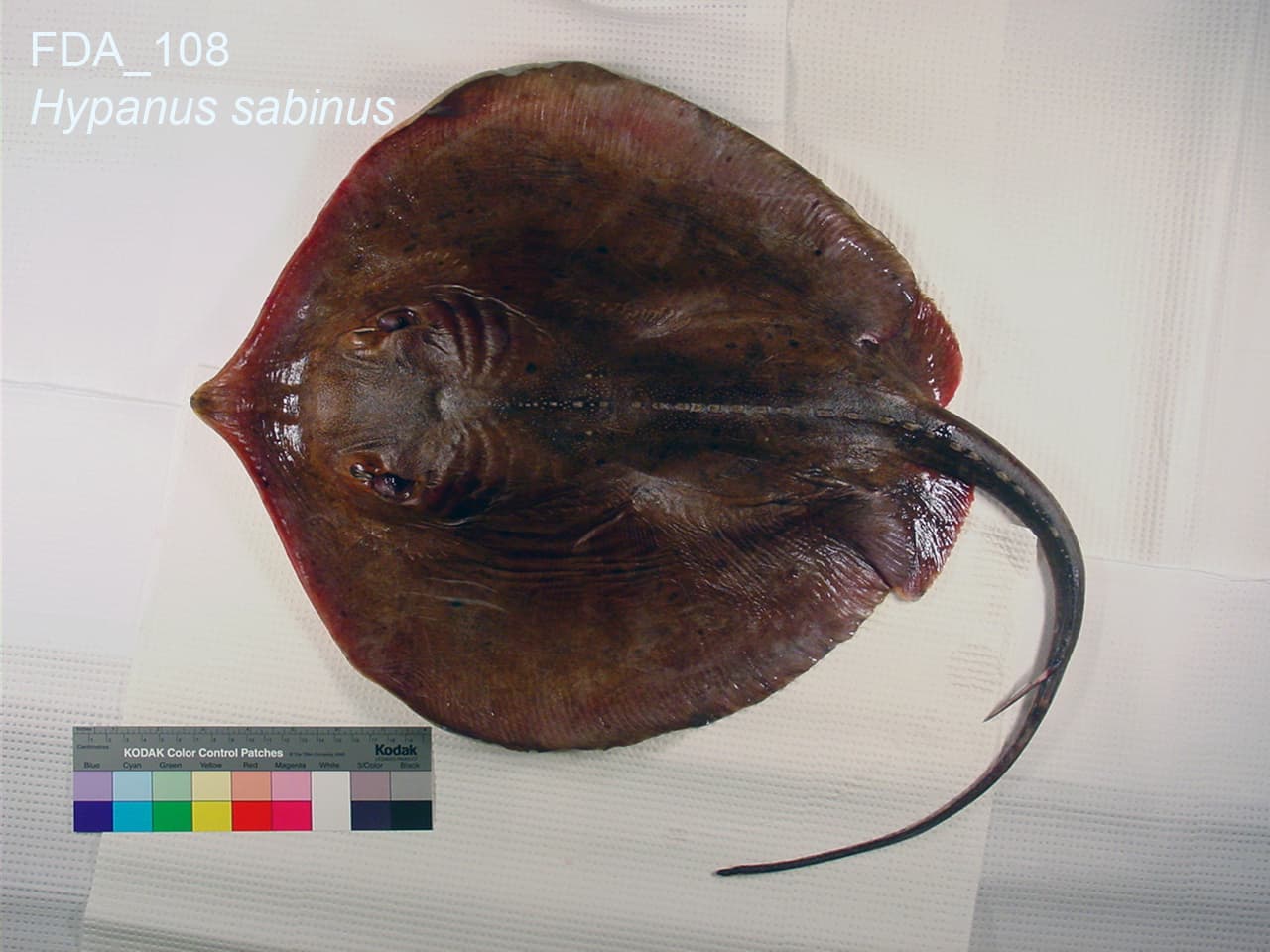
Handling & regulations: Food-use status is marked 'unclear — check current regulations' because this project has not found a reliable, current, Virginia-specific source confirming consumption safety or legal harvest status for this species — it is not a claim that it's unsafe or prohibited, only that this hasn't been confirmed. Habitat and bait notes reflect general regional knowledge, not individually verified data. Like all stingrays on this site, avoid stepping near the tail, never drag the ray onto dry sand or a pier deck for hook removal, and cut the leader close to the hook rather than forcing removal if it would delay release.
Commonly confused with: Southern Stingray. If you're not sure which one you've caught, treat it as the more restricted species and release it until you can confirm.
Identification
Much smaller than the already-published southern stingray at maturity — the single most useful field distinction between the two in this region, Flattened, spade-shaped disc with a prominent triangular snout and broadly rounded outer corners, Brownish to yellowish-brown above, whitish below; a whip-like tail bearing a serrated spine that is replaced annually
Where this fish fits
Atlantic Stingray is found across more than one water environment — this reflects real movement between them (e.g. a tidal migration or life-stage change), not uncertainty about where to look.
These are discovery categories describing where anglers realistically fish for this species, not a guarantee this project has confirmed regional access at every listed setting — see the linked locations below for this project's own actually-sourced spots.
- Typical season
- Warmer months, shallow water — a common incidental catch alongside the already-published southern stingray.
- Habitats
- Shallow inshore flats, Estuaries, lagoons, and brackish tidal rivers — the northern edge of this species' range reaches the Chesapeake Bay
- Food use
- Unclear — check current regulations
Data not yet verified.
This site hasn't checked for a fish-consumption advisory covering this species yet. That is not the same as confirmed safe — check current official guidance before eating your catch.
Seasons, size limits, and possession limits change and vary by water body. Always check the current regulations at Smithsonian Tropical Research Institute — Neotropical Fishes (Atlantic Stingray) before you fish.
- Bait & lures
- Not a deliberate target — almost always an incidental catch while bottom fishing shallow flats
- Beginner difficulty
- Moderate
Drawn from a named source but not independently confirmed. Double-check before relying on it.
No NOAA, VMRC, or Virginia-specific agency page with a dedicated species write-up was found (a Chesapeake Bay Program field-guide entry that likely covers this species returned a 404 on direct fetch). The Smithsonian Tropical Research Institute's Neotropical Fishes database is cited as the closest authoritative identification source found; the Chesapeake Bay as this species' documented northern range limit is corroborated by multiple independent marine-biology references. Season/habitat notes beyond range are general regional knowledge, not individually fact-checked.