Blue Catfish
Ictalurus furcatus
Partially verified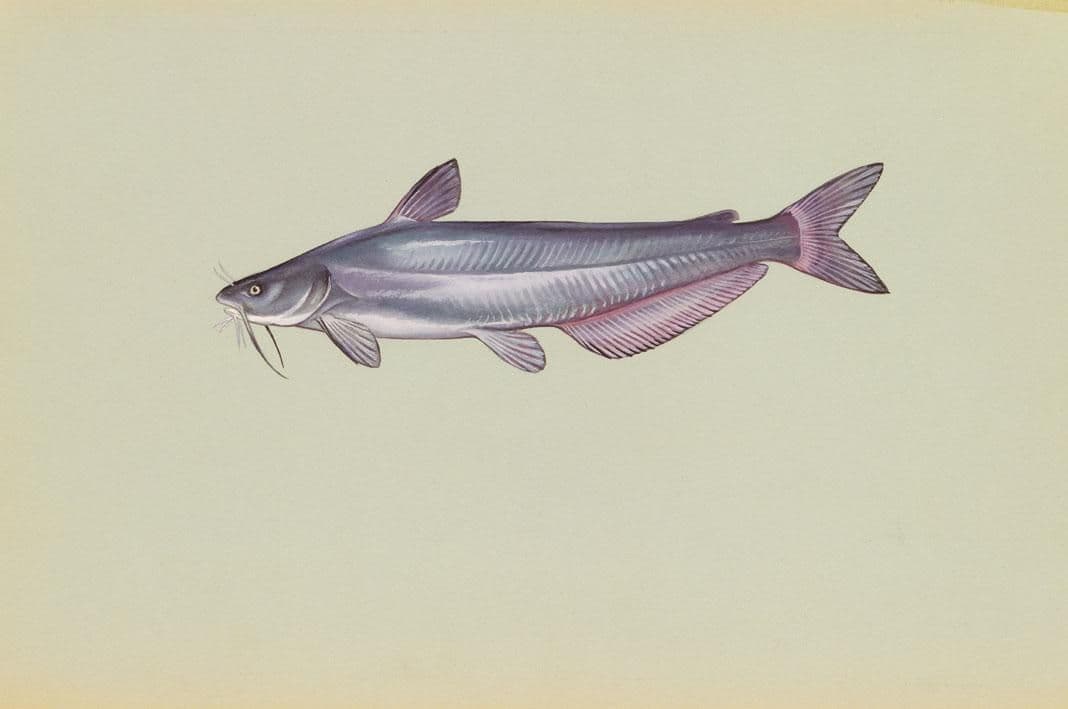
Commonly confused with: Channel Catfish, Atlantic Sturgeon, Shortnose Sturgeon. If you're not sure which one you've caught, treat it as the more restricted species and release it until you can confirm.
Identification
Slate-blue body, deeply forked tail, and a straight-edged anal fin with 30+ rays, Never has spots (channel catfish often do, especially when younger)
Where this fish fits
Blue Catfish is found across more than one water environment — this reflects real movement between them (e.g. a tidal migration or life-stage change), not uncertainty about where to look.
Common access at this project's own linked locations: Boat Ramp, Kayak, Bank / Shore.
These are discovery categories describing where anglers realistically fish for this species, not a guarantee this project has confirmed regional access at every listed setting — see the linked locations below for this project's own actually-sourced spots.
- Typical season
- Year-round; most consistent in the tidal rivers, with a summer/fall peak for the largest fish.
- Habitats
- Tidal rivers and their deep holes or channel edges, Brackish river mouths
- Food use
- Commonly eaten
Advisory exists — review official guidance.
James River (tidal) (I-95 bridge in Richmond downstream to the Hampton Roads Bridge-Tunnel) — PCBs and Kepone: Under 32 inches: no more than 2 meals/month (PCBs). 32 inches or longer: do not eat (PCBs) — larger, older fish carry more contaminant. A separate Kepone advisory for this stretch caps all species at 1 meal/day; follow whichever limit is more restrictive for the fish you've caught.
Recipes for Blue Catfish
Commonly eaten — check the advisory notice above before eating your catch.
Seasons, size limits, and possession limits change and vary by water body. Always check the current regulations at the current regulations page before you fish.
- Bait & lures
- Cut bait (shad, menhaden) fished on bottom, Chunk bait under a float in current seams
- Beginner difficulty
- Easy for beginners
Part of this record is confirmed against an official source; other parts are not. See the notes below for exactly which.
The anal-fin-ray-count and no-spots identification features (the standard way to separate blue catfish from the similar channel catfish) are confirmed via the Virginia DWR species page. Blue catfish cross tidal and non-tidal water — non-tidal reaches may fall under VDWR freshwater rules instead. Habitat/season/bait notes remain general regional angling knowledge, not individually fact-checked. Regulations change often — always check the current VMRC page linked below. Atlantic/shortnose sturgeon cross-link added in the Regional Species Completeness pass — a large blue catfish is a real, plausible mistaken-identity risk for a protected sturgeon, per the framework's own pre-existing sturgeon-vs-catfish LOOKALIKE_GROUPS cluster.