Tundra Swan
Cygnus columbianus
Confirmed against an official or primary source as of the date shown.
Permit-count, deadline, and season-window facts directly confirmed via a live DWR fetch. Identification/migration facts corroborated via Cornell's All About Birds and outdoor-media coverage of Virginia's tundra swan hunt via live search synthesis, not independently re-fetched.
Legal status: Legal to hunt in Virginia only with a drawing-based Tundra Swan Hunting Permit (maximum 475 permits for the season checked during this build; application deadline September 25). One swan per permittee for the entire season, not per day. Simply identifying a tundra swan does not authorize taking it — see the Tundra Swan Permit legal requirement and the Tundra Swan Season record before hunting.
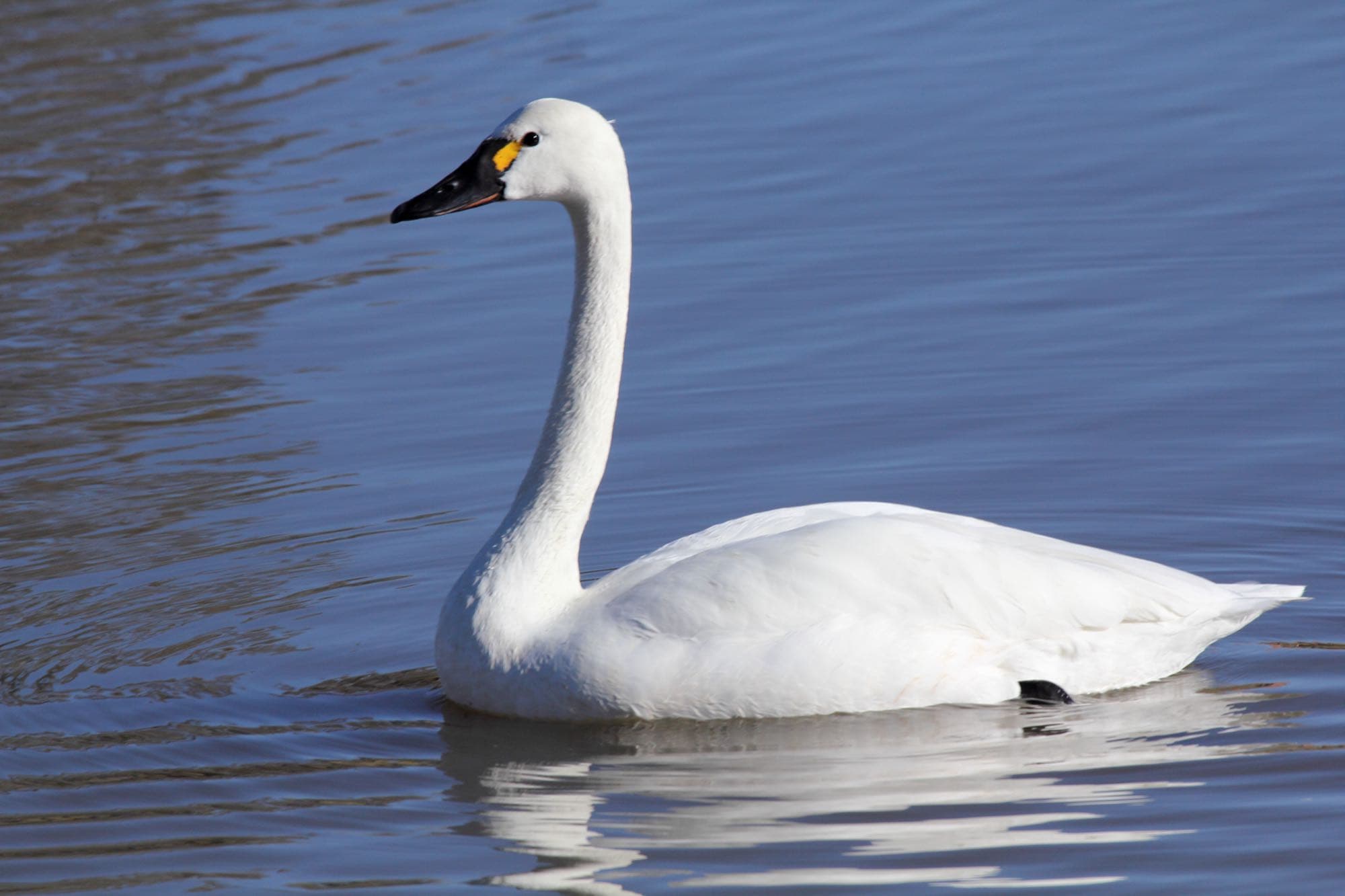
A large, all-white native swan that winters in Virginia in modest numbers — the only swan legally huntable in the state, and only by a limited drawing-based permit.
Field marks
- Entirely white adult plumage; young birds ('cygnets') show gray-tinged plumage through their first winter.
- Black bill, often with a small yellow spot near the eye (variable and not always present).
- Long, straight neck typically held erect.
- Habitat
- Large, shallow bays, estuaries, and agricultural fields in winter — in Virginia, concentrated in the coastal counties east of I-95.
- Flight profile
- Slow wingbeats relative to body size but powerful, direct flight, often in loose lines or V-formation, with a distinctive high-pitched, bugling call.
- Vocalizations
- A high-pitched, whooping or bugling call, often given in flight and audible at considerable distance.
Migration & seasonal context
A long-distance migrant breeding on the Arctic tundra and wintering along the Atlantic and Pacific coasts; Virginia's wintering population is part of the eastern population that winters primarily on Chesapeake Bay and North Carolina's sounds.
Conservation context
Native, protected under the standard migratory-bird framework, with harvest deliberately limited to a small drawing-based permit quota specifically to keep hunting pressure low relative to population size — distinct from the higher-volume management approach used for overabundant light geese.
Similar species — check before you shoot
Identification alone never establishes that a bird may legally be taken. Confirm species (and sex, where a sub-limit depends on it) before shooting.
Ethical shot selection: Confirm this is a tundra swan and not a look-alike protected species (including a mute swan, which is non-native and managed differently, or, in poor conditions, a snow goose at distance) before taking the shot — a swan-sized target deserves particular certainty given how limited and closely tracked this permit program is.
This page is educational and does not certify that any specific bird may be legally taken at any specific time or place. Always confirm the current season, bag limit, and permit requirements at Licensing & Regulations →