Mute Swan
Cygnus olor
Drawn from a named source but not independently confirmed. Double-check before relying on it.
Bill-color/posture identification distinctions from tundra swan are directly confirmed against the Chesapeake Bay Program's own field guide and corroborated by DWR's Virginia Mute Swan Management Plan. Non-native/invasive status and introduction history are well-corroborated general knowledge, not individually fact-checked against a single primary source. Added in the Regional Species Completeness, Phase 2 pass, promoted from the framework's own pre-existing draft entry — the framework's own mute-vs-tundra-swan and snow-goose-vs-swan LOOKALIKE_GROUPS clusters already flagged this exact identification pairing.
A non-native, invasive swan established year-round in the Chesapeake Bay region — never a legal target, and a real identification pairing against the native, protected, permit-huntable tundra swan.
Field marks
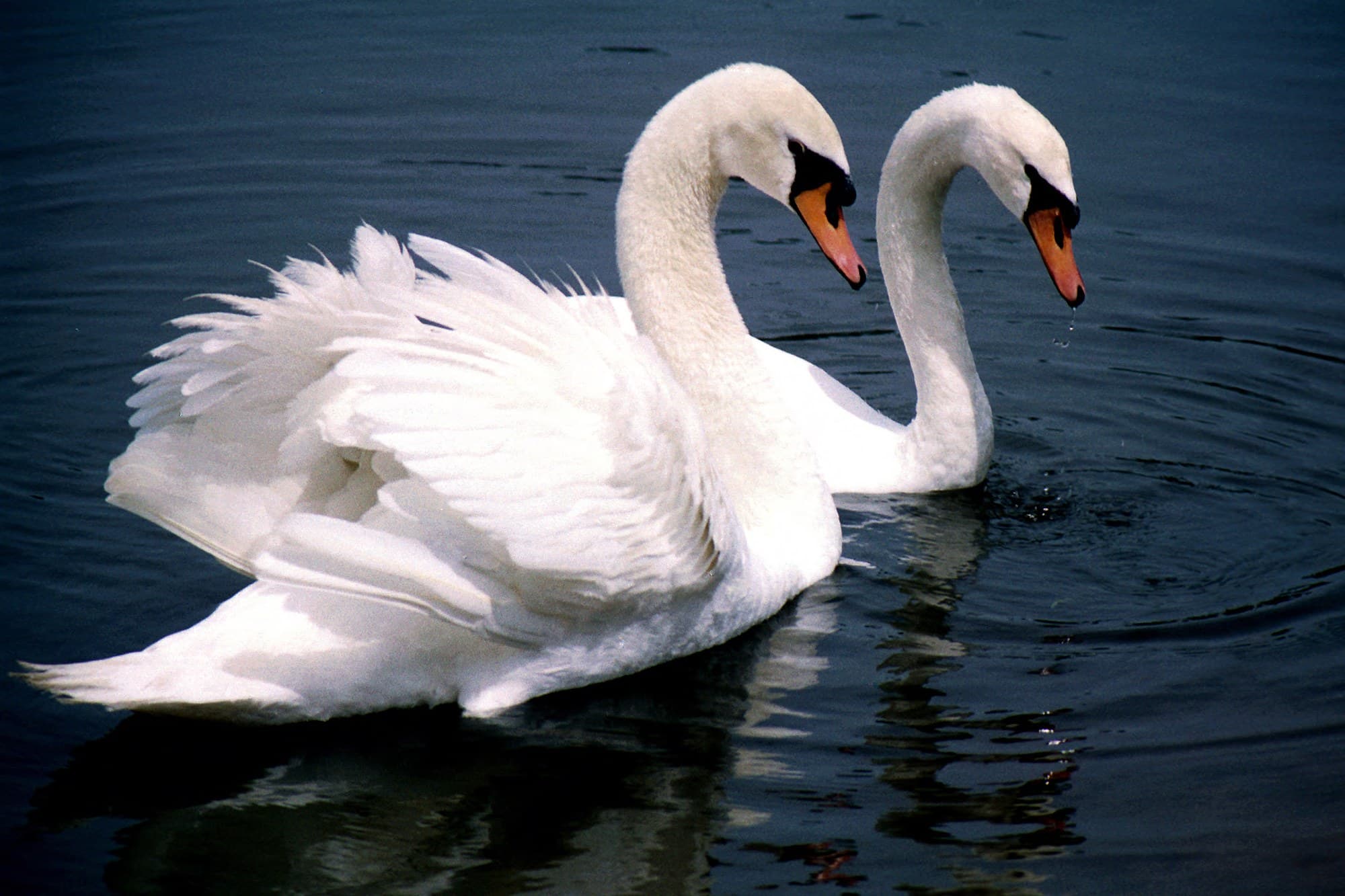
- Orange bill with a black knob at the base — the single clearest field mark separating it from tundra swan's all-black bill.
- Neck typically held in a graceful S-curve with the bill pointed downward and wings often arched over the back in a 'sailboat' posture — a distinctive habit no other swan in the region shows.
- Entirely white plumage, same as tundra swan — color alone never distinguishes the two.
- Habitat
- Shallow ponds, impoundments, and sheltered Bay shoreline year-round — unlike tundra swan, present in all seasons, not just winter.
- Flight profile
- Powerful direct flight; wingbeats produce an audible throbbing/humming sound distinct from the vocal calls of native swans (the species' name comes from being relatively voiceless, not silent in flight).
Migration & seasonal context
Non-migratory — introduced to the eastern U.S. in the late 1800s and into Virginia in the late 1900s as a decorative species for private estates and parks, now a self-sustaining feral population.
Conservation context
Managed in Virginia as an invasive, non-native species, distinct from and never to be confused with the state's own native, protected tundra swan management program.
Similar species — check before you shoot
Identification alone never establishes that a bird may legally be taken. Confirm species (and sex, where a sub-limit depends on it) before shooting.
Ethical shot selection: Confirm bill color (orange with a black knob, vs. tundra swan's all-black bill) before assuming any swan-sized white bird is the legally huntable tundra swan — the two require completely different treatment, and mistaking one for the other during a permitted tundra swan hunt is a real, documented risk.
This page is educational and does not certify that any specific bird may be legally taken at any specific time or place. Always confirm the current season, bag limit, and permit requirements at Licensing & Regulations →