Redhead
Aythya americana
More photos
Drawn from a named source but not independently confirmed. Double-check before relying on it.
Head-shape, bill-color, and eye-color distinctions from canvasback are directly confirmed against Cornell's All About Birds identification pages for both species. No Virginia-specific sub-limit found for this species in DWR's current duck season materials — noted honestly rather than assumed. Added in the Regional Species Completeness, Phase 2 pass, promoted from the framework's own pre-existing draft entry.
Legal status: A legal migratory game bird in Virginia during the open duck season, under the general duck bag limit — no redhead-specific sub-limit was found in this project's DWR research for the current season, but verify directly before hunting, since diving-duck sub-limits can and do change between seasons.
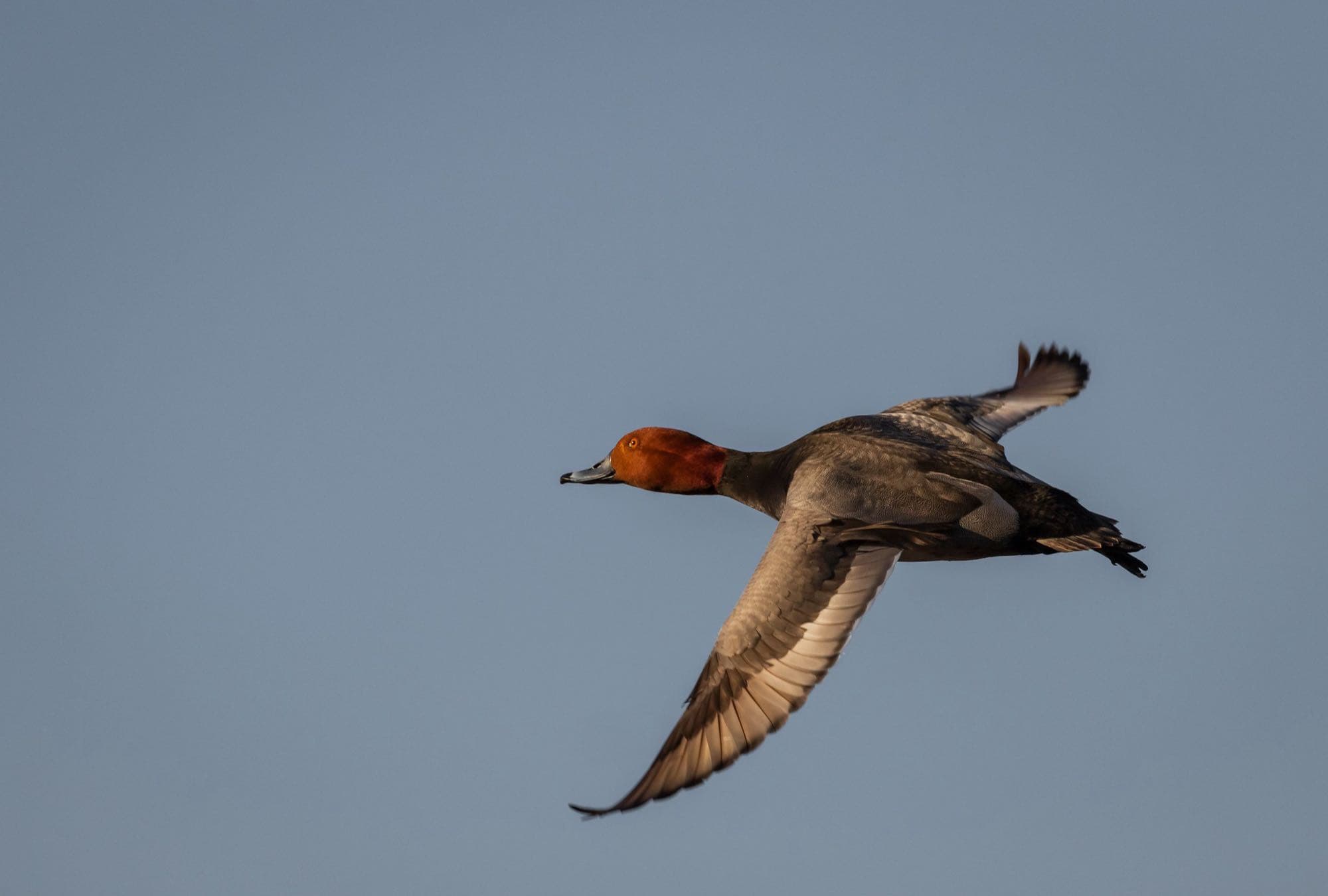
A medium-sized diving duck frequently confused with the larger canvasback — both breeding-male ducks show a red/chestnut head, but head shape and bill color separate them reliably.
Field marks
- Rounded head profile (not the canvasback's sloped, wedge-shaped forehead) — the most reliable field mark separating the two species.
- Light blue-gray bill with a black tip, versus canvasback's long, sloping, all-blackish bill.
- Yellow eyes (canvasback's are red).
Male, female, and seasonal plumage
- Male
- Rounded cinnamon-red head, black breast and rump, and a finely striated gray body.
- Female
- Plain, uniform soft brown, paler near the face/base of the bill — lacks any of the male's bold color.
- Habitat
- Open Bay water and large impoundments, often alongside canvasback and scaup.
- Feeding behavior
- Dives for aquatic vegetation, seeds, and some invertebrates.
- Flight profile
- Fast, direct flight typical of diving ducks, often in tight flocks.
Migration & seasonal context
A regular Atlantic Flyway diving duck, wintering in Chesapeake Bay open water alongside the already-published canvasback and scaup.
Similar species — check before you shoot
Identification alone never establishes that a bird may legally be taken. Confirm species (and sex, where a sub-limit depends on it) before shooting.
This page is educational and does not certify that any specific bird may be legally taken at any specific time or place. Always confirm the current season, bag limit, and permit requirements at Licensing & Regulations →