Red-throated Loon
Gavia stellata
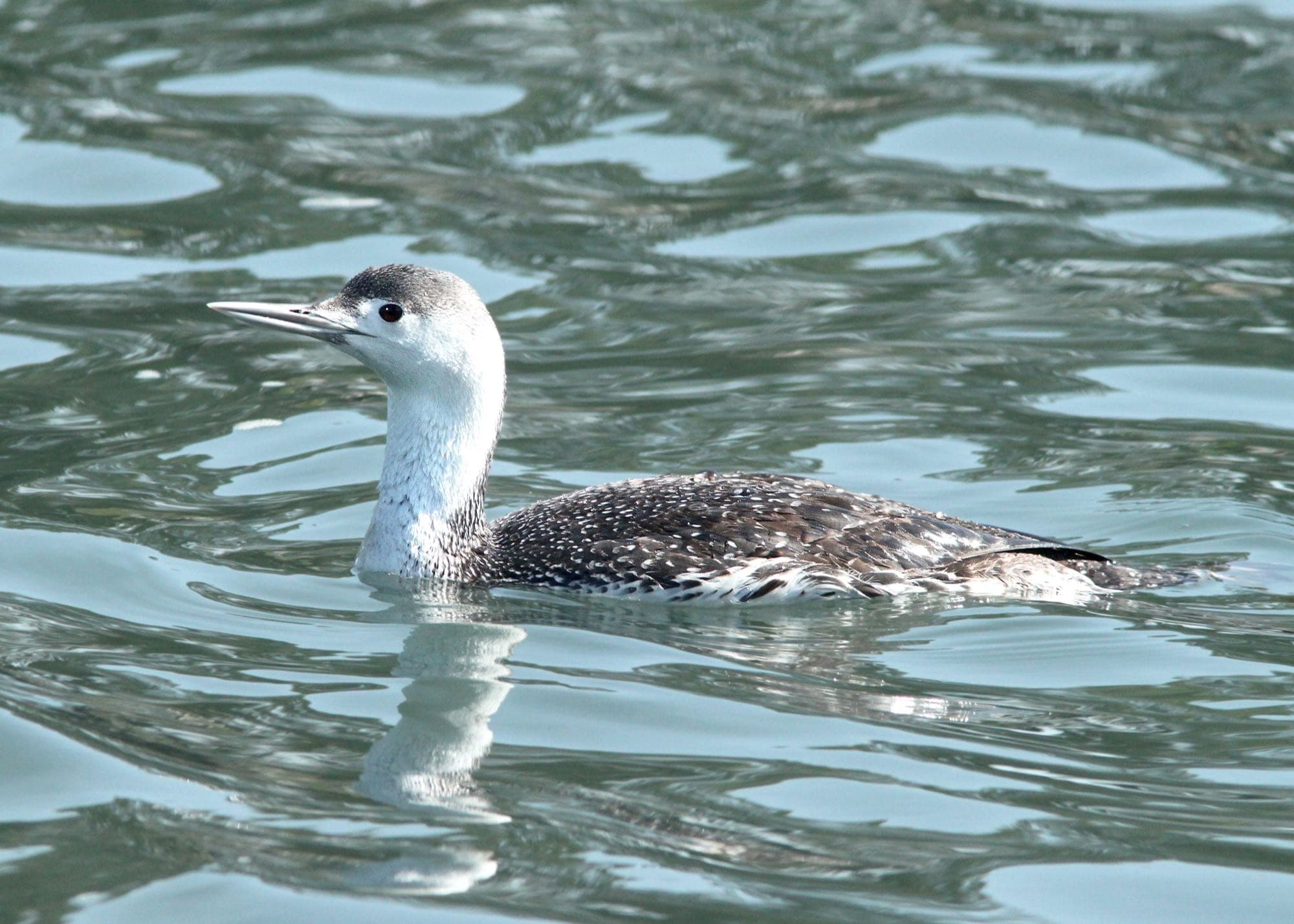
Drawn from a named source but not independently confirmed. Double-check before relying on it.
Size/build and winter-plumage identification distinctions from common loon are directly confirmed against Cornell's own identification page and corroborated by an independent regional source (Bird Watcher's General Store) describing the same field marks. Federal protection is well-established general knowledge, not specific to a single fetched page. Regular winter presence alongside common loon reflects general regional knowledge, not individually fact-checked against a Virginia-specific source.
A federally protected diving bird — not a legal migratory game bird — the smallest and slenderest North American loon, a regular winter visitor alongside the already-published common loon.
Field marks
- Noticeably smaller and slenderer than common loon, especially through the neck — described by birders as looking like 'a gymnast' next to common loon's 'fullback' build.
- Winter plumage: dark cap and hind-neck contrasting with a mostly white face and throat — more white on the face/neck than other loons, without the jagged dark/light border common loon shows.
- Thin, slightly upturned bill often held at a slight upward angle, versus common loon's straight, heavier, dagger-like bill held level.
- Habitat
- Open Bay and nearshore ocean water in winter, the same habitat type common loon uses.
Conservation context
Protected under the Migratory Bird Treaty Act, same as common loon; not managed as a game species anywhere in its range.
Similar species — check before you shoot
Identification alone never establishes that a bird may legally be taken. Confirm species (and sex, where a sub-limit depends on it) before shooting.
Ethical shot selection: Any uncertainty about whether a distant diving bird is a loon (of either species) or a legal duck/merganser should end the same way — do not shoot. Size/build and bill angle are the standard cues separating the two loon species from each other, but that distinction doesn't matter for the shoot/don't-shoot decision, since neither is legal.
This page is educational and does not certify that any specific bird may be legally taken at any specific time or place. Always confirm the current season, bag limit, and permit requirements at Licensing & Regulations →