Green-winged Teal
Anas crecca (carolinensis)
Drawn from a named source but not independently confirmed. Double-check before relying on it.
Identification/habitat facts drawn from Cornell's All About Birds, state wildlife-agency species pages, and Ducks Unlimited via live search synthesis. Legal bag-limit facts are separately, directly sourced to this project's own September Teal Season and Duck Season HuntingSeason records.
Legal status: A legal migratory game bird in Virginia. During the dedicated September Teal season, only blue-winged and green-winged teal count toward that season's specific bag limit; during the regular duck season it falls under the general duck bag limit. See the September Teal Season and Duck Season records for current limits.
The smallest dabbling duck in North America — a small, fast-flying, compact duck common in shallow marsh edges and flooded fields.
Field marks
- Noticeably small and compact, sitting high on the water compared to other dabblers.
- Bright green speculum flashes in flight on both sexes.
- Small bill relative to body size.
Male, female, and seasonal plumage
- Male
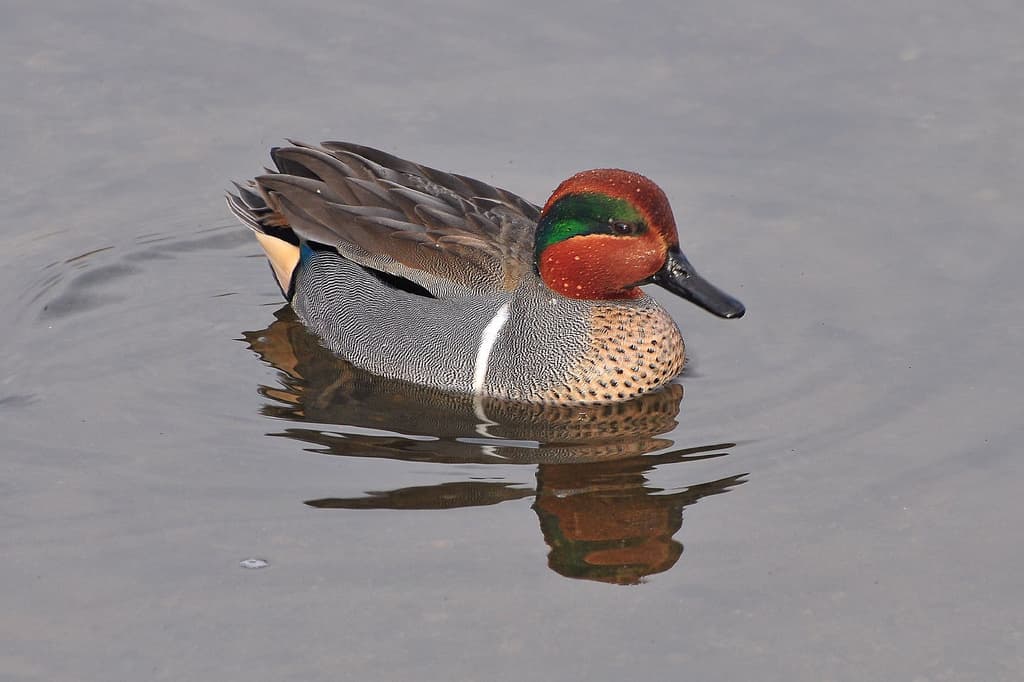
- Cinnamon-colored head with a gleaming green crescent from eye to nape; grayish body with a narrow white vertical shoulder stripe.
- Female
- Mottled brown with a white belly; look for a buffy-yellow stripe along the tail and the bird's small, compact silhouette to separate it from a young mallard.
- Habitat
- Shallow ponds and marsh edges with abundant emergent vegetation; uses both fresh and brackish/saltwater habitats.
- Feeding behavior
- Dabbles and picks at the water's surface and muddy margins for seeds and small invertebrates in very shallow water.
- Flight profile
- Fast, agile, and often erratic — flocks can wheel and turn tightly, a recognizable trait even before individual birds are identifiable.
- Flock behavior
- Highly gregarious; often in tight, fast-moving flocks distinct from the looser groups typical of mallards.
Migration & seasonal context
A widespread, common Atlantic Flyway migrant; Hampton Roads sees birds moving through and wintering from northern breeding grounds.
This page is educational and does not certify that any specific bird may be legally taken at any specific time or place. Always confirm the current season, bag limit, and permit requirements at Licensing & Regulations →