Common Gallinule
Gallinula galeata
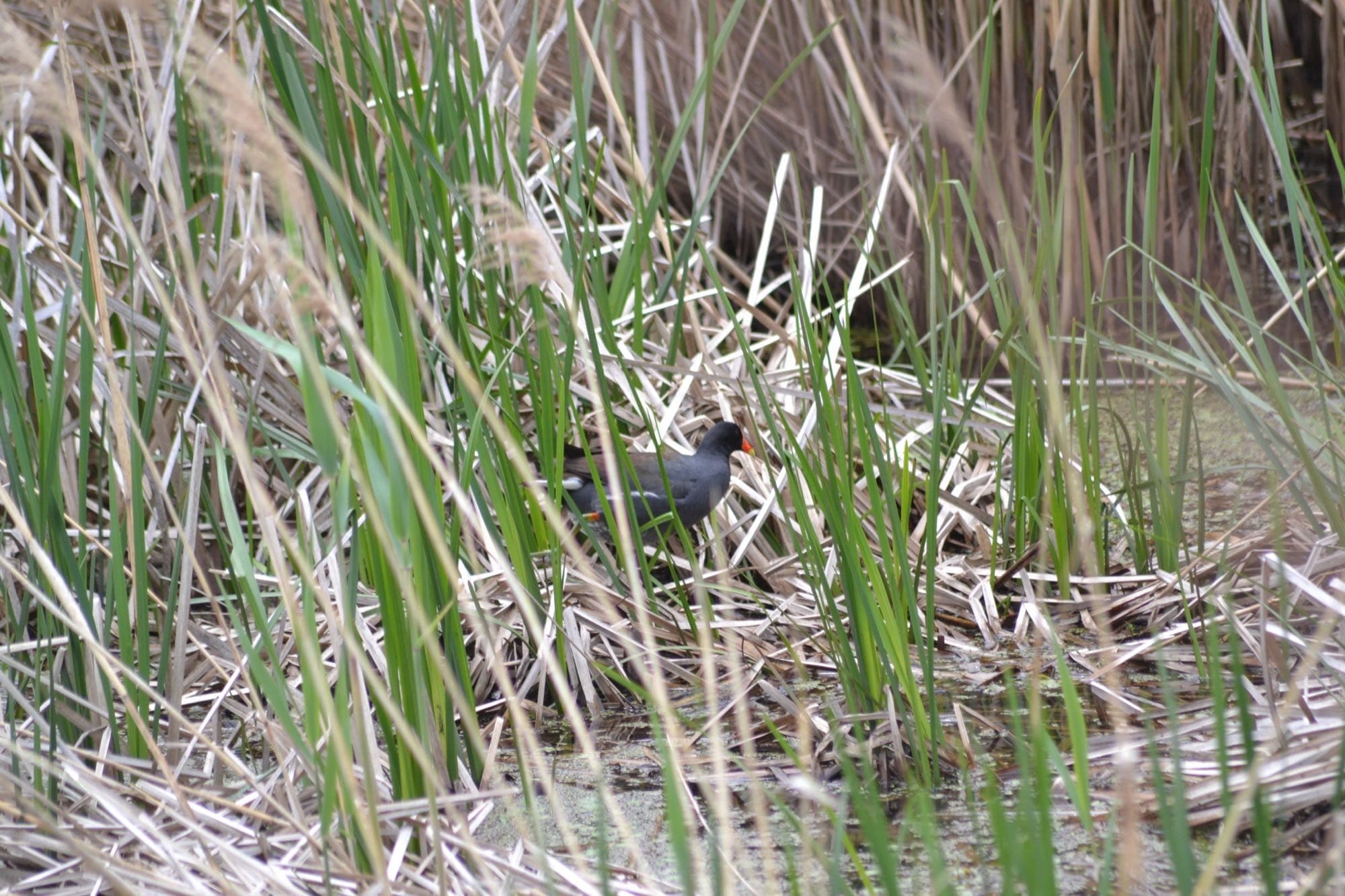
Drawn from a named source but not independently confirmed. Double-check before relying on it.
The red-vs-white bill/shield distinction from American coot is directly confirmed against Cornell's own identification page and corroborated by an independent coot-vs-gallinule comparison source (Birds Ontario). No Virginia-specific season/bag-limit record was found naming this species — stated as an absence of evidence rather than a directly confirmed 'protected' status citation, distinct from the grebes/loons above, which do carry a direct federal-protection citation.
A regionally-present marsh bird easily confused with American coot at a glance — the red (not white) bill and frontal shield is the fast, reliable distinction. Unlike coot, not a legal Virginia game species.
Field marks
- Bright red frontal shield and a red bill tipped in yellow — the key distinction from American coot's white bill and shield.
- Mostly charcoal-gray body with a white stripe down the flanks and white outer tail feathers.
- Juveniles are browner and lack the adult's red shield, making them easier to mistake for a young coot.
- Habitat
- Densely vegetated freshwater/brackish marshes.
Conservation context
Protected under the Migratory Bird Treaty Act in most US jurisdictions, including Virginia, where it is not currently treated as a legal game species — a real, meaningful contrast with the similar-looking, legally huntable American coot.
Similar species — check before you shoot
Identification alone never establishes that a bird may legally be taken. Confirm species (and sex, where a sub-limit depends on it) before shooting.
Ethical shot selection: Check bill and frontal-shield color specifically before treating any coot-like marsh bird as the legal species — a red bill/shield means common gallinule, not American coot, and it is not a legal target.
This page is educational and does not certify that any specific bird may be legally taken at any specific time or place. Always confirm the current season, bag limit, and permit requirements at Licensing & Regulations →