American Coot
Fulica americana
Confirmed against an official or primary source as of the date shown.
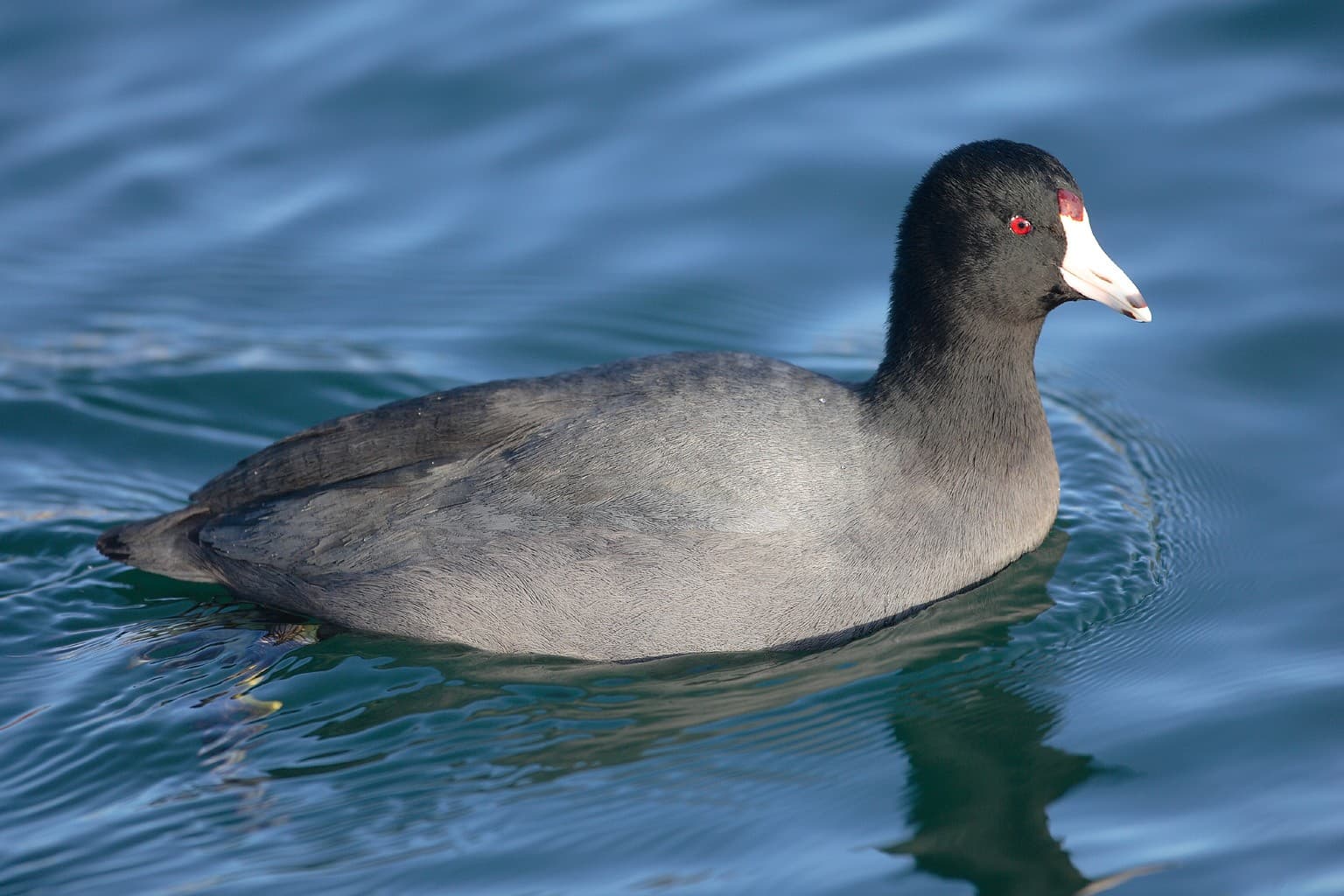
Identification features (white bill with dark spots, frontal shield, lobed toes, red iris) are directly confirmed against Cornell's own identification page. The 15/day, 45-possession bag limit under the shared Merganser and Coot Season is directly sourced to this project's own already-DWR-confirmed mergansers-coots-2026-2027 HuntingSeason record — this entry's own verificationStatus is 'verified' specifically because that load-bearing legal fact was directly, not just synthetically, confirmed. Virginia winter-abundance and small breeding population are directly confirmed via the Virginia Bird Atlas.
Legal status: A legal migratory game bird in Virginia, sharing the Merganser and Coot Season with all three merganser species — DWR's own current-season figure is 15 coots per day, 45 in possession (see the mergansers-coots-2026-2027 HuntingSeason record). Not currently treated by this project as a primary target species, but genuinely huntable, unlike the protected grebes/loons/cormorant elsewhere in this guide — do not assume it shares their protected status just because it's often mistaken for a small dark duck.
A dark, chicken-billed waterbird — not a duck — common to locally common in Virginia in winter, with a small scattered breeding population in the state; a legal migratory game bird in Virginia under its own bag limit, sharing a season with mergansers.
Field marks
- Dark gray to black body with a distinctive bright-white bill (with fine dark spots near the tip) and a white-to-reddish frontal shield above the bill.
- Yellow-green legs with lobed (not webbed) toes.
- Red iris, visible at close range.
- Habitat
- Ponds, marshes, and impoundments — common to locally common in Virginia in winter, with a small, scattered freshwater-wetland breeding population in the state.
Similar species — check before you shoot
Identification alone never establishes that a bird may legally be taken. Confirm species (and sex, where a sub-limit depends on it) before shooting.
This page is educational and does not certify that any specific bird may be legally taken at any specific time or place. Always confirm the current season, bag limit, and permit requirements at Licensing & Regulations →