Atlantic White Shrimp
Penaeus setiferus
Confirmed against an official or primary source as of the date shown.
The possession limit (20 qt heads-on / 15 qt tails, per person OR vessel whichever is more restrictive) and its 2021-08-01 effective date are directly confirmed via a live WebFetch of the actual regulation text at 4VAC20-1390-30, cross-checked with a second independent search — corrects a real error from an earlier pass, which had synthesized the limit from secondary news/industry coverage, gotten the per-person-or-vessel restriction wrong (stated as 'per person' only), and mistakenly dated the rule to 2026 instead of its real 2021 effective date. VIMS penaeid-shrimp population/season research is independently well-corroborated and unaffected by this correction.
Legal status: Virginia's recreational shrimp possession limit (4VAC20-1390-30, effective August 1, 2021 — not a new or 2026 rule) is 20 quarts of shrimp with heads-on or 15 quarts of tails of shrimp per person or vessel, whichever is more restrictive. A recreational fishing license applies (plus the applicable gear license for a cast net). Verify current limits directly with VMRC before relying on this guide.
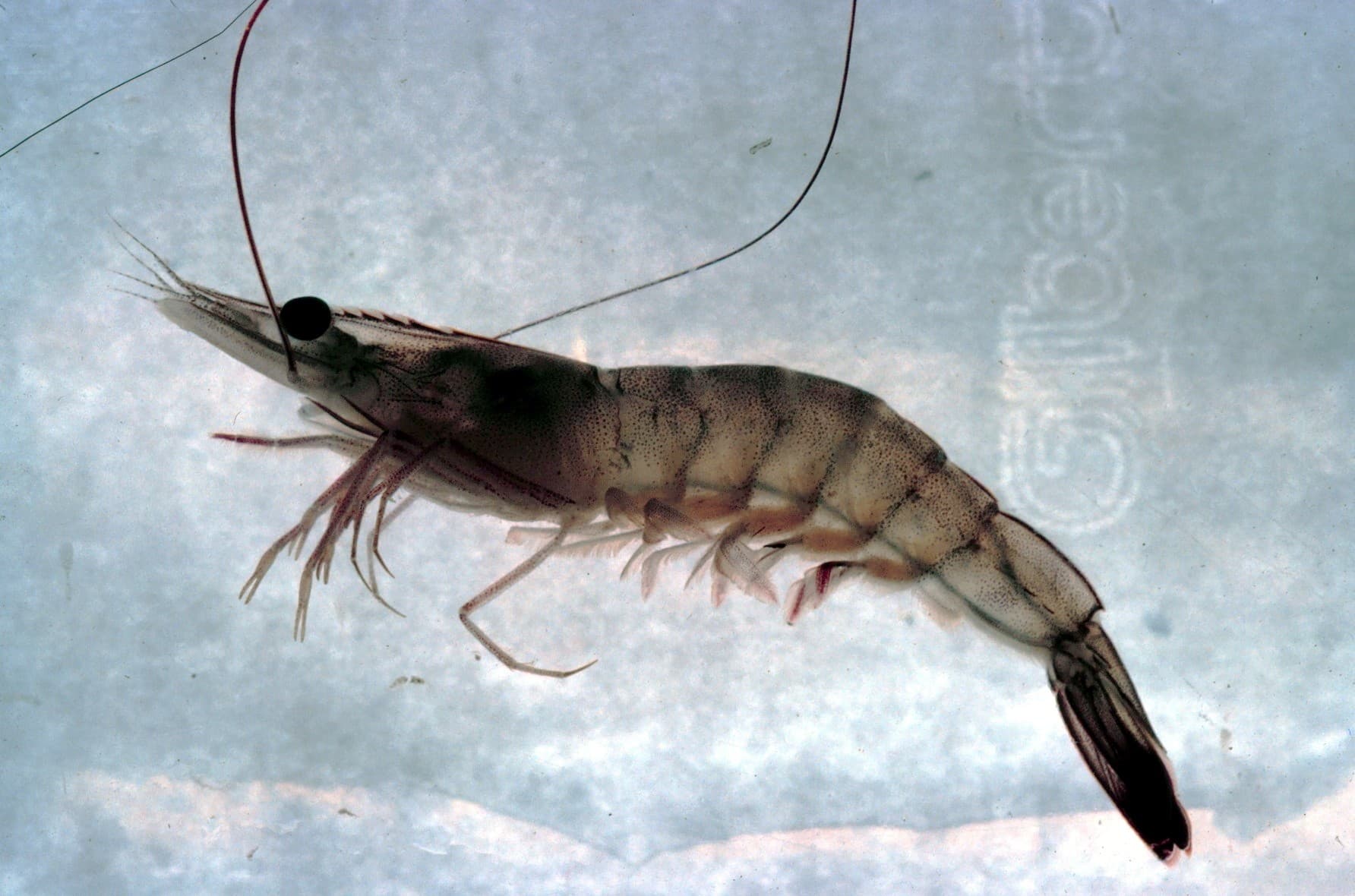
A translucent, grayish-white shrimp, the more commonly encountered of the Bay's two main penaeid shrimp species.
Identification
- Translucent grayish-white body with a relatively smooth, unspotted appearance.
- Long antennae, typically much longer than the body.
- Most active/catchable July through December as Bay water warms.
- Regional occurrence
- A genuinely emerging Chesapeake Bay species — VIMS survey data shows penaeid shrimp numbers in Virginia's Bay waters increasing steadily since 1991, with white shrimp the most numerous of the group, mostly July through December.
- Habitat
- Shallow, warm estuarine water over soft mud/sand bottom; more abundant as Bay waters have warmed.
- Food use
- Commonly Eaten
Ecological role
A recent but real addition to the Bay's food web, tracked by VIMS as part of a broader warming-driven shift in species composition.
Similar species — check before you keep one
Identification alone never establishes that an animal may legally be kept. Confirm species before harvesting.
Consumption advisory
Data not yet verified.
This site hasn't checked for a fish-consumption advisory covering this species yet. That is not the same as confirmed safe — check current official guidance before eating your catch.
This page is educational and does not certify that any specific animal may be legally harvested at any specific time or place. Confirm current regulations, health-closure status, and access rights before harvesting.