Lady Crab
Ovalipes ocellatus
Drawn from a named source but not independently confirmed. Double-check before relying on it.
Regional Mid-Atlantic occurrence confirmed via a VIMS-linked multispecies estuarine survey reference found via WebSearch; Virginia-specific abundance/seasonality data was not independently confirmed to the same standard as this project's other entries — flagged honestly rather than overstated.
Legal status: Not commonly targeted as a food species in this region and this guide found no confirmed dedicated Virginia recreational regulation for it specifically — included chiefly so a beachgoer who nets one out of curiosity can identify it and distinguish it from a blue crab, not as a harvest recommendation.
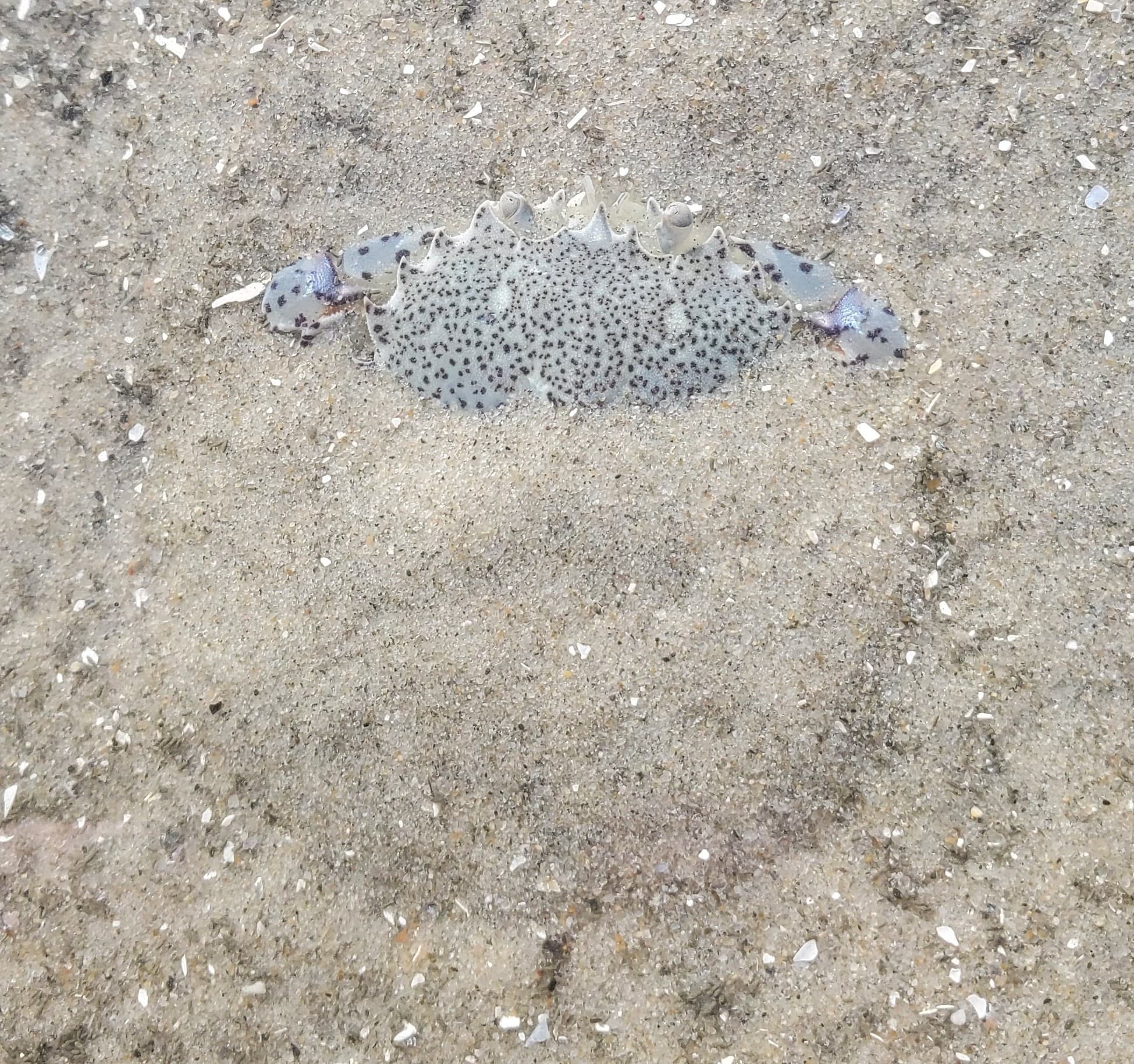
A speckled, purple-and-white spotted swimming crab, superficially similar to blue crab in having paddle-shaped rear swimming legs, but smaller and rounder with a very distinctive spotted pattern.
Identification
- Pale shell densely covered in purple/lavender spots — the easiest field mark versus blue crab.
- Rounder, more compact carapace than a blue crab's.
- Paddle-shaped last pair of legs, like blue crab, since both are swimming crabs.
- Regional occurrence
- Occurs in Mid-Atlantic estuaries including the Chesapeake Bay region, typically in warmer months — this project found solid regional (Mid-Atlantic) confirmation but comparatively limited Virginia-specific abundance data, and presents it accordingly.
- Habitat
- Sandy nearshore bottom and surf zones, often burying itself with only eyes exposed.
- Food use
- Not Typically Eaten
Ecological role
A common nearshore scavenger/predator in sandy surf-zone habitat.
Similar species — check before you keep one
Identification alone never establishes that an animal may legally be kept. Confirm species before harvesting.
This page is educational and does not certify that any specific animal may be legally harvested at any specific time or place. Confirm current regulations, health-closure status, and access rights before harvesting.