Tiger Shark
Galeocerdo cuvier
Partially verified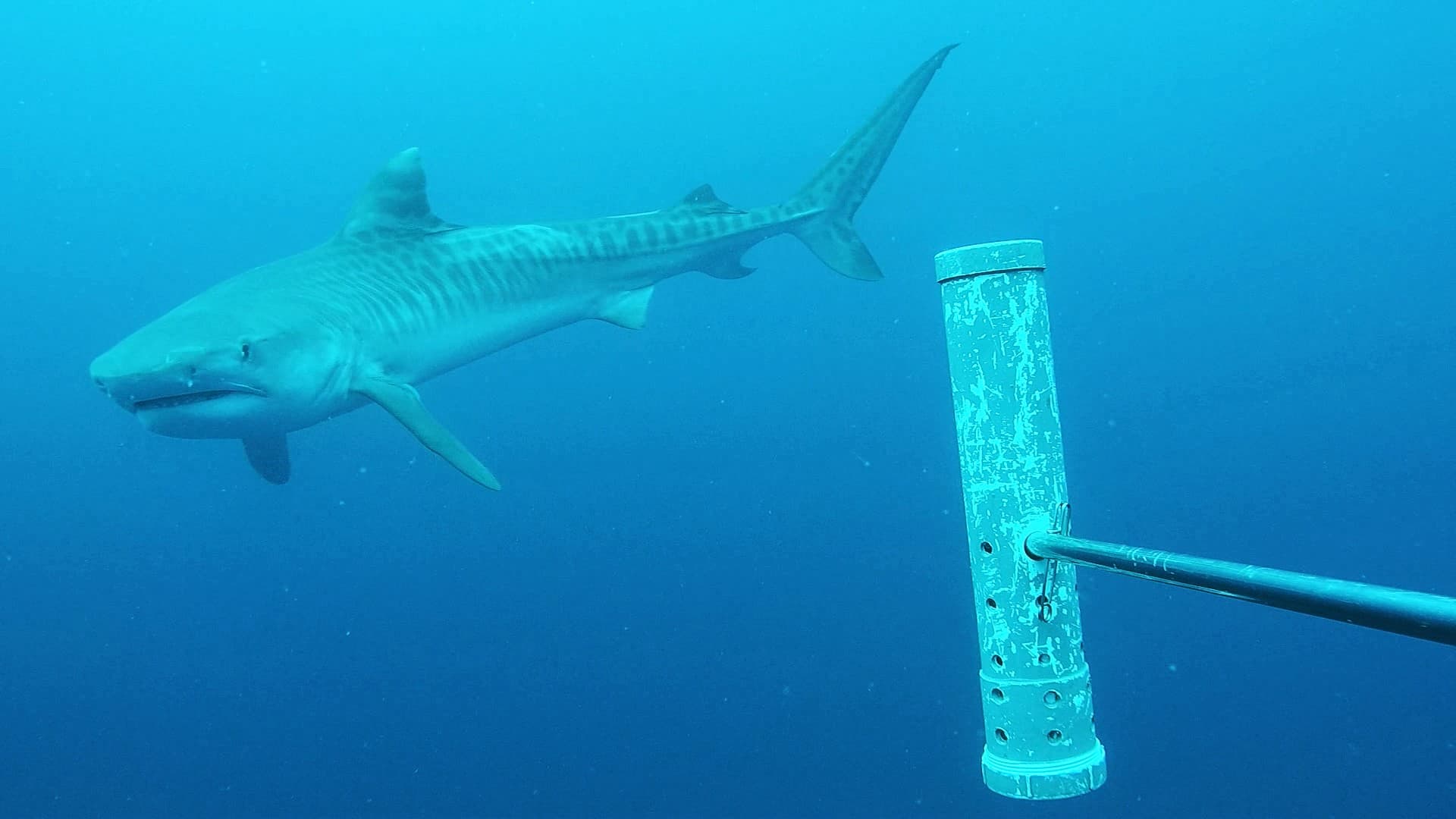
Handling & regulations: Federally confirmed open as of 2026-08-19, managed under the 'large coastal shark' complex: 54" fork-length minimum size, 1 shark total per vessel per trip. A real, if considerably reduced, Virginia presence: VIMS's own shark research page states tiger shark abundance in Virginia waters declined markedly from the 1970s into the 1990s and is now an occasional offshore visitor rather than the common coastal species it once was — not a species anyone should expect to catch regularly. Recreational anglers must hold a federal HMS Angling or Charterboat/Headboat permit *with a shark endorsement* to legally retain any shark species at all — most anglers fishing without one must release every shark regardless of that species' individual status, and Virginia (VMRC) rules may add further restrictions on top of federal ones. Anyone targeting sharks (from shore or a vessel) is also federally required to carry a device capable of quickly cutting the leader or hook. If removing the hook would delay release, cut the leader or hook as close to the hook as possible instead — the shark does not need to be lifted, dragged onto dry sand/a pier deck, or restrained to be released safely, and a shark should stay in the water throughout release whenever that's achievable.
Identification
Dark vertical bars/blotches along the sides (most visible on juveniles and sub-adults, fading with age) — the source of the common name, Broad, blunt, wedge-shaped head, Distinctively large, curved, serrated teeth, Long upper tail lobe
Where this fish fits
These are discovery categories describing where anglers realistically fish for this species, not a guarantee this project has confirmed regional access at every listed setting — see the linked locations below for this project's own actually-sourced spots.
- Typical season
- Warmer months, occasionally offshore — VIMS describes it as an occasional Virginia visitor, usually found at least 10-20 miles offshore, mostly sub-adults and adults (juveniles are born farther south and stay there in their first years).
- Habitats
- Offshore Virginia waters, typically well beyond the immediate coastline
- Food use
- Eat with caution
Data not yet verified.
This site hasn't checked for a fish-consumption advisory covering this species yet. That is not the same as confirmed safe — check current official guidance before eating your catch.
Seasons, size limits, and possession limits change and vary by water body. Always check the current regulations at the current regulations page before you fish.
- Bait & lures
- Large cut or live bait on heavy tackle, typically from a boat well offshore
- Beginner difficulty
- Challenging
Part of this record is confirmed against an official source; other parts are not. See the notes below for exactly which.
The 54" minimum size and 1/vessel/trip bag limit are directly confirmed against NOAA's own recreational Atlantic shark fishery status page. The Virginia-specific occurrence, historical abundance decline, and offshore-only present-day pattern are directly confirmed against VIMS's own tiger shark research page — real, Virginia-specific evidence, not a generic Atlantic range claim (see this project's own offshore-accessibility standard, REGIONAL_SPECIES_COMPLETENESS_PHASE2_PLAN.md §B). Identification features reflect general, well-established shark-identification knowledge, not individually fact-checked against a single source. foodUseStatus set to eat-with-caution per this project's own policy against ever defaulting a shark/ray to commonly-eaten — VIMS's own page notes the meat and fins have little commercial value and it is usually released.