Sand Tiger Shark
Carcharias taurus
Partially verified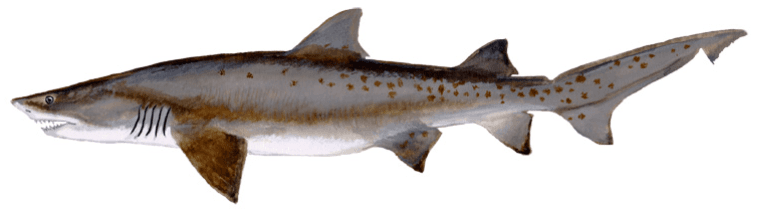
Handling & regulations: Prohibited species since 1997 — retention of the whole fish or any part (fins, meat, jaws, teeth) is illegal on the Atlantic coast; release with minimal injury and without removing the fish from the water. Its intimidating teeth lead to real misidentification risk against more dangerous species — sand tiger sharks are a generally docile, slow-moving species and not considered a significant threat to divers/swimmers under normal circumstances, but a prohibited species is a prohibited species regardless of temperament. Recreational anglers must hold a federal HMS Angling or Charterboat/Headboat permit *with a shark endorsement* to legally retain any shark species at all — most anglers fishing without one must release every shark regardless of that species' individual status, and Virginia (VMRC) rules may add further restrictions on top of federal ones. Anyone targeting sharks (from shore or a vessel) is also federally required to carry a device capable of quickly cutting the leader or hook. If removing the hook would delay release, cut the leader or hook as close to the hook as possible instead — the shark does not need to be lifted, dragged onto dry sand/a pier deck, or restrained to be released safely, and a shark should stay in the water throughout release whenever that's achievable.
Identification
Flattened, pointed snout with prominent needle-like teeth visible even with the mouth closed — a fearsome look this species' actual docile temperament doesn't match, Gray to light brown above, grayish-white below; grows to roughly 10.5 feet, Frequently seen resting near the bottom around wrecks — a real identification/temperament distinction from more active pelagic sharks
Where this fish fits
These are discovery categories describing where anglers realistically fish for this species, not a guarantee this project has confirmed regional access at every listed setting — see the linked locations below for this project's own actually-sourced spots.
- Typical season
- Warmer months, frequently around nearshore wrecks and structure off the Virginia coast.
- Habitats
- Nearshore wrecks and structure, Surf zone to shallow bays to outer continental shelf
- Food use
- Harvest restricted or prohibited
Data not yet verified.
This site hasn't checked for a fish-consumption advisory covering this species yet. That is not the same as confirmed safe — check current official guidance before eating your catch.
Seasons, size limits, and possession limits change and vary by water body. Always check the current regulations at the current regulations page before you fish.
- Bait & lures
- Not a deliberate rod-and-reel target for retention — a docile species frequently encountered by divers; an incidental hook-up must be released
- Beginner difficulty
- Challenging
Part of this record is confirmed against an official source; other parts are not. See the notes below for exactly which.
Prohibited-retention status directly confirmed live via the NOAA HMS recreational shark fishery status page as of 2026-08-16 (same source already cited for this site's other shark entries). Identification features (snout/teeth, coloring, size) are corroborated across NOAA outreach material and this project's own research notes in species-framework/inventory.ts, not from a single dedicated NOAA species profile page (none was found live). Habitat/season notes remain general regional knowledge, not individually fact-checked. Promoted from the Master Species Framework's own researched-gap inventory rather than invented fresh.