Northern Puffer
Sphoeroides maculatus
Unverified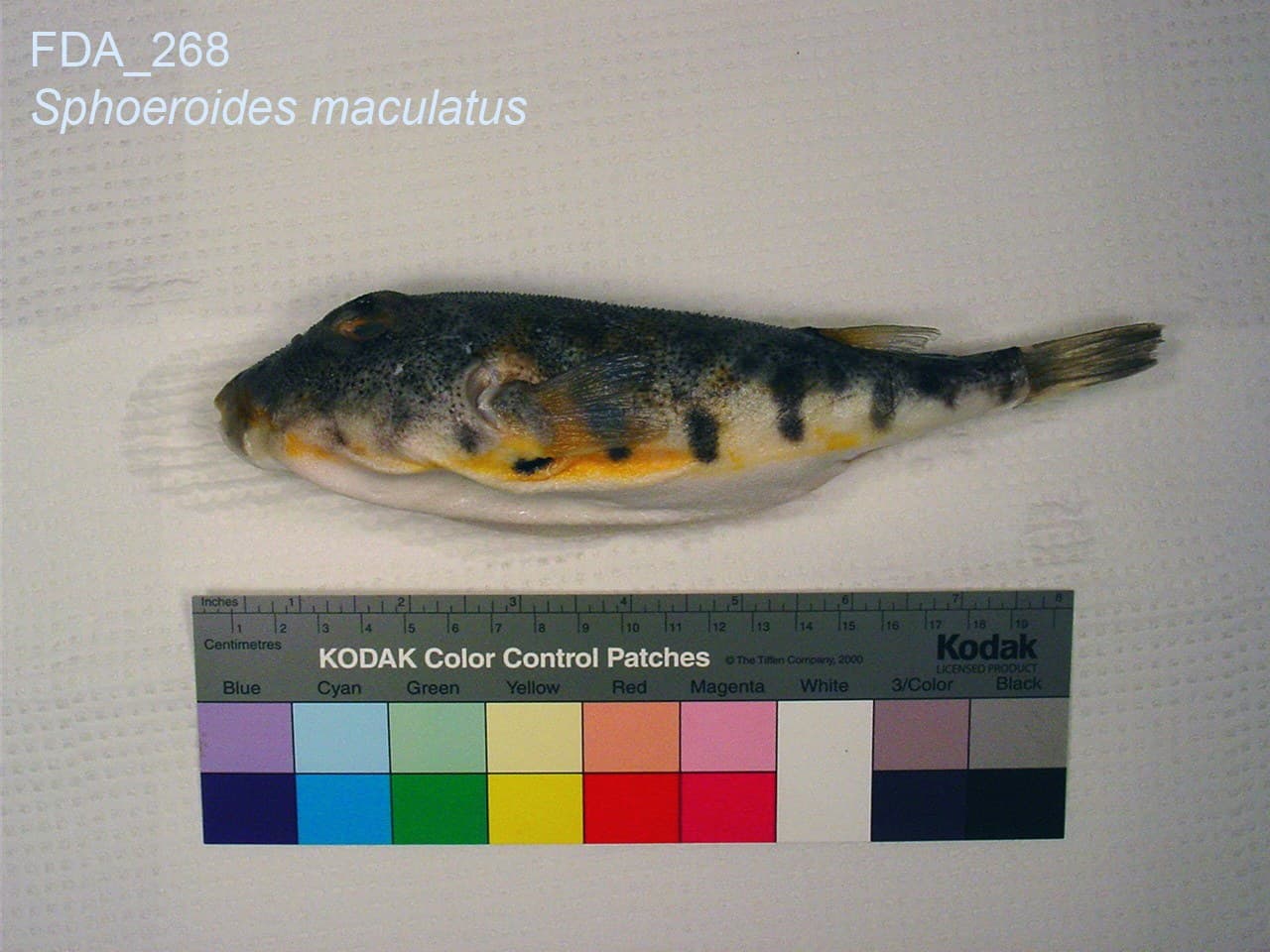
Handling & regulations: Not deadly poisonous like tropical pufferfish, and has a long history of regional consumption ('chicken of the sea' / 'sea squab'), but low-level toxins can be present in the skin and internal organs — anglers who keep one to eat should remove and discard all skin and viscera thoroughly before cooking, or have it cleaned by someone experienced with the species.
Identification
A small, oval, club-shaped body covered in fine spines, grayish-brown above with dark vertical bars and pepper-like spots on the sides and cheeks, yellowish-white below, A tiny, beak-like mouth and small dorsal fin set well back on the body; inflates like a ball when threatened — also known regionally as 'blowfish' or 'swelling toad'
Where this fish fits
Northern Puffer is found across more than one water environment — this reflects real movement between them (e.g. a tidal migration or life-stage change), not uncertainty about where to look.
These are discovery categories describing where anglers realistically fish for this species, not a guarantee this project has confirmed regional access at every listed setting — see the linked locations below for this project's own actually-sourced spots.
- Typical season
- Present seasonally in Virginia's coastal and Bay waters, most commonly caught in warmer months.
- Habitats
- Piers, jetties, and nearshore coastal and Bay waters over sand or mud bottom
- Food use
- Eat with caution
Data not yet verified.
This site hasn't checked for a fish-consumption advisory covering this species yet. That is not the same as confirmed safe — check current official guidance before eating your catch.
Seasons, size limits, and possession limits change and vary by water body. Always check the current regulations at the current regulations page before you fish.
- Bait & lures
- Squid strips (the most reliable bait), Bloodworms or sandworms, Clam or shrimp on a small two-hook bottom rig
- Beginner difficulty
- Easy for beginners
Drawn from a named source but not independently confirmed. Double-check before relying on it.
Identification features and the skin/viscera toxin caution are corroborated across the Chesapeake Bay Program's own field guide and multiple independent regional fishing/food sources — this project found no single authoritative Virginia-agency food-safety page specific to this species, hence the eat-with-caution status rather than a stronger claim. Habitat/season/bait notes reflect general regional angling knowledge. Added in the Regional Species Completeness pass.