Bullnose Ray
Myliobatis freminvillii
Partially verified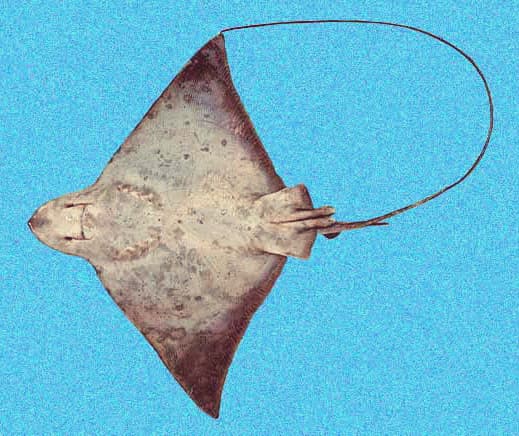
Handling & regulations: Has a venomous barbed tail spine like other rays — the same low-contact handling applies as cownose ray/southern stingray: avoid handling by hand where possible, cut the leader close to the hook rather than forcing removal if the hook isn't easily reached, and release in the water rather than on sand or a pier deck. If you can't confidently confirm the snout shape (notched vs. unnotched), that uncertainty doesn't change the handling approach — keep hands clear of the tail spine regardless of which ray it turns out to be.
Commonly confused with: Cownose Ray. If you're not sure which one you've caught, treat it as the more restricted species and release it until you can confirm.
Identification
Projecting snout with NO central notch or indentation — the key field mark separating it from the very similar cownose ray, whose snout is distinctly two-lobed, Long, sharply pointed pectoral fins ('wings') and a long, thin tail with a venomous barbed spine near the base, Gray, reddish-brown, or dark brown above with diffuse white spots smaller than the eye; white below, Smaller at maturity than cownose ray (up to about 42" disc width)
Where this fish fits
Bullnose Ray is found across more than one water environment — this reflects real movement between them (e.g. a tidal migration or life-stage change), not uncertainty about where to look.
These are discovery categories describing where anglers realistically fish for this species, not a guarantee this project has confirmed regional access at every listed setting — see the linked locations below for this project's own actually-sourced spots.
- Typical season
- Warmer months, in nearshore and estuarine Virginia waters — within its documented Massachusetts-to-Texas range.
- Habitats
- Nearshore and estuarine waters, Open Bay waters, often alongside cownose ray
- Food use
- Unclear — check current regulations
Data not yet verified.
This site hasn't checked for a fish-consumption advisory covering this species yet. That is not the same as confirmed safe — check current official guidance before eating your catch.
Seasons, size limits, and possession limits change and vary by water body. Always check the current regulations at Virginia Marine Resources Commission — Regulations before you fish.
- Bait & lures
- Cut bait or crab on bottom — often caught incidentally by anglers targeting other bottom species
- Beginner difficulty
- Moderate
Part of this record is confirmed against an official source; other parts are not. See the notes below for exactly which.
The unnotched-snout identification feature and its direct contrast with cownose ray's notched snout, the Massachusetts-to-Texas range, and the smaller maximum disc width are directly confirmed against Wikipedia's own sourced bullnose-ray entry and the Florida Museum's Discover Fishes species profile. Food-use status is marked 'unclear — check current regulations' because this project has not found a reliable, current, Virginia-specific source confirming consumption safety or legal harvest status for this species — it is not a claim that it's unsafe or prohibited, only that this hasn't been confirmed. Habitat and bait notes reflect general regional knowledge, not individually verified data.