Bull Shark
Carcharhinus leucas
Partially verified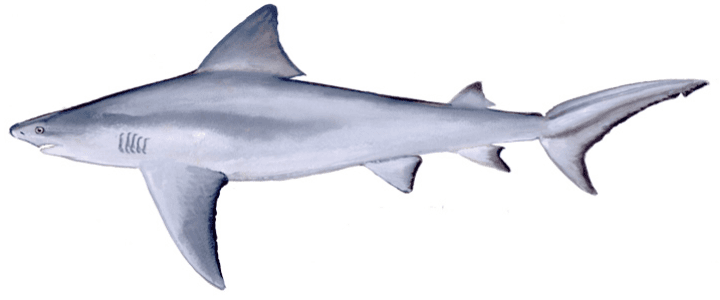
Handling & regulations: Regionally uncommon but real safety-awareness relevance given this species' documented brackish/tidal-river tolerance elsewhere in its range — treat any shark encounter in Hampton Roads' tidal rivers with appropriate caution rather than assuming sharks are strictly an ocean/inlet species. Managed under the same federal 'large coastal shark' recreational category as sandbar and dusky shark: 54-inch fork-length minimum, 1 shark/vessel/trip (combined with the other species in that category) as of the last confirmed check. Recreational anglers must hold a federal HMS Angling or Charterboat/Headboat permit *with a shark endorsement* to legally retain any shark species at all — most anglers fishing without one must release every shark regardless of that species' individual status, and Virginia (VMRC) rules may add further restrictions on top of federal ones. Anyone targeting sharks (from shore or a vessel) is also federally required to carry a device capable of quickly cutting the leader or hook. If removing the hook would delay release, cut the leader or hook as close to the hook as possible instead — the shark does not need to be lifted, dragged onto dry sand/a pier deck, or restrained to be released safely, and a shark should stay in the water throughout release whenever that's achievable.
Identification
Large, triangular, rearward-sloping first dorsal fin originating over or slightly behind the pectoral fin base, Short, blunt, rounded snout relative to a wide mouth — a notably stockier build than most other large coastal sharks, No interdorsal ridge (shared with spinner shark, but bull shark's stockier body and blunter snout distinguish the two)
Where this fish fits
Bull Shark is found across more than one water environment — this reflects real movement between them (e.g. a tidal migration or life-stage change), not uncertainty about where to look.
These are discovery categories describing where anglers realistically fish for this species, not a guarantee this project has confirmed regional access at every listed setting — see the linked locations below for this project's own actually-sourced spots.
- Typical season
- Warmer months; rare north of Delaware, so a genuinely uncommon Hampton Roads catch rather than a reliable target.
- Habitats
- Shallow coastal waters, Lagoons, bays, and river mouths — highly salinity-tolerant and known to enter far into fresh water elsewhere in its range
- Food use
- Eat with caution
Data not yet verified.
This site hasn't checked for a fish-consumption advisory covering this species yet. That is not the same as confirmed safe — check current official guidance before eating your catch.
Seasons, size limits, and possession limits change and vary by water body. Always check the current regulations at the current regulations page before you fish.
- Bait & lures
- Cut or live bait on a wire or heavy leader — not a species this guide encourages beginners to specifically target given the safety/permit stakes
- Beginner difficulty
- Challenging
Part of this record is confirmed against an official source; other parts are not. See the notes below for exactly which.
Identification features (dorsal fin position, snout/body shape, absence of interdorsal ridge) are confirmed via NOAA's own shark identification guide. The 54-inch minimum/1-per-vessel-per-trip large-coastal-shark retention rule was directly confirmed live via the NOAA HMS status page as of 2026-08-16. Habitat/season notes remain general regional knowledge, not individually fact-checked.