Bowfin
Amia calva
Partially verified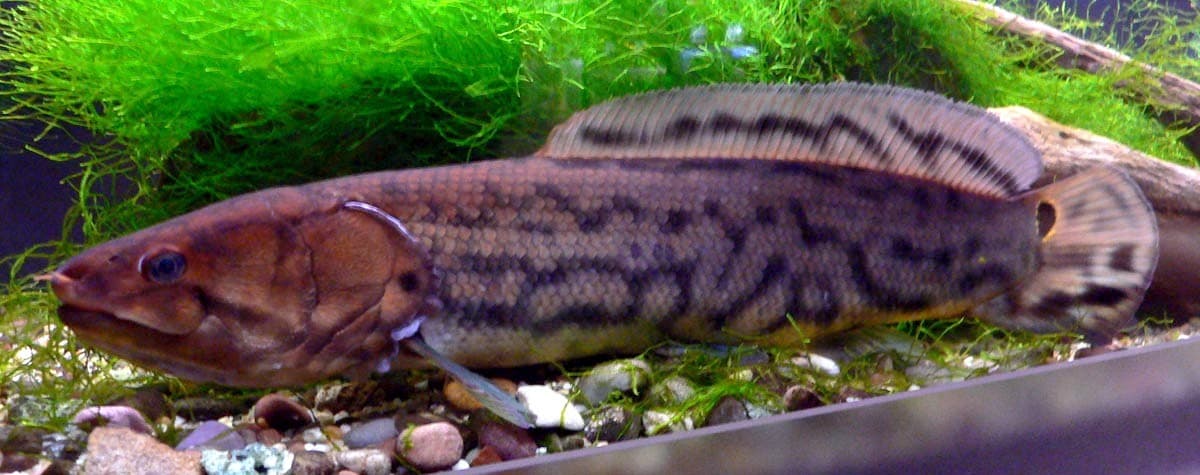
Handling & regulations: A real native, ancient-lineage fish (unrelated to the invasive northern snakehead it's frequently mistaken for) with a lung-like gas bladder that lets it breathe air and survive low-oxygen water. Powerful jaws and sharp teeth — handle with care.
Commonly confused with: American Eel, Northern Snakehead. If you're not sure which one you've caught, treat it as the more restricted species and release it until you can confirm.
Identification
A single, very long dorsal fin running most of the length of the back, a flattened head, and a rounded tail, A black eyespot ringed in orange-yellow at the top of the tail base — more prominent in males — genuinely useful for telling a native bowfin apart from the invasive northern snakehead, which has no tail eyespot
Where this fish fits
These are discovery categories describing where anglers realistically fish for this species, not a guarantee this project has confirmed regional access at every listed setting — see the linked locations below for this project's own actually-sourced spots.
- Typical season
- Peak fishing is during the spring spawn (April-June), when bowfin move from deep water into weedy shallows to guard nests.
- Habitats
- Sluggish, weedy freshwater backwaters, swamps, and slow rivers — including the Great Dismal Swamp
- Food use
- Catch-and-release recommended
Data not yet verified.
This site hasn't checked for a fish-consumption advisory covering this species yet. That is not the same as confirmed safe — check current official guidance before eating your catch.
Seasons, size limits, and possession limits change and vary by water body. Always check the current regulations at the current regulations page before you fish.
- Bait & lures
- Cut fish, live minnows, large nightcrawlers, or crayfish — scent is the biggest draw, Topwater frogs, poppers, spinnerbaits, and chatterbaits for aggressive reaction strikes
- Beginner difficulty
- Moderate
Part of this record is confirmed against an official source; other parts are not. See the notes below for exactly which.
The tail-eyespot and jaw/teeth identification features distinguishing bowfin from northern snakehead are directly confirmed via Virginia DWR's own snakehead-identification page. Habitat/season/bait notes reflect general regional angling knowledge, not individually fact-checked. Food-use status is catch-and-release-recommended — this project found no reliable, current Virginia-specific consumption guidance, and bowfin's own ecological value as a native predator argues against defaulting to commonly-eaten without one. Added in the Regional Species Completeness pass as part of the bowfin/eel/snakehead identification-safety cluster.