Blackfin Tuna
Thunnus atlanticus
Unverified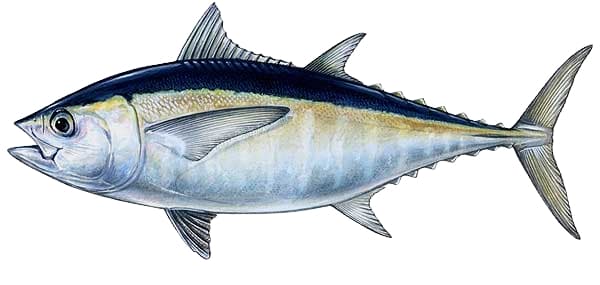
Handling & regulations: A federal HMS Angling or Charterboat/Headboat permit is required to retain Atlantic tunas recreationally — see the federal permit link below; check current NOAA HMS bag/size rules before keeping one, since this project did not find a blackfin-specific limit distinct from the general Atlantic tunas permit framework.
Commonly confused with: Yellowfin Tuna. If you're not sure which one you've caught, treat it as the more restricted species and release it until you can confirm.
Identification
Second dorsal and anal fins are not elongated (unlike yellowfin tuna's sickle-shaped ones), Long pectoral fin reaches nearly to the start of the second dorsal fin — bluefin tuna's pectoral fin is noticeably shorter, Bronze stripe along the sides; finlets dark with white edges; grows much smaller than yellowfin or bluefin (commonly under 28 inches)
Where this fish fits
These are discovery categories describing where anglers realistically fish for this species, not a guarantee this project has confirmed regional access at every listed setting — see the linked locations below for this project's own actually-sourced spots.
- Typical season
- Near the northern edge of this species' typical range in Virginia's offshore Gulf Stream-influenced waters — a documented but less common component of the regional tuna fishery than yellowfin.
- Habitats
- Coastal to offshore Gulf Stream-influenced waters
- Food use
- Commonly eaten
Data not yet verified.
This site hasn't checked for a fish-consumption advisory covering this species yet. That is not the same as confirmed safe — check current official guidance before eating your catch.
Seasons, size limits, and possession limits change and vary by water body. Always check the current regulations at the current regulations page before you fish.
- Bait & lures
- Trolled small skirted lures or ballyhoo, Live bait around structure or current edges
- Beginner difficulty
- Challenging
Drawn from a named source but not independently confirmed. Double-check before relying on it.
NOAA Fisheries has no dedicated Atlantic blackfin tuna species page (confirmed via direct fetch attempts, all 404), so identification features here are sourced from Florida FWC's own species profile rather than a Virginia-specific or federal source — a real, named state wildlife agency, but not this project's usual first choice for a Virginia species. Regional (Virginia) occurrence and season are general knowledge, not individually fact-checked; the federal permit requirement is a well-established fact for all Atlantic HMS tunas, not blackfin-specific confirmation.