Bigeye Tuna
Thunnus obesus
Partially verified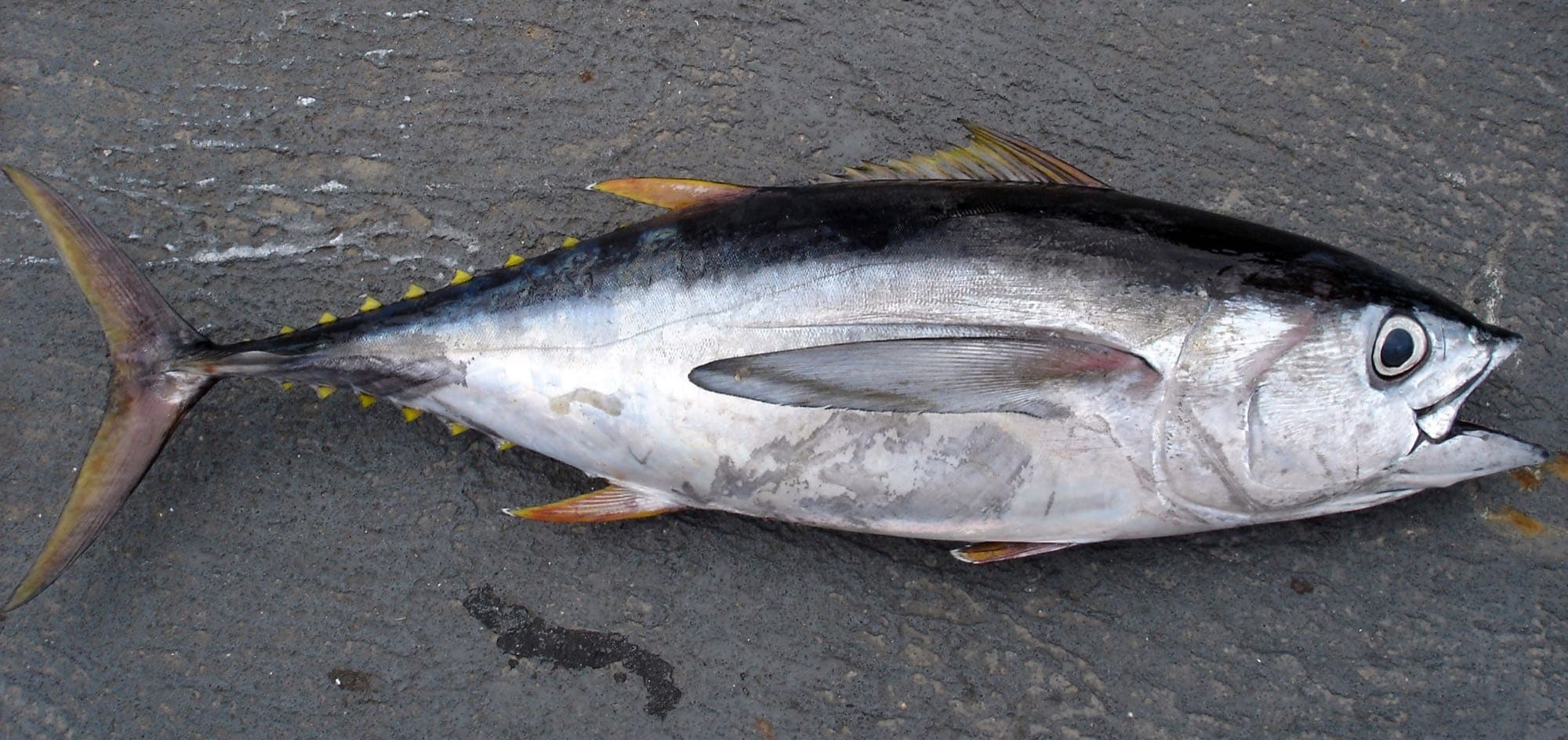
Handling & regulations: A federal HMS Angling or Charterboat/Headboat permit is required to retain any Atlantic tuna recreationally, with a minimum size and mandatory catch reporting — confirmed live via NOAA's own bigeye tuna species page. Bigeye tuna is specifically named on the FDA/EPA's joint mercury advisory 'Choices to Avoid' list, the same highest-mercury tier as shark, swordfish, king mackerel, marlin, and (Gulf) tilefish — this project could not get a clean direct fetch of the current live FDA chart (repeated 404s), but this is corroborated consistently across multiple independent secondary sources describing the same list. Pregnant/nursing people and young children should avoid it; everyone else should eat it only occasionally.
Commonly confused with: Yellowfin Tuna. If you're not sure which one you've caught, treat it as the more restricted species and release it until you can confirm.
Identification
Larger eyes than yellowfin tuna — the source of the name and a real field mark, not just a size comparison, Finlets (the small fins between the dorsal/anal fins and the tail) are bright yellow with black edges — yellowfin's lack the black edging, First dorsal fin deep yellow, second dorsal and anal fins pale yellow
Where this fish fits
These are discovery categories describing where anglers realistically fish for this species, not a guarantee this project has confirmed regional access at every listed setting — see the linked locations below for this project's own actually-sourced spots.
- Typical season
- A documented, if less accessible, component of the same offshore canyon tuna fishery as the already-published yellowfin — not a fishery an ordinary shore or inshore angler can reach.
- Habitats
- Deep offshore canyon waters, diving to roughly 800 feet — deeper than most other tropical tunas
- Food use
- Eat with caution
Data not yet verified.
This site hasn't checked for a fish-consumption advisory covering this species yet. That is not the same as confirmed safe — check current official guidance before eating your catch.
Seasons, size limits, and possession limits change and vary by water body. Always check the current regulations at the current regulations page before you fish.
- Bait & lures
- Trolled ballyhoo and skirted lures, Deep-dropped or chunk bait once a school is located
- Beginner difficulty
- Challenging
Part of this record is confirmed against an official source; other parts are not. See the notes below for exactly which.
Identification features (eye size, finlet coloring) and the federal permit/reporting requirement were directly confirmed via NOAA's own Atlantic Bigeye Tuna species page as of 2026-08-16. The FDA mercury-advisory placement is corroborated via consistent secondary-source reporting, not a clean direct FDA fetch — same caveat already used on this site's golden-tilefish entry. Habitat/season/bait notes remain general regional knowledge, not individually fact-checked.