Atlantic Bonito
Sarda sarda
Unverified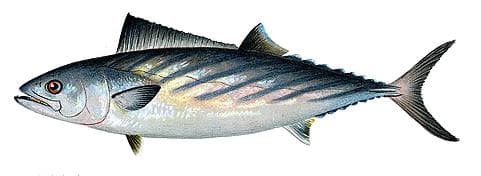
Handling & regulations: A true bonito, not a small tuna — genuinely eaten (often smoked or grilled) but with darker, stronger-flavored flesh than tuna; many anglers still prefer other species for the table. No Atlantic-HMS permit or federal tuna-specific rule applies to this species; a standard Virginia saltwater fishing license covers it.
Commonly confused with: False Albacore (Little Tunny). If you're not sure which one you've caught, treat it as the more restricted species and release it until you can confirm.
Identification
Diagonal dark stripes running down the back — angled steeply, unlike the roughly horizontal striping of the (rarer, more southern) striped bonito, Fully scaled body and a noticeably curved lateral line, 6–8 finlets between the second dorsal/anal fins and the tail
Where this fish fits
These are discovery categories describing where anglers realistically fish for this species, not a guarantee this project has confirmed regional access at every listed setting — see the linked locations below for this project's own actually-sourced spots.
- Typical season
- A seasonal nearshore/offshore visitor, often mixed in with false albacore runs — general regional knowledge, not an individually confirmed local season.
- Habitats
- Nearshore and offshore coastal waters, often near bait schools
- Food use
- Commonly eaten
Data not yet verified.
This site hasn't checked for a fish-consumption advisory covering this species yet. That is not the same as confirmed safe — check current official guidance before eating your catch.
Seasons, size limits, and possession limits change and vary by water body. Always check the current regulations at North Carolina Division of Marine Fisheries — Atlantic Bonito before you fish.
- Bait & lures
- Small trolled spoons or feathers, Live or cut bait around visible bait schools
- Beginner difficulty
- Moderate
Drawn from a named source but not independently confirmed. Double-check before relying on it.
No NOAA or Virginia-specific agency page was found with this species' own identification write-up; the North Carolina Division of Marine Fisheries' species profile (confirmed live, a real state marine agency, though North Carolina rather than Virginia) is cited as the closest authoritative regional source, corroborated by general marine-biology reference identification features. Season/habitat/bait notes are general regional angling knowledge, not individually fact-checked.