Wood Duck
Aix sponsa
Drawn from a named source but not independently confirmed. Double-check before relying on it.
Identification/habitat facts drawn from Cornell's All About Birds, the Virginia Bird Atlas, and Ducks Unlimited via live search synthesis across multiple independent sources. Legal bag-limit facts are separately, directly sourced to this project's own Duck Season HuntingSeason record.
Legal status: A legal migratory game bird in Virginia during the open duck season, subject to its own daily/possession sub-limit (3 per day in the current season — see the Duck Season record).
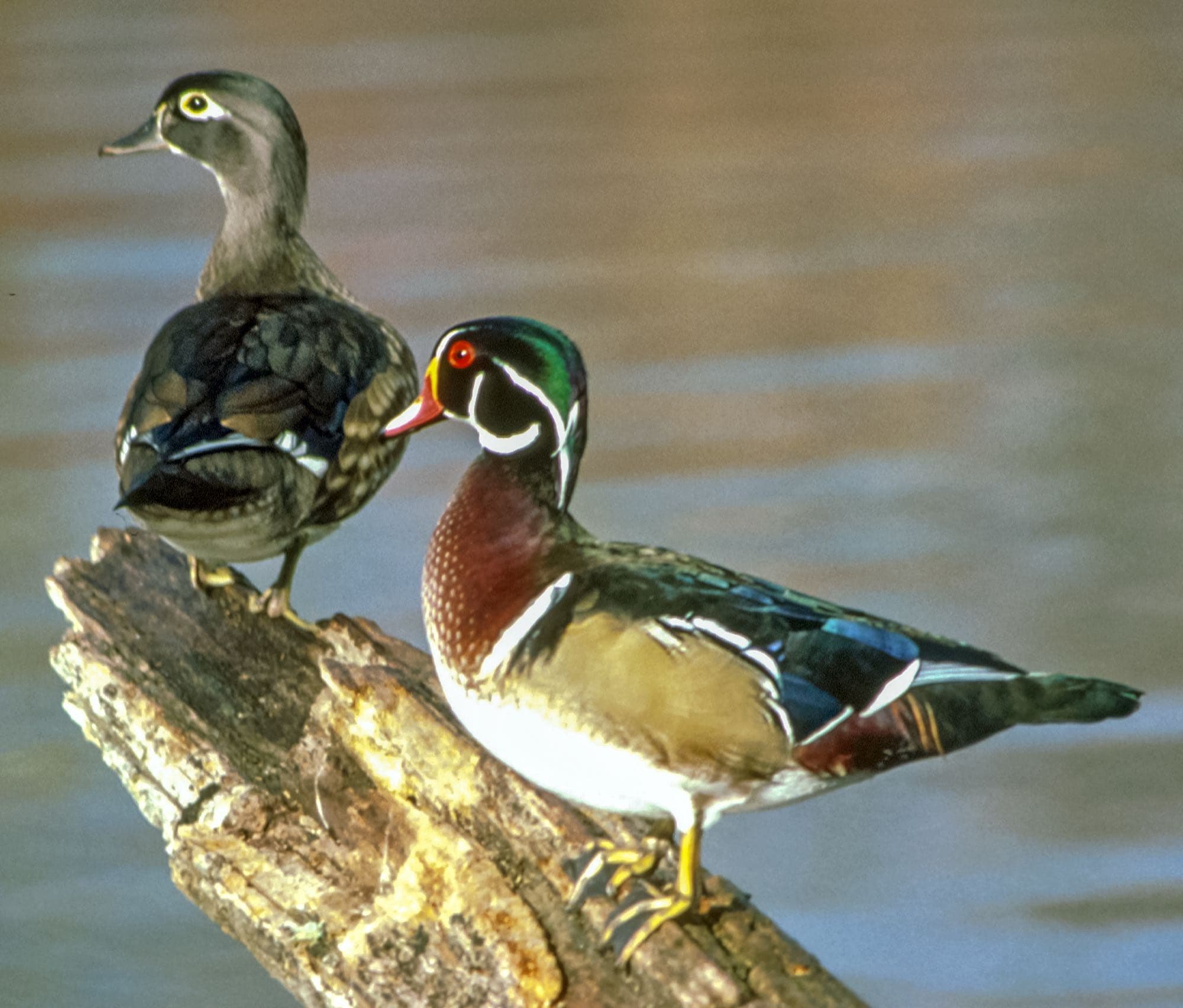
One of the most vividly colored ducks in North America, and — unusually for a duck — a cavity nester found year-round in Hampton Roads' wooded swamps, beaver ponds, and forested creeks.
Field marks
- Distinctive boxy, crested head shape unlike any other regularly-encountered duck.
- Long, broad, squared-off tail, visible both on the water and in flight.
- Bright red eye (male).
Male, female, and seasonal plumage
- Male
- Iridescent green-and-chestnut plumage with bold white stripes on the face and body — considered one of the most strikingly patterned North American ducks.
- Female
- Gray-brown overall with a distinctive white, teardrop-shaped eye-ring and a subtler crest than the male.
- Eclipse plumage
- Males lose much of the bright breeding coloration but retain the red eye and white throat pattern that separate them from females.
- Habitat
- Wooded swamps, beaver ponds, bottomland hardwood forest, and forested creeks and rivers throughout Virginia — needs standing dead timber or nest boxes for cavity nesting.
- Feeding behavior
- Dabbles and gleans for acorns, seeds, aquatic invertebrates, and berries; frequently forages on land under mast-producing trees, not just on the water.
- Flight profile
- Fast, agile flight through timber and brush — noticeably more maneuverable in tight, wooded spaces than open-water ducks.
- Vocalizations
- A rising, squealing 'oo-eek' given by the hen, often in flight — frequently the first clue a wood duck is present in flooded timber before it's seen.
Migration & seasonal context
Present in Virginia year-round; northern-breeding wood ducks add to the local population in winter, so Hampton Roads sees both resident, locally-hatched birds and migrants from further north depending on season.
Conservation context
Population recovered strongly during the 20th century after historic overharvest and habitat loss, aided substantially by nest-box programs; considered a conservation success story, though wooded-wetland habitat loss remains an ongoing local pressure.
This page is educational and does not certify that any specific bird may be legally taken at any specific time or place. Always confirm the current season, bag limit, and permit requirements at Licensing & Regulations →