Ruddy Duck
Oxyura jamaicensis
Drawn from a named source but not independently confirmed. Double-check before relying on it.
Identification/behavior facts drawn from Cornell's All About Birds, the Chesapeake Bay Program field guide, and Ducks Unlimited via live search synthesis. `foodUseStatus` set to eat-with-caution reflecting general guidance that small diving ducks with a substantially invertebrate diet often have stronger flavor than dabbling ducks — a culinary note, not a food-safety claim. Directly relevant to Ragged Island WMA, whose own DWR page names ruddy ducks among the species using that area — see areas.ts.
Legal status: A legal migratory game bird in Virginia during the open duck season, under the general duck bag limit — a species many hunters rarely target specifically; verify current sub-limits, if any, directly with DWR before hunting.
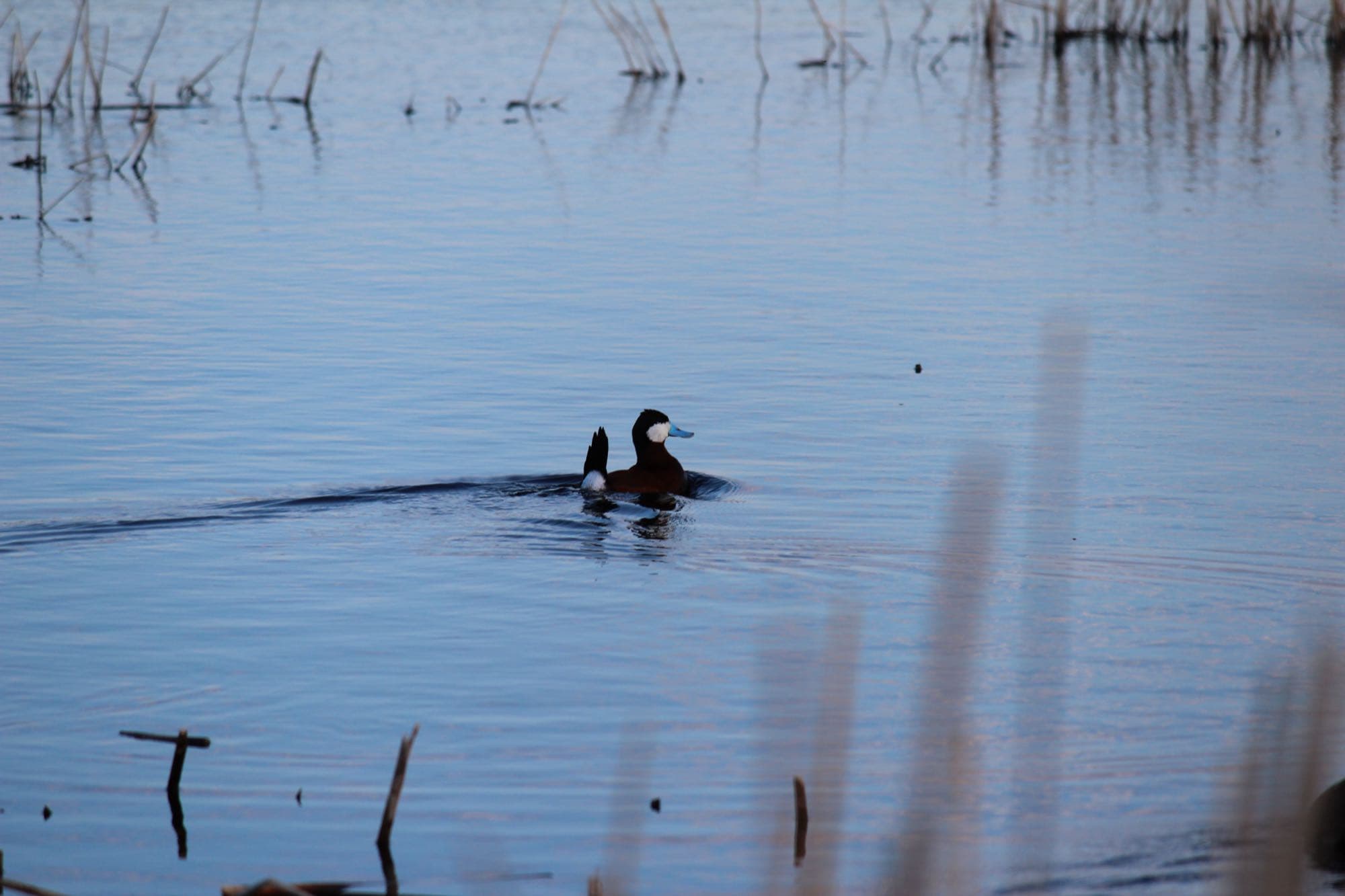
A small, stocky, stiff-tailed diving duck unlike any other regularly-encountered Hampton Roads waterfowl — the long tail held cocked upright is unmistakable once seen.
Field marks
- A long, stiff tail, often held pointed upward — the species' defining field mark, shared by no other locally-occurring duck.
- A stout, broad, scoop-shaped bill.
- Small and compact compared to any dabbling duck.
Male, female, and seasonal plumage
- Male
- In breeding condition, a sky-blue bill, a bright white cheek patch, and a chestnut body — a bold, almost cartoonish combination.
- Female
- Brownish overall with a blurry dark line crossing a dingy white cheek.
- Habitat
- Ponds, lakes, and sheltered brackish water in winter.
- Feeding behavior
- Dives for aquatic invertebrates and some plant material, typically in short, shallow dives, occasionally to about 10 feet.
- Flight profile
- Reluctant flier, often preferring to dive or dive-and-swim away from disturbance rather than take flight; when flushed, flies low and fast with rapid wingbeats.
Migration & seasonal context
A widespread winter visitor across Virginia's ponds, lakes, and sheltered coastal waters.
This page is educational and does not certify that any specific bird may be legally taken at any specific time or place. Always confirm the current season, bag limit, and permit requirements at Licensing & Regulations →